Compare commits
38 Commits
v0.9.0-rc1
...
v0.7.0-rc3
| Author | SHA1 | Date | |
|---|---|---|---|

|
1771b9f286 | ||
|
|
56a9a46625 | ||
|
|
5174fc539f | ||
|
|
95cb97cf42 | ||
|
|
53adfe0b09 | ||
|
|
8d4e155ece | ||
|
|
6069709035 | ||
|
|
c9d7fbbd12 | ||
|
|
0b51f58de0 | ||
|
|
45e9f84f6c | ||
|
|
20cff853e8 | ||
|
|
d28d5e04a9 | ||
|
|
26f4e27df0 | ||
|
|
106d513e0b | ||
|
|
223ec76601 | ||
|
|
405837de22 | ||
|
|
51bd107536 | ||
|
|
08c43e7918 | ||
|
|
6f070502b5 | ||
|
|
61081b91a3 | ||
|
|
2a84d0afb9 | ||
|
|
2c17f27ab4 | ||
|
|
5bb9838c4f | ||
|
|
d59018a14c | ||
|
|
5f2b8bb6ad | ||
|
|
6554640a61 | ||
|
|
5fbb092212 | ||
|
|
dbb4ca7c87 | ||
|
|
e506931830 | ||
|
|
feaf63c15f | ||
|
|
a94179be4d | ||
|
|
7837de8bc8 | ||
|
|
0366781728 | ||
|
|
e898fca70a | ||
|
|
d788ceb1d3 | ||
|
|
90a48fc761 | ||
|
|
de57c79bf9 | ||
|
|
af8c4e7eac |
@@ -1,27 +0,0 @@
|
||||
{
|
||||
"name": "Frigate Dev",
|
||||
"dockerComposeFile": "../docker-compose.yml",
|
||||
"service": "dev",
|
||||
"workspaceFolder": "/lab/frigate",
|
||||
"extensions": [
|
||||
"ms-python.python",
|
||||
"visualstudioexptteam.vscodeintellicode",
|
||||
"mhutchie.git-graph",
|
||||
"ms-azuretools.vscode-docker",
|
||||
"streetsidesoftware.code-spell-checker",
|
||||
"eamodio.gitlens",
|
||||
"esbenp.prettier-vscode",
|
||||
"ms-python.vscode-pylance"
|
||||
],
|
||||
"settings": {
|
||||
"python.pythonPath": "/usr/bin/python3",
|
||||
"python.linting.pylintEnabled": true,
|
||||
"python.linting.enabled": true,
|
||||
"python.formatting.provider": "black",
|
||||
"editor.formatOnPaste": false,
|
||||
"editor.formatOnSave": true,
|
||||
"editor.formatOnType": true,
|
||||
"files.trimTrailingWhitespace": true,
|
||||
"terminal.integrated.shell.linux": "/bin/bash"
|
||||
}
|
||||
}
|
||||
@@ -1,10 +1,6 @@
|
||||
README.md
|
||||
docs/
|
||||
diagram.png
|
||||
.gitignore
|
||||
debug
|
||||
config/
|
||||
*.pyc
|
||||
.git
|
||||
core
|
||||
*.mp4
|
||||
*.db
|
||||
*.pyc
|
||||
4
.github/FUNDING.yml
vendored
@@ -1,3 +1 @@
|
||||
github:
|
||||
- blakeblackshear
|
||||
- paularmstrong
|
||||
github: blakeblackshear
|
||||
|
||||
21
.github/ISSUE_TEMPLATE/bug_report.md
vendored
@@ -1,6 +1,6 @@
|
||||
---
|
||||
name: Bug report or Support request
|
||||
about: Bug report or Support request
|
||||
name: Bug report
|
||||
about: Create a report to help us improve
|
||||
title: ''
|
||||
labels: ''
|
||||
assignees: ''
|
||||
@@ -8,25 +8,25 @@ assignees: ''
|
||||
---
|
||||
|
||||
**Describe the bug**
|
||||
A clear and concise description of what your issue is.
|
||||
A clear and concise description of what the bug is.
|
||||
|
||||
**Version of frigate**
|
||||
Output from `/api/version`
|
||||
What version are you using?
|
||||
|
||||
**Config file**
|
||||
Include your full config file wrapped in triple back ticks.
|
||||
```yaml
|
||||
Include your full config file wrapped in back ticks.
|
||||
```
|
||||
config here
|
||||
```
|
||||
|
||||
**Frigate container logs**
|
||||
**Logs**
|
||||
```
|
||||
Include relevant log output here
|
||||
```
|
||||
|
||||
**Frigate stats**
|
||||
```json
|
||||
Output from frigate's /api/stats endpoint
|
||||
**Frigate debug stats**
|
||||
```
|
||||
Output from frigate's /debug/stats endpoint
|
||||
```
|
||||
|
||||
**FFprobe from your camera**
|
||||
@@ -41,7 +41,6 @@ If applicable, add screenshots to help explain your problem.
|
||||
|
||||
**Computer Hardware**
|
||||
- OS: [e.g. Ubuntu, Windows]
|
||||
- Install method: [e.g. Addon, Docker Compose, Docker Command]
|
||||
- Virtualization: [e.g. Proxmox, Virtualbox]
|
||||
- Coral Version: [e.g. USB, PCIe, None]
|
||||
- Network Setup: [e.g. Wired, WiFi]
|
||||
|
||||
17
.github/stale.yml
vendored
@@ -1,17 +0,0 @@
|
||||
# Number of days of inactivity before an issue becomes stale
|
||||
daysUntilStale: 30
|
||||
# Number of days of inactivity before a stale issue is closed
|
||||
daysUntilClose: 3
|
||||
# Issues with these labels will never be considered stale
|
||||
exemptLabels:
|
||||
- pinned
|
||||
- security
|
||||
# Label to use when marking an issue as stale
|
||||
staleLabel: stale
|
||||
# Comment to post when marking an issue as stale. Set to `false` to disable
|
||||
markComment: >
|
||||
This issue has been automatically marked as stale because it has not had
|
||||
recent activity. It will be closed if no further activity occurs. Thank you
|
||||
for your contributions.
|
||||
# Comment to post when closing a stale issue. Set to `false` to disable
|
||||
closeComment: false
|
||||
46
.github/workflows/pull_request.yml
vendored
@@ -1,46 +0,0 @@
|
||||
name: On pull request
|
||||
|
||||
on: pull_request
|
||||
|
||||
jobs:
|
||||
web_lint:
|
||||
name: Web - Lint
|
||||
runs-on: ubuntu-latest
|
||||
steps:
|
||||
- uses: actions/checkout@master
|
||||
- uses: actions/setup-node@master
|
||||
with:
|
||||
node-version: 14.x
|
||||
- run: npm install
|
||||
working-directory: ./web
|
||||
- name: Lint
|
||||
run: npm run lint:cmd
|
||||
working-directory: ./web
|
||||
|
||||
web_build:
|
||||
name: Web - Build
|
||||
runs-on: ubuntu-latest
|
||||
steps:
|
||||
- uses: actions/checkout@master
|
||||
- uses: actions/setup-node@master
|
||||
with:
|
||||
node-version: 14.x
|
||||
- run: npm install
|
||||
working-directory: ./web
|
||||
- name: Build
|
||||
run: npm run build
|
||||
working-directory: ./web
|
||||
|
||||
web_test:
|
||||
name: Web - Test
|
||||
runs-on: ubuntu-latest
|
||||
steps:
|
||||
- uses: actions/checkout@master
|
||||
- uses: actions/setup-node@master
|
||||
with:
|
||||
node-version: 14.x
|
||||
- run: npm install
|
||||
working-directory: ./web
|
||||
- name: Test
|
||||
run: npm run test
|
||||
working-directory: ./web
|
||||
28
.github/workflows/push.yml
vendored
@@ -1,28 +0,0 @@
|
||||
name: On push
|
||||
|
||||
on:
|
||||
push:
|
||||
branches:
|
||||
- master
|
||||
- release-0.8.0
|
||||
|
||||
jobs:
|
||||
deploy-docs:
|
||||
name: Deploy docs
|
||||
runs-on: ubuntu-latest
|
||||
defaults:
|
||||
run:
|
||||
working-directory: ./docs
|
||||
steps:
|
||||
- uses: actions/checkout@master
|
||||
- uses: actions/setup-node@master
|
||||
with:
|
||||
node-version: 12.x
|
||||
- run: npm install
|
||||
- name: Build docs
|
||||
run: npm run build
|
||||
- name: Deploy documentation
|
||||
uses: peaceiris/actions-gh-pages@v3
|
||||
with:
|
||||
github_token: ${{ secrets.GITHUB_TOKEN }}
|
||||
publish_dir: ./docs/build
|
||||
14
.gitignore
vendored
@@ -1,14 +1,4 @@
|
||||
.DS_Store
|
||||
*.pyc
|
||||
*.swp
|
||||
*.pyc
|
||||
debug
|
||||
.vscode
|
||||
config/config.yml
|
||||
models
|
||||
*.mp4
|
||||
*.db
|
||||
frigate/version.py
|
||||
web/build
|
||||
web/node_modules
|
||||
web/coverage
|
||||
core
|
||||
config/config.yml
|
||||
588
.pylintrc
@@ -1,588 +0,0 @@
|
||||
[MASTER]
|
||||
|
||||
# A comma-separated list of package or module names from where C extensions may
|
||||
# be loaded. Extensions are loading into the active Python interpreter and may
|
||||
# run arbitrary code.
|
||||
extension-pkg-whitelist=
|
||||
|
||||
# Specify a score threshold to be exceeded before program exits with error.
|
||||
fail-under=10.0
|
||||
|
||||
# Add files or directories to the blacklist. They should be base names, not
|
||||
# paths.
|
||||
ignore=CVS
|
||||
|
||||
# Add files or directories matching the regex patterns to the blacklist. The
|
||||
# regex matches against base names, not paths.
|
||||
ignore-patterns=
|
||||
|
||||
# Python code to execute, usually for sys.path manipulation such as
|
||||
# pygtk.require().
|
||||
#init-hook=
|
||||
|
||||
# Use multiple processes to speed up Pylint. Specifying 0 will auto-detect the
|
||||
# number of processors available to use.
|
||||
jobs=1
|
||||
|
||||
# Control the amount of potential inferred values when inferring a single
|
||||
# object. This can help the performance when dealing with large functions or
|
||||
# complex, nested conditions.
|
||||
limit-inference-results=100
|
||||
|
||||
# List of plugins (as comma separated values of python module names) to load,
|
||||
# usually to register additional checkers.
|
||||
load-plugins=
|
||||
|
||||
# Pickle collected data for later comparisons.
|
||||
persistent=yes
|
||||
|
||||
# When enabled, pylint would attempt to guess common misconfiguration and emit
|
||||
# user-friendly hints instead of false-positive error messages.
|
||||
suggestion-mode=yes
|
||||
|
||||
# Allow loading of arbitrary C extensions. Extensions are imported into the
|
||||
# active Python interpreter and may run arbitrary code.
|
||||
unsafe-load-any-extension=no
|
||||
|
||||
|
||||
[MESSAGES CONTROL]
|
||||
|
||||
# Only show warnings with the listed confidence levels. Leave empty to show
|
||||
# all. Valid levels: HIGH, INFERENCE, INFERENCE_FAILURE, UNDEFINED.
|
||||
confidence=
|
||||
|
||||
# Disable the message, report, category or checker with the given id(s). You
|
||||
# can either give multiple identifiers separated by comma (,) or put this
|
||||
# option multiple times (only on the command line, not in the configuration
|
||||
# file where it should appear only once). You can also use "--disable=all" to
|
||||
# disable everything first and then reenable specific checks. For example, if
|
||||
# you want to run only the similarities checker, you can use "--disable=all
|
||||
# --enable=similarities". If you want to run only the classes checker, but have
|
||||
# no Warning level messages displayed, use "--disable=all --enable=classes
|
||||
# --disable=W".
|
||||
disable=print-statement,
|
||||
parameter-unpacking,
|
||||
unpacking-in-except,
|
||||
old-raise-syntax,
|
||||
backtick,
|
||||
long-suffix,
|
||||
old-ne-operator,
|
||||
old-octal-literal,
|
||||
import-star-module-level,
|
||||
non-ascii-bytes-literal,
|
||||
raw-checker-failed,
|
||||
bad-inline-option,
|
||||
locally-disabled,
|
||||
file-ignored,
|
||||
suppressed-message,
|
||||
useless-suppression,
|
||||
deprecated-pragma,
|
||||
use-symbolic-message-instead,
|
||||
apply-builtin,
|
||||
basestring-builtin,
|
||||
buffer-builtin,
|
||||
cmp-builtin,
|
||||
coerce-builtin,
|
||||
execfile-builtin,
|
||||
file-builtin,
|
||||
long-builtin,
|
||||
raw_input-builtin,
|
||||
reduce-builtin,
|
||||
standarderror-builtin,
|
||||
unicode-builtin,
|
||||
xrange-builtin,
|
||||
coerce-method,
|
||||
delslice-method,
|
||||
getslice-method,
|
||||
setslice-method,
|
||||
no-absolute-import,
|
||||
old-division,
|
||||
dict-iter-method,
|
||||
dict-view-method,
|
||||
next-method-called,
|
||||
metaclass-assignment,
|
||||
indexing-exception,
|
||||
raising-string,
|
||||
reload-builtin,
|
||||
oct-method,
|
||||
hex-method,
|
||||
nonzero-method,
|
||||
cmp-method,
|
||||
input-builtin,
|
||||
round-builtin,
|
||||
intern-builtin,
|
||||
unichr-builtin,
|
||||
map-builtin-not-iterating,
|
||||
zip-builtin-not-iterating,
|
||||
range-builtin-not-iterating,
|
||||
filter-builtin-not-iterating,
|
||||
using-cmp-argument,
|
||||
eq-without-hash,
|
||||
div-method,
|
||||
idiv-method,
|
||||
rdiv-method,
|
||||
exception-message-attribute,
|
||||
invalid-str-codec,
|
||||
sys-max-int,
|
||||
bad-python3-import,
|
||||
deprecated-string-function,
|
||||
deprecated-str-translate-call,
|
||||
deprecated-itertools-function,
|
||||
deprecated-types-field,
|
||||
next-method-defined,
|
||||
dict-items-not-iterating,
|
||||
dict-keys-not-iterating,
|
||||
dict-values-not-iterating,
|
||||
deprecated-operator-function,
|
||||
deprecated-urllib-function,
|
||||
xreadlines-attribute,
|
||||
deprecated-sys-function,
|
||||
exception-escape,
|
||||
comprehension-escape
|
||||
|
||||
# Enable the message, report, category or checker with the given id(s). You can
|
||||
# either give multiple identifier separated by comma (,) or put this option
|
||||
# multiple time (only on the command line, not in the configuration file where
|
||||
# it should appear only once). See also the "--disable" option for examples.
|
||||
enable=c-extension-no-member
|
||||
|
||||
|
||||
[REPORTS]
|
||||
|
||||
# Python expression which should return a score less than or equal to 10. You
|
||||
# have access to the variables 'error', 'warning', 'refactor', and 'convention'
|
||||
# which contain the number of messages in each category, as well as 'statement'
|
||||
# which is the total number of statements analyzed. This score is used by the
|
||||
# global evaluation report (RP0004).
|
||||
evaluation=10.0 - ((float(5 * error + warning + refactor + convention) / statement) * 10)
|
||||
|
||||
# Template used to display messages. This is a python new-style format string
|
||||
# used to format the message information. See doc for all details.
|
||||
#msg-template=
|
||||
|
||||
# Set the output format. Available formats are text, parseable, colorized, json
|
||||
# and msvs (visual studio). You can also give a reporter class, e.g.
|
||||
# mypackage.mymodule.MyReporterClass.
|
||||
output-format=text
|
||||
|
||||
# Tells whether to display a full report or only the messages.
|
||||
reports=no
|
||||
|
||||
# Activate the evaluation score.
|
||||
score=yes
|
||||
|
||||
|
||||
[REFACTORING]
|
||||
|
||||
# Maximum number of nested blocks for function / method body
|
||||
max-nested-blocks=5
|
||||
|
||||
# Complete name of functions that never returns. When checking for
|
||||
# inconsistent-return-statements if a never returning function is called then
|
||||
# it will be considered as an explicit return statement and no message will be
|
||||
# printed.
|
||||
never-returning-functions=sys.exit
|
||||
|
||||
|
||||
[SPELLING]
|
||||
|
||||
# Limits count of emitted suggestions for spelling mistakes.
|
||||
max-spelling-suggestions=4
|
||||
|
||||
# Spelling dictionary name. Available dictionaries: none. To make it work,
|
||||
# install the python-enchant package.
|
||||
spelling-dict=
|
||||
|
||||
# List of comma separated words that should not be checked.
|
||||
spelling-ignore-words=
|
||||
|
||||
# A path to a file that contains the private dictionary; one word per line.
|
||||
spelling-private-dict-file=
|
||||
|
||||
# Tells whether to store unknown words to the private dictionary (see the
|
||||
# --spelling-private-dict-file option) instead of raising a message.
|
||||
spelling-store-unknown-words=no
|
||||
|
||||
|
||||
[TYPECHECK]
|
||||
|
||||
# List of decorators that produce context managers, such as
|
||||
# contextlib.contextmanager. Add to this list to register other decorators that
|
||||
# produce valid context managers.
|
||||
contextmanager-decorators=contextlib.contextmanager
|
||||
|
||||
# List of members which are set dynamically and missed by pylint inference
|
||||
# system, and so shouldn't trigger E1101 when accessed. Python regular
|
||||
# expressions are accepted.
|
||||
generated-members=
|
||||
|
||||
# Tells whether missing members accessed in mixin class should be ignored. A
|
||||
# mixin class is detected if its name ends with "mixin" (case insensitive).
|
||||
ignore-mixin-members=yes
|
||||
|
||||
# Tells whether to warn about missing members when the owner of the attribute
|
||||
# is inferred to be None.
|
||||
ignore-none=yes
|
||||
|
||||
# This flag controls whether pylint should warn about no-member and similar
|
||||
# checks whenever an opaque object is returned when inferring. The inference
|
||||
# can return multiple potential results while evaluating a Python object, but
|
||||
# some branches might not be evaluated, which results in partial inference. In
|
||||
# that case, it might be useful to still emit no-member and other checks for
|
||||
# the rest of the inferred objects.
|
||||
ignore-on-opaque-inference=yes
|
||||
|
||||
# List of class names for which member attributes should not be checked (useful
|
||||
# for classes with dynamically set attributes). This supports the use of
|
||||
# qualified names.
|
||||
ignored-classes=optparse.Values,thread._local,_thread._local
|
||||
|
||||
# List of module names for which member attributes should not be checked
|
||||
# (useful for modules/projects where namespaces are manipulated during runtime
|
||||
# and thus existing member attributes cannot be deduced by static analysis). It
|
||||
# supports qualified module names, as well as Unix pattern matching.
|
||||
ignored-modules=
|
||||
|
||||
# Show a hint with possible names when a member name was not found. The aspect
|
||||
# of finding the hint is based on edit distance.
|
||||
missing-member-hint=yes
|
||||
|
||||
# The minimum edit distance a name should have in order to be considered a
|
||||
# similar match for a missing member name.
|
||||
missing-member-hint-distance=1
|
||||
|
||||
# The total number of similar names that should be taken in consideration when
|
||||
# showing a hint for a missing member.
|
||||
missing-member-max-choices=1
|
||||
|
||||
# List of decorators that change the signature of a decorated function.
|
||||
signature-mutators=
|
||||
|
||||
|
||||
[STRING]
|
||||
|
||||
# This flag controls whether inconsistent-quotes generates a warning when the
|
||||
# character used as a quote delimiter is used inconsistently within a module.
|
||||
check-quote-consistency=no
|
||||
|
||||
# This flag controls whether the implicit-str-concat should generate a warning
|
||||
# on implicit string concatenation in sequences defined over several lines.
|
||||
check-str-concat-over-line-jumps=no
|
||||
|
||||
|
||||
[FORMAT]
|
||||
|
||||
# Expected format of line ending, e.g. empty (any line ending), LF or CRLF.
|
||||
expected-line-ending-format=
|
||||
|
||||
# Regexp for a line that is allowed to be longer than the limit.
|
||||
ignore-long-lines=^\s*(# )?<?https?://\S+>?$
|
||||
|
||||
# Number of spaces of indent required inside a hanging or continued line.
|
||||
indent-after-paren=4
|
||||
|
||||
# String used as indentation unit. This is usually " " (4 spaces) or "\t" (1
|
||||
# tab).
|
||||
indent-string=' '
|
||||
|
||||
# Maximum number of characters on a single line.
|
||||
max-line-length=100
|
||||
|
||||
# Maximum number of lines in a module.
|
||||
max-module-lines=1000
|
||||
|
||||
# Allow the body of a class to be on the same line as the declaration if body
|
||||
# contains single statement.
|
||||
single-line-class-stmt=no
|
||||
|
||||
# Allow the body of an if to be on the same line as the test if there is no
|
||||
# else.
|
||||
single-line-if-stmt=no
|
||||
|
||||
|
||||
[SIMILARITIES]
|
||||
|
||||
# Ignore comments when computing similarities.
|
||||
ignore-comments=yes
|
||||
|
||||
# Ignore docstrings when computing similarities.
|
||||
ignore-docstrings=yes
|
||||
|
||||
# Ignore imports when computing similarities.
|
||||
ignore-imports=no
|
||||
|
||||
# Minimum lines number of a similarity.
|
||||
min-similarity-lines=4
|
||||
|
||||
|
||||
[MISCELLANEOUS]
|
||||
|
||||
# List of note tags to take in consideration, separated by a comma.
|
||||
notes=FIXME,
|
||||
XXX,
|
||||
TODO
|
||||
|
||||
# Regular expression of note tags to take in consideration.
|
||||
#notes-rgx=
|
||||
|
||||
|
||||
[BASIC]
|
||||
|
||||
# Naming style matching correct argument names.
|
||||
argument-naming-style=snake_case
|
||||
|
||||
# Regular expression matching correct argument names. Overrides argument-
|
||||
# naming-style.
|
||||
#argument-rgx=
|
||||
|
||||
# Naming style matching correct attribute names.
|
||||
attr-naming-style=snake_case
|
||||
|
||||
# Regular expression matching correct attribute names. Overrides attr-naming-
|
||||
# style.
|
||||
#attr-rgx=
|
||||
|
||||
# Bad variable names which should always be refused, separated by a comma.
|
||||
bad-names=foo,
|
||||
bar,
|
||||
baz,
|
||||
toto,
|
||||
tutu,
|
||||
tata
|
||||
|
||||
# Bad variable names regexes, separated by a comma. If names match any regex,
|
||||
# they will always be refused
|
||||
bad-names-rgxs=
|
||||
|
||||
# Naming style matching correct class attribute names.
|
||||
class-attribute-naming-style=any
|
||||
|
||||
# Regular expression matching correct class attribute names. Overrides class-
|
||||
# attribute-naming-style.
|
||||
#class-attribute-rgx=
|
||||
|
||||
# Naming style matching correct class names.
|
||||
class-naming-style=PascalCase
|
||||
|
||||
# Regular expression matching correct class names. Overrides class-naming-
|
||||
# style.
|
||||
#class-rgx=
|
||||
|
||||
# Naming style matching correct constant names.
|
||||
const-naming-style=UPPER_CASE
|
||||
|
||||
# Regular expression matching correct constant names. Overrides const-naming-
|
||||
# style.
|
||||
#const-rgx=
|
||||
|
||||
# Minimum line length for functions/classes that require docstrings, shorter
|
||||
# ones are exempt.
|
||||
docstring-min-length=-1
|
||||
|
||||
# Naming style matching correct function names.
|
||||
function-naming-style=snake_case
|
||||
|
||||
# Regular expression matching correct function names. Overrides function-
|
||||
# naming-style.
|
||||
#function-rgx=
|
||||
|
||||
# Good variable names which should always be accepted, separated by a comma.
|
||||
good-names=i,
|
||||
j,
|
||||
k,
|
||||
ex,
|
||||
Run,
|
||||
_
|
||||
|
||||
# Good variable names regexes, separated by a comma. If names match any regex,
|
||||
# they will always be accepted
|
||||
good-names-rgxs=
|
||||
|
||||
# Include a hint for the correct naming format with invalid-name.
|
||||
include-naming-hint=no
|
||||
|
||||
# Naming style matching correct inline iteration names.
|
||||
inlinevar-naming-style=any
|
||||
|
||||
# Regular expression matching correct inline iteration names. Overrides
|
||||
# inlinevar-naming-style.
|
||||
#inlinevar-rgx=
|
||||
|
||||
# Naming style matching correct method names.
|
||||
method-naming-style=snake_case
|
||||
|
||||
# Regular expression matching correct method names. Overrides method-naming-
|
||||
# style.
|
||||
#method-rgx=
|
||||
|
||||
# Naming style matching correct module names.
|
||||
module-naming-style=snake_case
|
||||
|
||||
# Regular expression matching correct module names. Overrides module-naming-
|
||||
# style.
|
||||
#module-rgx=
|
||||
|
||||
# Colon-delimited sets of names that determine each other's naming style when
|
||||
# the name regexes allow several styles.
|
||||
name-group=
|
||||
|
||||
# Regular expression which should only match function or class names that do
|
||||
# not require a docstring.
|
||||
no-docstring-rgx=^_
|
||||
|
||||
# List of decorators that produce properties, such as abc.abstractproperty. Add
|
||||
# to this list to register other decorators that produce valid properties.
|
||||
# These decorators are taken in consideration only for invalid-name.
|
||||
property-classes=abc.abstractproperty
|
||||
|
||||
# Naming style matching correct variable names.
|
||||
variable-naming-style=snake_case
|
||||
|
||||
# Regular expression matching correct variable names. Overrides variable-
|
||||
# naming-style.
|
||||
#variable-rgx=
|
||||
|
||||
|
||||
[VARIABLES]
|
||||
|
||||
# List of additional names supposed to be defined in builtins. Remember that
|
||||
# you should avoid defining new builtins when possible.
|
||||
additional-builtins=
|
||||
|
||||
# Tells whether unused global variables should be treated as a violation.
|
||||
allow-global-unused-variables=yes
|
||||
|
||||
# List of strings which can identify a callback function by name. A callback
|
||||
# name must start or end with one of those strings.
|
||||
callbacks=cb_,
|
||||
_cb
|
||||
|
||||
# A regular expression matching the name of dummy variables (i.e. expected to
|
||||
# not be used).
|
||||
dummy-variables-rgx=_+$|(_[a-zA-Z0-9_]*[a-zA-Z0-9]+?$)|dummy|^ignored_|^unused_
|
||||
|
||||
# Argument names that match this expression will be ignored. Default to name
|
||||
# with leading underscore.
|
||||
ignored-argument-names=_.*|^ignored_|^unused_
|
||||
|
||||
# Tells whether we should check for unused import in __init__ files.
|
||||
init-import=no
|
||||
|
||||
# List of qualified module names which can have objects that can redefine
|
||||
# builtins.
|
||||
redefining-builtins-modules=six.moves,past.builtins,future.builtins,builtins,io
|
||||
|
||||
|
||||
[LOGGING]
|
||||
|
||||
# The type of string formatting that logging methods do. `old` means using %
|
||||
# formatting, `new` is for `{}` formatting.
|
||||
logging-format-style=fstr
|
||||
|
||||
# Logging modules to check that the string format arguments are in logging
|
||||
# function parameter format.
|
||||
logging-modules=logging
|
||||
|
||||
|
||||
[DESIGN]
|
||||
|
||||
# Maximum number of arguments for function / method.
|
||||
max-args=5
|
||||
|
||||
# Maximum number of attributes for a class (see R0902).
|
||||
max-attributes=7
|
||||
|
||||
# Maximum number of boolean expressions in an if statement (see R0916).
|
||||
max-bool-expr=5
|
||||
|
||||
# Maximum number of branch for function / method body.
|
||||
max-branches=12
|
||||
|
||||
# Maximum number of locals for function / method body.
|
||||
max-locals=15
|
||||
|
||||
# Maximum number of parents for a class (see R0901).
|
||||
max-parents=7
|
||||
|
||||
# Maximum number of public methods for a class (see R0904).
|
||||
max-public-methods=20
|
||||
|
||||
# Maximum number of return / yield for function / method body.
|
||||
max-returns=6
|
||||
|
||||
# Maximum number of statements in function / method body.
|
||||
max-statements=50
|
||||
|
||||
# Minimum number of public methods for a class (see R0903).
|
||||
min-public-methods=2
|
||||
|
||||
|
||||
[CLASSES]
|
||||
|
||||
# List of method names used to declare (i.e. assign) instance attributes.
|
||||
defining-attr-methods=__init__,
|
||||
__new__,
|
||||
setUp,
|
||||
__post_init__
|
||||
|
||||
# List of member names, which should be excluded from the protected access
|
||||
# warning.
|
||||
exclude-protected=_asdict,
|
||||
_fields,
|
||||
_replace,
|
||||
_source,
|
||||
_make
|
||||
|
||||
# List of valid names for the first argument in a class method.
|
||||
valid-classmethod-first-arg=cls
|
||||
|
||||
# List of valid names for the first argument in a metaclass class method.
|
||||
valid-metaclass-classmethod-first-arg=cls
|
||||
|
||||
|
||||
[IMPORTS]
|
||||
|
||||
# List of modules that can be imported at any level, not just the top level
|
||||
# one.
|
||||
allow-any-import-level=
|
||||
|
||||
# Allow wildcard imports from modules that define __all__.
|
||||
allow-wildcard-with-all=no
|
||||
|
||||
# Analyse import fallback blocks. This can be used to support both Python 2 and
|
||||
# 3 compatible code, which means that the block might have code that exists
|
||||
# only in one or another interpreter, leading to false positives when analysed.
|
||||
analyse-fallback-blocks=no
|
||||
|
||||
# Deprecated modules which should not be used, separated by a comma.
|
||||
deprecated-modules=optparse,tkinter.tix
|
||||
|
||||
# Create a graph of external dependencies in the given file (report RP0402 must
|
||||
# not be disabled).
|
||||
ext-import-graph=
|
||||
|
||||
# Create a graph of every (i.e. internal and external) dependencies in the
|
||||
# given file (report RP0402 must not be disabled).
|
||||
import-graph=
|
||||
|
||||
# Create a graph of internal dependencies in the given file (report RP0402 must
|
||||
# not be disabled).
|
||||
int-import-graph=
|
||||
|
||||
# Force import order to recognize a module as part of the standard
|
||||
# compatibility libraries.
|
||||
known-standard-library=
|
||||
|
||||
# Force import order to recognize a module as part of a third party library.
|
||||
known-third-party=enchant
|
||||
|
||||
# Couples of modules and preferred modules, separated by a comma.
|
||||
preferred-modules=
|
||||
|
||||
|
||||
[EXCEPTIONS]
|
||||
|
||||
# Exceptions that will emit a warning when being caught. Defaults to
|
||||
# "BaseException, Exception".
|
||||
overgeneral-exceptions=BaseException,
|
||||
Exception
|
||||
67
Makefile
@@ -1,62 +1,37 @@
|
||||
default_target: amd64_frigate
|
||||
|
||||
COMMIT_HASH := $(shell git log -1 --pretty=format:"%h"|tail -1)
|
||||
|
||||
version:
|
||||
echo "VERSION='0.9.0-$(COMMIT_HASH)'" > frigate/version.py
|
||||
|
||||
web:
|
||||
docker build --tag frigate-web --file docker/Dockerfile.web web/
|
||||
|
||||
amd64_wheels:
|
||||
docker build --tag blakeblackshear/frigate-wheels:1.0.3-amd64 --file docker/Dockerfile.wheels .
|
||||
docker build --tag blakeblackshear/frigate-wheels:amd64 --file docker/Dockerfile.wheels .
|
||||
|
||||
amd64_ffmpeg:
|
||||
docker build --no-cache --pull --tag blakeblackshear/frigate-ffmpeg:1.2.0-amd64 --file docker/Dockerfile.ffmpeg.amd64 .
|
||||
docker build --tag blakeblackshear/frigate-ffmpeg:amd64 --file docker/Dockerfile.ffmpeg.amd64 .
|
||||
|
||||
nginx_frigate:
|
||||
docker buildx build --push --platform linux/arm/v7,linux/arm64/v8,linux/amd64 --tag blakeblackshear/frigate-nginx:1.0.2 --file docker/Dockerfile.nginx .
|
||||
|
||||
amd64_frigate: version web
|
||||
docker build --no-cache --tag frigate-base --build-arg ARCH=amd64 --build-arg FFMPEG_VERSION=1.1.0 --build-arg WHEELS_VERSION=1.0.3 --build-arg NGINX_VERSION=1.0.2 --file docker/Dockerfile.base .
|
||||
docker build --no-cache --tag frigate --file docker/Dockerfile.amd64 .
|
||||
amd64_frigate:
|
||||
docker build --tag frigate-base --build-arg ARCH=amd64 --file docker/Dockerfile.base .
|
||||
docker build --tag frigate --file docker/Dockerfile.amd64 .
|
||||
|
||||
amd64_all: amd64_wheels amd64_ffmpeg amd64_frigate
|
||||
|
||||
amd64nvidia_wheels:
|
||||
docker build --tag blakeblackshear/frigate-wheels:1.0.3-amd64nvidia --file docker/Dockerfile.wheels .
|
||||
arm64_wheels:
|
||||
docker build --tag blakeblackshear/frigate-wheels:arm64 --file docker/Dockerfile.wheels.arm64 .
|
||||
|
||||
amd64nvidia_ffmpeg:
|
||||
docker build --no-cache --pull --tag blakeblackshear/frigate-ffmpeg:1.2.0-amd64nvidia --file docker/Dockerfile.ffmpeg.amd64nvidia .
|
||||
arm64_ffmpeg:
|
||||
docker build --tag blakeblackshear/frigate-ffmpeg:arm64 --file docker/Dockerfile.ffmpeg.arm64 .
|
||||
|
||||
amd64nvidia_frigate: version web
|
||||
docker build --no-cache --tag frigate-base --build-arg ARCH=amd64nvidia --build-arg FFMPEG_VERSION=1.0.0 --build-arg WHEELS_VERSION=1.0.3 --build-arg NGINX_VERSION=1.0.2 --file docker/Dockerfile.base .
|
||||
docker build --no-cache --tag frigate --file docker/Dockerfile.amd64nvidia .
|
||||
arm64_frigate:
|
||||
docker build --tag frigate-base --build-arg ARCH=arm64 --file docker/Dockerfile.base .
|
||||
docker build --tag frigate --file docker/Dockerfile.arm64 .
|
||||
|
||||
amd64nvidia_all: amd64nvidia_wheels amd64nvidia_ffmpeg amd64nvidia_frigate
|
||||
armv7hf_all: arm64_wheels arm64_ffmpeg arm64_frigate
|
||||
|
||||
aarch64_wheels:
|
||||
docker build --tag blakeblackshear/frigate-wheels:1.0.3-aarch64 --file docker/Dockerfile.wheels .
|
||||
armv7hf_wheels:
|
||||
docker build --tag blakeblackshear/frigate-wheels:armv7hf --file docker/Dockerfile.wheels .
|
||||
|
||||
aarch64_ffmpeg:
|
||||
docker build --no-cache --pull --tag blakeblackshear/frigate-ffmpeg:1.2.0-aarch64 --file docker/Dockerfile.ffmpeg.aarch64 .
|
||||
armv7hf_ffmpeg:
|
||||
docker build --tag blakeblackshear/frigate-ffmpeg:armv7hf --file docker/Dockerfile.ffmpeg.armv7hf .
|
||||
|
||||
aarch64_frigate: version web
|
||||
docker build --no-cache --tag frigate-base --build-arg ARCH=aarch64 --build-arg FFMPEG_VERSION=1.0.0 --build-arg WHEELS_VERSION=1.0.3 --build-arg NGINX_VERSION=1.0.2 --file docker/Dockerfile.base .
|
||||
docker build --no-cache --tag frigate --file docker/Dockerfile.aarch64 .
|
||||
armv7hf_frigate:
|
||||
docker build --tag frigate-base --build-arg ARCH=armv7hf --file docker/Dockerfile.base .
|
||||
docker build --tag frigate --file docker/Dockerfile.armv7hf .
|
||||
|
||||
armv7_all: armv7_wheels armv7_ffmpeg armv7_frigate
|
||||
|
||||
armv7_wheels:
|
||||
docker build --tag blakeblackshear/frigate-wheels:1.0.3-armv7 --file docker/Dockerfile.wheels .
|
||||
|
||||
armv7_ffmpeg:
|
||||
docker build --no-cache --pull --tag blakeblackshear/frigate-ffmpeg:1.2.0-armv7 --file docker/Dockerfile.ffmpeg.armv7 .
|
||||
|
||||
armv7_frigate: version web
|
||||
docker build --no-cache --tag frigate-base --build-arg ARCH=armv7 --build-arg FFMPEG_VERSION=1.0.0 --build-arg WHEELS_VERSION=1.0.3 --build-arg NGINX_VERSION=1.0.2 --file docker/Dockerfile.base .
|
||||
docker build --no-cache --tag frigate --file docker/Dockerfile.armv7 .
|
||||
|
||||
armv7_all: armv7_wheels armv7_ffmpeg armv7_frigate
|
||||
|
||||
.PHONY: web
|
||||
armv7hf_all: armv7hf_wheels armv7hf_ffmpeg armv7hf_frigate
|
||||
|
||||
423
README.md
@@ -1,45 +1,410 @@
|
||||
<p align="center">
|
||||
<img align="center" alt="logo" src="docs/static/img/frigate.png">
|
||||
</p>
|
||||
|
||||
# Frigate - NVR With Realtime Object Detection for IP Cameras
|
||||
Uses OpenCV and Tensorflow to perform realtime object detection locally for IP cameras. Designed for integration with HomeAssistant or others via MQTT.
|
||||
|
||||
A complete and local NVR designed for [Home Assistant](https://www.home-assistant.io) with AI object detection. Uses OpenCV and Tensorflow to perform realtime object detection locally for IP cameras.
|
||||
Use of a [Google Coral Accelerator](https://coral.ai/products/) is optional, but highly recommended. On my Intel i7 processor, I can process 2-3 FPS with the CPU. The Coral can process 100+ FPS with very low CPU load.
|
||||
|
||||
Use of a [Google Coral Accelerator](https://coral.ai/products/) is optional, but highly recommended. The Coral will outperform even the best CPUs and can process 100+ FPS with very little overhead.
|
||||
|
||||
- Tight integration with Home Assistant via a [custom component](https://github.com/blakeblackshear/frigate-hass-integration)
|
||||
- Designed to minimize resource use and maximize performance by only looking for objects when and where it is necessary
|
||||
- Leverages multiprocessing heavily with an emphasis on realtime over processing every frame
|
||||
- Uses a very low overhead motion detection to determine where to run object detection
|
||||
- Object detection with TensorFlow runs in separate processes for maximum FPS
|
||||
- Communicates over MQTT for easy integration into other systems
|
||||
- Records video with retention settings based on detected objects
|
||||
- 24/7 recording
|
||||
- Re-streaming via RTMP to reduce the number of connections to your camera
|
||||
- Object detection with Tensorflow runs in a separate process
|
||||
- Object info is published over MQTT for integration into HomeAssistant as a binary sensor
|
||||
- An endpoint is available to view an MJPEG stream for debugging, but should not be used continuously
|
||||
|
||||

|
||||
|
||||
## Example video (from older version)
|
||||
You see multiple bounding boxes because it draws bounding boxes from all frames in the past 1 second where a person was detected. Not all of the bounding boxes were from the current frame.
|
||||
[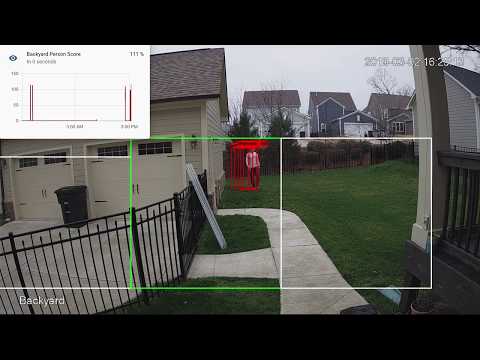](http://www.youtube.com/watch?v=nqHbCtyo4dY "Frigate")
|
||||
|
||||
## Documentation
|
||||
- [Camera Specific Docs](docs/CAMERAS.md)
|
||||
- [Hardware Acceleration](docs/HWACCEL.md)
|
||||
|
||||
View the documentation at https://blakeblackshear.github.io/frigate
|
||||
## Getting Started
|
||||
Run the container with
|
||||
```bash
|
||||
docker run --rm \
|
||||
--name frigate \
|
||||
--privileged \
|
||||
--shm-size=100m \ # only needed with large numbers of high res cameras
|
||||
-v /dev/bus/usb:/dev/bus/usb \
|
||||
-v <path_to_config_dir>:/config:ro \
|
||||
-v /etc/localtime:/etc/localtime:ro \
|
||||
-p 5000:5000 \
|
||||
-e FRIGATE_RTSP_PASSWORD='password' \
|
||||
blakeblackshear/frigate:stable
|
||||
```
|
||||
|
||||
## Donations
|
||||
Example docker-compose:
|
||||
```yaml
|
||||
frigate:
|
||||
container_name: frigate
|
||||
restart: unless-stopped
|
||||
privileged: true
|
||||
shm_size: '100m' # only needed with large numbers of high res cameras
|
||||
image: blakeblackshear/frigate:stable
|
||||
volumes:
|
||||
- /dev/bus/usb:/dev/bus/usb
|
||||
- /etc/localtime:/etc/localtime:ro
|
||||
- <path_to_config>:/config
|
||||
- <path_to_directory_for_clips>:/clips
|
||||
ports:
|
||||
- "5000:5000"
|
||||
environment:
|
||||
FRIGATE_RTSP_PASSWORD: "password"
|
||||
healthcheck:
|
||||
test: ["CMD", "wget" , "-q", "-O-", "http://localhost:5000"]
|
||||
interval: 30s
|
||||
timeout: 10s
|
||||
retries: 5
|
||||
start_period: 3m
|
||||
```
|
||||
|
||||
If you would like to make a donation to support development, please use [Github Sponsors](https://github.com/sponsors/blakeblackshear).
|
||||
A `config.yml` file must exist in the `config` directory. See example [here](config/config.example.yml) and camera specific info can be found [here](docs/CAMERAS.md).
|
||||
|
||||
## Screenshots
|
||||
### Calculating shm-size
|
||||
The default shm-size of 64m should be fine for most setups. If you start seeing segfault errors, it could be because you have too many high resolution cameras and you need to specify a higher shm size.
|
||||
|
||||
Integration into Home Assistant
|
||||
You can calculate the necessary shm-size for each camera with the following formula:
|
||||
```
|
||||
(width * height * 3 + 270480)/1048576 = <shm size in mb>
|
||||
```
|
||||
|
||||
<div>
|
||||
<a href="docs/static/img/media_browser.png"><img src="docs/static/img/media_browser.png" height=400></a>
|
||||
<a href="docs/static/img/notification.png"><img src="docs/static/img/notification.png" height=400></a>
|
||||
</div>
|
||||
## Recommended Hardware
|
||||
|Name|Inference Speed|Notes|
|
||||
|----|---------------|-----|
|
||||
|Atomic Pi|16ms|Best option for a dedicated low power board with a small number of cameras.|
|
||||
|Intel NUC NUC7i3BNK|8-10ms|Best possible performance. Can handle 7+ cameras at 5fps depending on typical amounts of motion.|
|
||||
|BMAX B2 Plus|10-12ms|Good balance of performance and cost. Also capable of running many other services at the same time as frigate.|
|
||||
|Minisforum GK41|9-10ms|Great alternative to a NUC. Easily handiles 4 1080p cameras.|
|
||||
|Raspberry Pi 3B (32bit)|60ms|Can handle a small number of cameras, but the detection speeds are slow|
|
||||
|Raspberry Pi 4 (32bit)|15-20ms|Can handle a small number of cameras. The 2GB version runs fine.|
|
||||
|Raspberry Pi 4 (64bit)|10-15ms|Can handle a small number of cameras. The 2GB version runs fine.|
|
||||
|
||||
Also comes with a builtin UI:
|
||||
Users have reported varying success in getting frigate to run in a VM. In some cases, the virtualization layer introduces a significant delay in communication with the Coral. If running virtualized in Proxmox, pass the USB card/interface to the virtual machine not the USB ID for faster inference speed.
|
||||
|
||||
<div>
|
||||
<a href="docs/static/img/home-ui.png"><img src="docs/static/img/home-ui.png" height=400></a>
|
||||
<a href="docs/static/img/camera-ui.png"><img src="docs/static/img/camera-ui.png" height=400></a>
|
||||
</div>
|
||||
## Integration with HomeAssistant
|
||||
|
||||
Setup a camera, binary_sensor, sensor and optionally automation as shown for each camera you define in frigate. Replace <camera_name> with the camera name as defined in the frigate `config.yml` (The `frigate_coral_fps` and `frigate_coral_inference` sensors only need to be defined once)
|
||||
|
||||
```
|
||||
camera:
|
||||
- name: <camera_name> Last Person
|
||||
platform: mqtt
|
||||
topic: frigate/<camera_name>/person/snapshot
|
||||
- name: <camera_name> Last Car
|
||||
platform: mqtt
|
||||
topic: frigate/<camera_name>/car/snapshot
|
||||
|
||||
binary_sensor:
|
||||
- name: <camera_name> Person
|
||||
platform: mqtt
|
||||
state_topic: "frigate/<camera_name>/person"
|
||||
device_class: motion
|
||||
availability_topic: "frigate/available"
|
||||
|
||||
sensor:
|
||||
- platform: rest
|
||||
name: Frigate Debug
|
||||
resource: http://localhost:5000/debug/stats
|
||||
scan_interval: 5
|
||||
json_attributes:
|
||||
- <camera_name>
|
||||
- detection_fps
|
||||
- detectors
|
||||
value_template: 'OK'
|
||||
- platform: template
|
||||
sensors:
|
||||
<camera_name>_fps:
|
||||
value_template: '{{ states.sensor.frigate_debug.attributes["<camera_name>"]["fps"] }}'
|
||||
unit_of_measurement: 'FPS'
|
||||
<camera_name>_skipped_fps:
|
||||
value_template: '{{ states.sensor.frigate_debug.attributes["<camera_name>"]["skipped_fps"] }}'
|
||||
unit_of_measurement: 'FPS'
|
||||
<camera_name>_detection_fps:
|
||||
value_template: '{{ states.sensor.frigate_debug.attributes["<camera_name>"]["detection_fps"] }}'
|
||||
unit_of_measurement: 'FPS'
|
||||
frigate_detection_fps:
|
||||
value_template: '{{ states.sensor.frigate_debug.attributes["detection_fps"] }}'
|
||||
unit_of_measurement: 'FPS'
|
||||
frigate_coral_inference:
|
||||
value_template: '{{ states.sensor.frigate_debug.attributes["detectors"]["coral"]["inference_speed"] }}'
|
||||
unit_of_measurement: 'ms'
|
||||
|
||||
automation:
|
||||
- alias: Alert me if a person is detected while armed away
|
||||
trigger:
|
||||
platform: state
|
||||
entity_id: binary_sensor.camera_person
|
||||
from: 'off'
|
||||
to: 'on'
|
||||
condition:
|
||||
- condition: state
|
||||
entity_id: alarm_control_panel.home_alarm
|
||||
state: armed_away
|
||||
action:
|
||||
- service: notify.user_telegram
|
||||
data:
|
||||
message: "A person was detected."
|
||||
data:
|
||||
photo:
|
||||
- url: http://<ip>:5000/<camera_name>/person/best.jpg
|
||||
caption: A person was detected.
|
||||
```
|
||||
## HTTP Endpoints
|
||||
A web server is available on port 5000 with the following endpoints.
|
||||
|
||||
### `/<camera_name>`
|
||||
An mjpeg stream for debugging. Keep in mind the mjpeg endpoint is for debugging only and will put additional load on the system when in use.
|
||||
|
||||
You can access a higher resolution mjpeg stream by appending `h=height-in-pixels` to the endpoint. For example `http://localhost:5000/back?h=1080`. You can also increase the FPS by appending `fps=frame-rate` to the URL such as `http://localhost:5000/back?fps=10` or both with `?fps=10&h=1000`
|
||||
|
||||
### `/<camera_name>/<object_name>/best.jpg[?h=300&crop=1]`
|
||||
The best snapshot for any object type. It is a full resolution image by default.
|
||||
|
||||
Example parameters:
|
||||
- `h=300`: resizes the image to 300 pixes tall
|
||||
- `crop=1`: crops the image to the region of the detection rather than returning the entire image
|
||||
|
||||
### `/<camera_name>/latest.jpg[?h=300]`
|
||||
The most recent frame that frigate has finished processing. It is a full resolution image by default.
|
||||
|
||||
Example parameters:
|
||||
- `h=300`: resizes the image to 300 pixes tall
|
||||
|
||||
### `/debug/stats`
|
||||
Contains some granular debug info that can be used for sensors in HomeAssistant. See details below.
|
||||
|
||||
## MQTT Messages
|
||||
These are the MQTT messages generated by Frigate. The default topic_prefix is `frigate`, but can be changed in the config file.
|
||||
|
||||
### frigate/available
|
||||
Designed to be used as an availability topic with HomeAssistant. Possible message are:
|
||||
"online": published when frigate is running (on startup)
|
||||
"offline": published right before frigate stops
|
||||
|
||||
### frigate/<camera_name>/<object_name>
|
||||
Publishes `ON` or `OFF` and is designed to be used a as a binary sensor in HomeAssistant for whether or not that object type is detected.
|
||||
|
||||
### frigate/<camera_name>/<object_name>/snapshot
|
||||
Publishes a jpeg encoded frame of the detected object type. When the object is no longer detected, the highest confidence image is published or the original image
|
||||
is published again.
|
||||
|
||||
The height and crop of snapshots can be configured as shown in the example config.
|
||||
|
||||
### frigate/<camera_name>/events/start
|
||||
Message published at the start of any tracked object. JSON looks as follows:
|
||||
```json
|
||||
{
|
||||
"label": "person",
|
||||
"score": 0.87890625,
|
||||
"box": [
|
||||
95,
|
||||
155,
|
||||
581,
|
||||
1182
|
||||
],
|
||||
"area": 499122,
|
||||
"region": [
|
||||
0,
|
||||
132,
|
||||
1080,
|
||||
1212
|
||||
],
|
||||
"frame_time": 1600208805.60284,
|
||||
"centroid": [
|
||||
338,
|
||||
668
|
||||
],
|
||||
"id": "1600208805.60284-k1l43p",
|
||||
"start_time": 1600208805.60284,
|
||||
"top_score": 0.87890625,
|
||||
"zones": [],
|
||||
"score_history": [
|
||||
0.87890625
|
||||
],
|
||||
"computed_score": 0.0,
|
||||
"false_positive": true
|
||||
}
|
||||
```
|
||||
|
||||
### frigate/<camera_name>/events/end
|
||||
Same as `frigate/<camera_name>/events/start`, but with an `end_time` property as well.
|
||||
|
||||
### frigate/<zone_name>/<object_name>
|
||||
Publishes `ON` or `OFF` and is designed to be used a as a binary sensor in HomeAssistant for whether or not that object type is detected in the zone.
|
||||
|
||||
## Understanding min_score and threshold filters
|
||||
`min_score` defines the minimum score for Frigate to begin tracking a detected object. Any single detection below `min_score` will be ignored as a false positive. `threshold` is based on the median of the history of scores for a tracked object. Consider the following frames when `min_score` is set to 0.6 and threshold is set to 0.85:
|
||||
|
||||
| Frame | Current Score | Score History | Computed Score | Detected Object |
|
||||
| --- | --- | --- | --- | --- |
|
||||
| 1 | 0.7 | 0.0, 0, 0.7 | 0.0 | No
|
||||
| 2 | 0.55 | 0.0, 0.7, 0.0 | 0.0 | No
|
||||
| 3 | 0.85 | 0.7, 0.0, 0.85 | 0.7 | No
|
||||
| 4 | 0.90 | 0.7, 0.85, 0.95, 0.90 | 0.875 | Yes
|
||||
| 5 | 0.88 | 0.7, 0.85, 0.95, 0.90, 0.88 | 0.88 | Yes
|
||||
| 6 | 0.95 | 0.7, 0.85, 0.95, 0.90, 0.88, 0.95 | 0.89 | Yes
|
||||
|
||||
In frame 2, the score is below the `min_score` value, so frigate ignores it and it becomes a 0.0. The computed score is the median of the score history (padding to at least 3 values), and only when that computed score crosses the `threshold` is the object marked as a true positive. That happens in frame 4 in the example.
|
||||
|
||||
## Using a custom model or labels
|
||||
Models for both CPU and EdgeTPU (Coral) are bundled in the image. You can use your own models with volume mounts:
|
||||
- CPU Model: `/cpu_model.tflite`
|
||||
- EdgeTPU Model: `/edgetpu_model.tflite`
|
||||
- Labels: `/labelmap.txt`
|
||||
|
||||
### Customizing the Labelmap
|
||||
The labelmap can be customized to your needs. A common reason to do this is to combine multiple object types that are easily confused when you don't need to be as granular such as car/truck. You must retain the same number of labels, but you can change the names. To change:
|
||||
|
||||
- Download the [COCO labelmap](https://dl.google.com/coral/canned_models/coco_labels.txt)
|
||||
- Modify the label names as desired. For example, change `7 truck` to `7 car`
|
||||
- Mount the new file at `/labelmap.txt` in the container with an additional volume
|
||||
```
|
||||
-v ./config/labelmap.txt:/labelmap.txt
|
||||
```
|
||||
|
||||
## Recording Clips
|
||||
**Note**: Previous versions of frigate included `-vsync drop` in input parameters. This is not compatible with FFmpeg's segment feature and must be removed from your input parameters if you have overrides set.
|
||||
|
||||
Frigate can save video clips without any CPU overhead for encoding by simply copying the stream directly with FFmpeg. It leverages FFmpeg's segment functionality to maintain a cache of 90 seconds of video for each camera. The cache files are written to disk at /cache and do not introduce memory overhead. When an object is being tracked, it will extend the cache to ensure it can assemble a clip when the event ends. Once the event ends, it again uses FFmpeg to assemble a clip by combining the video clips without any encoding by the CPU. Assembled clips are are saved to the /clips directory along with a json file containing the current information about the tracked object.
|
||||
|
||||
### Global Configuration Options
|
||||
- `max_seconds`: This limits the size of the cache when an object is being tracked. If an object is stationary and being tracked for a long time, the cache files will expire and this value will be the maximum clip length for the *end* of the event. For example, if this is set to 300 seconds and an object is being tracked for 600 seconds, the clip will end up being the last 300 seconds. Defaults to 300 seconds.
|
||||
|
||||
### Per-camera Configuration Options
|
||||
- `pre_capture`: Defines how much time should be included in the clip prior to the beginning of the event. Defaults to 30 seconds.
|
||||
- `objects`: List of object types to save clips for. Object types here must be listed for tracking at the camera or global configuration. Defaults to all tracked objects.
|
||||
|
||||
## Detectors Configuration
|
||||
Frigate attempts to detect your Coral device automatically. If you have multiple Coral devices or a version that is not detected automatically, you can specify using the `detectors` config option as shown in the example config.
|
||||
|
||||
## Masks and limiting detection to a certain area
|
||||
The mask works by looking at the bottom center of any bounding box (first image, red dot below) and comparing that to your mask. If that red dot falls on an area of your mask that is black, the detection (and motion) will be ignored. The mask in the second image would limit detection on this camera to only objects that are in the front yard and not the street.
|
||||
|
||||
<a href="docs/example-mask-check-point.png"><img src="docs/example-mask-check-point.png" height="300"></a>
|
||||
<a href="docs/example-mask.bmp"><img src="docs/example-mask.bmp" height="300"></a>
|
||||
<a href="docs/example-mask-overlay.png"><img src="docs/example-mask-overlay.png" height="300"></a>
|
||||
|
||||
The following types of masks are supported:
|
||||
- `base64`: Base64 encoded image file
|
||||
- `poly`: List of x,y points like zone configuration
|
||||
- `image`: Path to an image file in the config directory
|
||||
|
||||
`base64` and `image` masks must be the same aspect ratio as your camera.
|
||||
|
||||
## Zones
|
||||
Zones allow you to define a specific area of the frame and apply additional filters for object types so you can determine whether or not an object is within a particular area. Zones cannot have the same name as a camera. If desired, a single zone can include multiple cameras if you have multiple cameras covering the same area. See the sample config for details on how to configure.
|
||||
|
||||
During testing, `draw_zones` can be set in the config to tell frigate to draw the zone on the frames so you can adjust as needed. The zone line will increase in thickness when any object enters the zone.
|
||||
|
||||

|
||||
|
||||
## Debug Info
|
||||
```jsonc
|
||||
{
|
||||
/* Per Camera Stats */
|
||||
"back": {
|
||||
/***************
|
||||
* Frames per second being consumed from your camera. If this is higher
|
||||
* than it is supposed to be, you should set -r FPS in your input_args.
|
||||
* camera_fps = process_fps + skipped_fps
|
||||
***************/
|
||||
"camera_fps": 5.0,
|
||||
/***************
|
||||
* Number of times detection is run per second. This can be higher than
|
||||
* your camera FPS because frigate often looks at the same frame multiple times
|
||||
* or in multiple locations
|
||||
***************/
|
||||
"detection_fps": 1.5,
|
||||
/***************
|
||||
* PID for the ffmpeg process that consumes this camera
|
||||
***************/
|
||||
"ffmpeg_pid": 27,
|
||||
/***************
|
||||
* Timestamps of frames in various parts of processing
|
||||
***************/
|
||||
"frame_info": {
|
||||
/***************
|
||||
* Timestamp of the frame frigate is running object detection on.
|
||||
***************/
|
||||
"detect": 1596994991.91426,
|
||||
/***************
|
||||
* Timestamp of the frame frigate is processing detected objects on.
|
||||
* This is where MQTT messages are sent, zones are checked, etc.
|
||||
***************/
|
||||
"process": 1596994991.91426,
|
||||
/***************
|
||||
* Timestamp of the frame frigate last read from ffmpeg.
|
||||
***************/
|
||||
"read": 1596994991.91426
|
||||
},
|
||||
/***************
|
||||
* PID for the process that runs detection for this camera
|
||||
***************/
|
||||
"pid": 34,
|
||||
/***************
|
||||
* Frames per second being processed by frigate.
|
||||
***************/
|
||||
"process_fps": 5.1,
|
||||
/***************
|
||||
* Timestamp when the detection process started looking for a frame. If this value stays constant
|
||||
* for a long time, that means there aren't any frames in the frame queue.
|
||||
***************/
|
||||
"read_start": 1596994991.943814,
|
||||
/***************
|
||||
* Frames per second skip for processing by frigate.
|
||||
***************/
|
||||
"skipped_fps": 0.0
|
||||
},
|
||||
/***************
|
||||
* Sum of detection_fps across all cameras and detectors.
|
||||
* This should be the sum of all detection_fps values from cameras.
|
||||
***************/
|
||||
"detection_fps": 5.0,
|
||||
/* Detectors Stats */
|
||||
"detectors": {
|
||||
"coral": {
|
||||
/***************
|
||||
* Timestamp when object detection started. If this value stays non-zero and constant
|
||||
* for a long time, that means the detection process is stuck.
|
||||
***************/
|
||||
"detection_start": 0.0,
|
||||
/***************
|
||||
* Time spent running object detection in milliseconds.
|
||||
***************/
|
||||
"inference_speed": 10.48,
|
||||
/***************
|
||||
* PID for the shared process that runs object detection on the Coral.
|
||||
***************/
|
||||
"pid": 25321
|
||||
}
|
||||
}
|
||||
}
|
||||
```
|
||||
|
||||
## Tips
|
||||
- Lower the framerate of the video feed on the camera to reduce the CPU usage for capturing the feed. Not as effective, but you can also modify the `take_frame` [configuration](config/config.example.yml) for each camera to only analyze every other frame, or every third frame, etc.
|
||||
- Hard code the resolution of each camera in your config if you are having difficulty starting frigate or if the initial ffprobe for camerea resolution fails or returns incorrect info. Example:
|
||||
```
|
||||
cameras:
|
||||
back:
|
||||
ffmpeg:
|
||||
input: rtsp://<camera>
|
||||
height: 1080
|
||||
width: 1920
|
||||
```
|
||||
- Additional logging is available in the docker container - You can view the logs by running `docker logs -t frigate`
|
||||
- Object configuration - Tracked objects types, sizes and thresholds can be defined globally and/or on a per camera basis. The global and camera object configuration is *merged*. For example, if you defined tracking person, car, and truck globally but modified your backyard camera to only track person, the global config would merge making the effective list for the backyard camera still contain person, car and truck. If you want precise object tracking per camera, best practice to put a minimal list of objects at the global level and expand objects on a per camera basis. Object threshold and area configuration will be used first from the camera object config (if defined) and then from the global config. See the [example config](config/config.example.yml) for more information.
|
||||
|
||||
## Troubleshooting
|
||||
|
||||
### "ffmpeg didnt return a frame. something is wrong"
|
||||
Turn on logging for the camera by overriding the global_args and setting the log level to `info`:
|
||||
```yaml
|
||||
ffmpeg:
|
||||
global_args:
|
||||
- -hide_banner
|
||||
- -loglevel
|
||||
- info
|
||||
```
|
||||
|
||||

|
||||
|
||||
BIN
config/back-mask.bmp
Normal file

|
After Width: | Height: | Size: 1.8 MiB |
232
config/config.example.yml
Normal file
@@ -0,0 +1,232 @@
|
||||
web_port: 5000
|
||||
|
||||
################
|
||||
## List of detectors.
|
||||
## Currently supported types: cpu, edgetpu
|
||||
## EdgeTPU requires device as defined here: https://coral.ai/docs/edgetpu/multiple-edgetpu/#using-the-tensorflow-lite-python-api
|
||||
################
|
||||
detectors:
|
||||
coral:
|
||||
type: edgetpu
|
||||
device: usb
|
||||
|
||||
mqtt:
|
||||
host: mqtt.server.com
|
||||
topic_prefix: frigate
|
||||
# client_id: frigate # Optional -- set to override default client id of 'frigate' if running multiple instances
|
||||
# user: username # Optional
|
||||
#################
|
||||
## Environment variables that begin with 'FRIGATE_' may be referenced in {}.
|
||||
## password: '{FRIGATE_MQTT_PASSWORD}'
|
||||
#################
|
||||
# password: password # Optional
|
||||
|
||||
################
|
||||
# Global configuration for saving clips
|
||||
################
|
||||
save_clips:
|
||||
###########
|
||||
# Maximum length of time to retain video during long events.
|
||||
# If an object is being tracked for longer than this amount of time, the cache
|
||||
# will begin to expire and the resulting clip will be the last x seconds of the event.
|
||||
###########
|
||||
max_seconds: 300
|
||||
|
||||
#################
|
||||
# Default ffmpeg args. Optional and can be overwritten per camera.
|
||||
# Should work with most RTSP cameras that send h264 video
|
||||
# Built from the properties below with:
|
||||
# "ffmpeg" + global_args + input_args + "-i" + input + output_args
|
||||
#################
|
||||
# ffmpeg:
|
||||
# global_args:
|
||||
# - -hide_banner
|
||||
# - -loglevel
|
||||
# - panic
|
||||
# hwaccel_args: []
|
||||
# input_args:
|
||||
# - -avoid_negative_ts
|
||||
# - make_zero
|
||||
# - -fflags
|
||||
# - nobuffer
|
||||
# - -flags
|
||||
# - low_delay
|
||||
# - -strict
|
||||
# - experimental
|
||||
# - -fflags
|
||||
# - +genpts+discardcorrupt
|
||||
# - -vsync
|
||||
# - drop
|
||||
# - -rtsp_transport
|
||||
# - tcp
|
||||
# - -stimeout
|
||||
# - '5000000'
|
||||
# - -use_wallclock_as_timestamps
|
||||
# - '1'
|
||||
# output_args:
|
||||
# - -f
|
||||
# - rawvideo
|
||||
# - -pix_fmt
|
||||
# - yuv420p
|
||||
|
||||
####################
|
||||
# Global object configuration. Applies to all cameras
|
||||
# unless overridden at the camera levels.
|
||||
# Keys must be valid labels. By default, the model uses coco (https://dl.google.com/coral/canned_models/coco_labels.txt).
|
||||
# All labels from the model are reported over MQTT. These values are used to filter out false positives.
|
||||
# min_area (optional): minimum width*height of the bounding box for the detected object
|
||||
# max_area (optional): maximum width*height of the bounding box for the detected object
|
||||
# min_score (optional): minimum score for the object to initiate tracking
|
||||
# threshold (optional): The minimum decimal percentage for tracked object's computed score to considered a true positive
|
||||
####################
|
||||
objects:
|
||||
track:
|
||||
- person
|
||||
filters:
|
||||
person:
|
||||
min_area: 5000
|
||||
max_area: 100000
|
||||
min_score: 0.5
|
||||
threshold: 0.85
|
||||
|
||||
cameras:
|
||||
back:
|
||||
ffmpeg:
|
||||
################
|
||||
# Source passed to ffmpeg after the -i parameter. Supports anything compatible with OpenCV and FFmpeg.
|
||||
# Environment variables that begin with 'FRIGATE_' may be referenced in {}
|
||||
################
|
||||
input: rtsp://viewer:{FRIGATE_RTSP_PASSWORD}@10.0.10.10:554/cam/realmonitor?channel=1&subtype=2
|
||||
#################
|
||||
# These values will override default values for just this camera
|
||||
#################
|
||||
# global_args: []
|
||||
# hwaccel_args: []
|
||||
# input_args: []
|
||||
# output_args: []
|
||||
|
||||
################
|
||||
## Optionally specify the resolution of the video feed. Frigate will try to auto detect if not specified
|
||||
################
|
||||
# height: 1280
|
||||
# width: 720
|
||||
|
||||
################
|
||||
## Specify the framerate of your camera
|
||||
##
|
||||
## NOTE: This should only be set in the event ffmpeg is unable to determine your camera's framerate
|
||||
## on its own and the reported framerate for your camera in frigate is well over what is expected.
|
||||
################
|
||||
# fps: 5
|
||||
|
||||
################
|
||||
## Optional mask. Must be the same aspect ratio as your video feed. Value is any of the following:
|
||||
## - name of a file in the config directory
|
||||
## - base64 encoded image prefixed with 'base64,' eg. 'base64,asfasdfasdf....'
|
||||
## - polygon of x,y coordinates prefixed with 'poly,' eg. 'poly,0,900,1080,900,1080,1920,0,1920'
|
||||
##
|
||||
## The mask works by looking at the bottom center of the bounding box for the detected
|
||||
## person in the image. If that pixel in the mask is a black pixel, it ignores it as a
|
||||
## false positive. In my mask, the grass and driveway visible from my backdoor camera
|
||||
## are white. The garage doors, sky, and trees (anywhere it would be impossible for a
|
||||
## person to stand) are black.
|
||||
##
|
||||
## Masked areas are also ignored for motion detection.
|
||||
################
|
||||
# mask: back-mask.bmp
|
||||
|
||||
################
|
||||
# Allows you to limit the framerate within frigate for cameras that do not support
|
||||
# custom framerates. A value of 1 tells frigate to look at every frame, 2 every 2nd frame,
|
||||
# 3 every 3rd frame, etc.
|
||||
################
|
||||
take_frame: 1
|
||||
|
||||
################
|
||||
# The number of seconds to retain the highest scoring image for the best.jpg endpoint before allowing it
|
||||
# to be replaced by a newer image. Defaults to 60 seconds.
|
||||
################
|
||||
best_image_timeout: 60
|
||||
|
||||
################
|
||||
# MQTT settings
|
||||
################
|
||||
# mqtt:
|
||||
# crop_to_region: True
|
||||
# snapshot_height: 300
|
||||
|
||||
################
|
||||
# Zones
|
||||
################
|
||||
zones:
|
||||
#################
|
||||
# Name of the zone
|
||||
################
|
||||
front_steps:
|
||||
####################
|
||||
# A list of x,y coordinates to define the polygon of the zone. The top
|
||||
# left corner is 0,0. Can also be a comma separated string of all x,y coordinates combined.
|
||||
# The same zone name can exist across multiple cameras if they have overlapping FOVs.
|
||||
# An object is determined to be in the zone based on whether or not the bottom center
|
||||
# of it's bounding box is within the polygon. The polygon must have at least 3 points.
|
||||
# Coordinates can be generated at https://www.image-map.net/
|
||||
####################
|
||||
coordinates:
|
||||
- 545,1077
|
||||
- 747,939
|
||||
- 788,805
|
||||
################
|
||||
# Zone level object filters. These are applied in addition to the global and camera filters
|
||||
# and should be more restrictive than the global and camera filters. The global and camera
|
||||
# filters are applied upstream.
|
||||
################
|
||||
filters:
|
||||
person:
|
||||
min_area: 5000
|
||||
max_area: 100000
|
||||
threshold: 0.8
|
||||
|
||||
################
|
||||
# This will save a clip for each tracked object by frigate along with a json file that contains
|
||||
# data related to the tracked object. This works by telling ffmpeg to write video segments to /cache
|
||||
# from the video stream without re-encoding. Clips are then created by using ffmpeg to merge segments
|
||||
# without re-encoding. The segments saved are unaltered from what frigate receives to avoid re-encoding.
|
||||
# They do not contain bounding boxes. These are optimized to capture "false_positive" examples for improving frigate.
|
||||
#
|
||||
# NOTE: This feature does not work if you have "-vsync drop" configured in your input params.
|
||||
# This will only work for camera feeds that can be copied into the mp4 container format without
|
||||
# encoding such as h264. It may not work for some types of streams.
|
||||
################
|
||||
save_clips:
|
||||
enabled: False
|
||||
#########
|
||||
# Number of seconds before the event to include in the clips
|
||||
#########
|
||||
pre_capture: 30
|
||||
#########
|
||||
# Objects to save clips for. Defaults to all tracked object types.
|
||||
#########
|
||||
# objects:
|
||||
# - person
|
||||
|
||||
################
|
||||
# Configuration for the snapshots in the debug view and mqtt
|
||||
################
|
||||
snapshots:
|
||||
show_timestamp: True
|
||||
draw_zones: False
|
||||
draw_bounding_boxes: True
|
||||
|
||||
################
|
||||
# Camera level object config. If defined, this is used instead of the global config.
|
||||
################
|
||||
objects:
|
||||
track:
|
||||
- person
|
||||
- car
|
||||
filters:
|
||||
person:
|
||||
min_area: 5000
|
||||
max_area: 100000
|
||||
min_score: 0.5
|
||||
threshold: 0.85
|
||||
465
detect_objects.py
Normal file
@@ -0,0 +1,465 @@
|
||||
import faulthandler; faulthandler.enable()
|
||||
import os
|
||||
import signal
|
||||
import sys
|
||||
import traceback
|
||||
import signal
|
||||
import cv2
|
||||
import time
|
||||
import datetime
|
||||
import queue
|
||||
import yaml
|
||||
import threading
|
||||
import multiprocessing as mp
|
||||
import subprocess as sp
|
||||
import numpy as np
|
||||
import logging
|
||||
from flask import Flask, Response, make_response, jsonify, request
|
||||
import paho.mqtt.client as mqtt
|
||||
|
||||
from frigate.video import track_camera, get_ffmpeg_input, get_frame_shape, CameraCapture, start_or_restart_ffmpeg
|
||||
from frigate.object_processing import TrackedObjectProcessor
|
||||
from frigate.events import EventProcessor
|
||||
from frigate.util import EventsPerSecond
|
||||
from frigate.edgetpu import EdgeTPUProcess
|
||||
|
||||
FRIGATE_VARS = {k: v for k, v in os.environ.items() if k.startswith('FRIGATE_')}
|
||||
|
||||
with open('/config/config.yml') as f:
|
||||
CONFIG = yaml.safe_load(f)
|
||||
|
||||
MQTT_HOST = CONFIG['mqtt']['host']
|
||||
MQTT_PORT = CONFIG.get('mqtt', {}).get('port', 1883)
|
||||
MQTT_TOPIC_PREFIX = CONFIG.get('mqtt', {}).get('topic_prefix', 'frigate')
|
||||
MQTT_USER = CONFIG.get('mqtt', {}).get('user')
|
||||
MQTT_PASS = CONFIG.get('mqtt', {}).get('password')
|
||||
if not MQTT_PASS is None:
|
||||
MQTT_PASS = MQTT_PASS.format(**FRIGATE_VARS)
|
||||
MQTT_CLIENT_ID = CONFIG.get('mqtt', {}).get('client_id', 'frigate')
|
||||
|
||||
# Set the default FFmpeg config
|
||||
FFMPEG_CONFIG = CONFIG.get('ffmpeg', {})
|
||||
FFMPEG_DEFAULT_CONFIG = {
|
||||
'global_args': FFMPEG_CONFIG.get('global_args',
|
||||
['-hide_banner','-loglevel','panic']),
|
||||
'hwaccel_args': FFMPEG_CONFIG.get('hwaccel_args',
|
||||
[]),
|
||||
'input_args': FFMPEG_CONFIG.get('input_args',
|
||||
['-avoid_negative_ts', 'make_zero',
|
||||
'-fflags', 'nobuffer',
|
||||
'-flags', 'low_delay',
|
||||
'-strict', 'experimental',
|
||||
'-fflags', '+genpts+discardcorrupt',
|
||||
'-rtsp_transport', 'tcp',
|
||||
'-stimeout', '5000000',
|
||||
'-use_wallclock_as_timestamps', '1']),
|
||||
'output_args': FFMPEG_CONFIG.get('output_args',
|
||||
['-f', 'rawvideo',
|
||||
'-pix_fmt', 'yuv420p'])
|
||||
}
|
||||
|
||||
GLOBAL_OBJECT_CONFIG = CONFIG.get('objects', {})
|
||||
|
||||
WEB_PORT = CONFIG.get('web_port', 5000)
|
||||
DETECTORS = CONFIG.get('detectors', {'coral': {'type': 'edgetpu', 'device': 'usb'}})
|
||||
|
||||
class CameraWatchdog(threading.Thread):
|
||||
def __init__(self, camera_processes, config, detectors, detection_queue, tracked_objects_queue, stop_event):
|
||||
threading.Thread.__init__(self)
|
||||
self.camera_processes = camera_processes
|
||||
self.config = config
|
||||
self.detectors = detectors
|
||||
self.detection_queue = detection_queue
|
||||
self.tracked_objects_queue = tracked_objects_queue
|
||||
self.stop_event = stop_event
|
||||
|
||||
def run(self):
|
||||
time.sleep(10)
|
||||
while True:
|
||||
# wait a bit before checking
|
||||
time.sleep(10)
|
||||
|
||||
if self.stop_event.is_set():
|
||||
print(f"Exiting watchdog...")
|
||||
break
|
||||
|
||||
now = datetime.datetime.now().timestamp()
|
||||
|
||||
# check the detection processes
|
||||
for detector in self.detectors.values():
|
||||
detection_start = detector.detection_start.value
|
||||
if (detection_start > 0.0 and
|
||||
now - detection_start > 10):
|
||||
print("Detection appears to be stuck. Restarting detection process")
|
||||
detector.start_or_restart()
|
||||
elif not detector.detect_process.is_alive():
|
||||
print("Detection appears to have stopped. Restarting detection process")
|
||||
detector.start_or_restart()
|
||||
|
||||
# check the camera processes
|
||||
for name, camera_process in self.camera_processes.items():
|
||||
process = camera_process['process']
|
||||
if not process.is_alive():
|
||||
print(f"Track process for {name} is not alive. Starting again...")
|
||||
camera_process['process_fps'].value = 0.0
|
||||
camera_process['detection_fps'].value = 0.0
|
||||
camera_process['read_start'].value = 0.0
|
||||
process = mp.Process(target=track_camera, args=(name, self.config[name], camera_process['frame_queue'],
|
||||
camera_process['frame_shape'], self.detection_queue, self.tracked_objects_queue,
|
||||
camera_process['process_fps'], camera_process['detection_fps'],
|
||||
camera_process['read_start'], self.stop_event))
|
||||
process.daemon = True
|
||||
camera_process['process'] = process
|
||||
process.start()
|
||||
print(f"Track process started for {name}: {process.pid}")
|
||||
|
||||
if not camera_process['capture_thread'].is_alive():
|
||||
frame_shape = camera_process['frame_shape']
|
||||
frame_size = frame_shape[0] * frame_shape[1] * frame_shape[2]
|
||||
ffmpeg_process = start_or_restart_ffmpeg(camera_process['ffmpeg_cmd'], frame_size)
|
||||
camera_capture = CameraCapture(name, ffmpeg_process, frame_shape, camera_process['frame_queue'],
|
||||
camera_process['take_frame'], camera_process['camera_fps'], self.stop_event)
|
||||
camera_capture.start()
|
||||
camera_process['ffmpeg_process'] = ffmpeg_process
|
||||
camera_process['capture_thread'] = camera_capture
|
||||
elif now - camera_process['capture_thread'].current_frame.value > 5:
|
||||
print(f"No frames received from {name} in 5 seconds. Exiting ffmpeg...")
|
||||
ffmpeg_process = camera_process['ffmpeg_process']
|
||||
ffmpeg_process.terminate()
|
||||
try:
|
||||
print("Waiting for ffmpeg to exit gracefully...")
|
||||
ffmpeg_process.communicate(timeout=30)
|
||||
except sp.TimeoutExpired:
|
||||
print("FFmpeg didnt exit. Force killing...")
|
||||
ffmpeg_process.kill()
|
||||
ffmpeg_process.communicate()
|
||||
|
||||
def main():
|
||||
stop_event = threading.Event()
|
||||
# connect to mqtt and setup last will
|
||||
def on_connect(client, userdata, flags, rc):
|
||||
print("On connect called")
|
||||
if rc != 0:
|
||||
if rc == 3:
|
||||
print ("MQTT Server unavailable")
|
||||
elif rc == 4:
|
||||
print ("MQTT Bad username or password")
|
||||
elif rc == 5:
|
||||
print ("MQTT Not authorized")
|
||||
else:
|
||||
print ("Unable to connect to MQTT: Connection refused. Error code: " + str(rc))
|
||||
# publish a message to signal that the service is running
|
||||
client.publish(MQTT_TOPIC_PREFIX+'/available', 'online', retain=True)
|
||||
client = mqtt.Client(client_id=MQTT_CLIENT_ID)
|
||||
client.on_connect = on_connect
|
||||
client.will_set(MQTT_TOPIC_PREFIX+'/available', payload='offline', qos=1, retain=True)
|
||||
if not MQTT_USER is None:
|
||||
client.username_pw_set(MQTT_USER, password=MQTT_PASS)
|
||||
client.connect(MQTT_HOST, MQTT_PORT, 60)
|
||||
client.loop_start()
|
||||
|
||||
##
|
||||
# Setup config defaults for cameras
|
||||
##
|
||||
for name, config in CONFIG['cameras'].items():
|
||||
config['snapshots'] = {
|
||||
'show_timestamp': config.get('snapshots', {}).get('show_timestamp', True),
|
||||
'draw_zones': config.get('snapshots', {}).get('draw_zones', False),
|
||||
'draw_bounding_boxes': config.get('snapshots', {}).get('draw_bounding_boxes', True)
|
||||
}
|
||||
config['zones'] = config.get('zones', {})
|
||||
|
||||
# Queue for cameras to push tracked objects to
|
||||
tracked_objects_queue = mp.Queue()
|
||||
|
||||
# Queue for clip processing
|
||||
event_queue = mp.Queue()
|
||||
|
||||
# create the detection pipes and shms
|
||||
out_events = {}
|
||||
camera_shms = []
|
||||
for name in CONFIG['cameras'].keys():
|
||||
out_events[name] = mp.Event()
|
||||
shm_in = mp.shared_memory.SharedMemory(name=name, create=True, size=300*300*3)
|
||||
shm_out = mp.shared_memory.SharedMemory(name=f"out-{name}", create=True, size=20*6*4)
|
||||
camera_shms.append(shm_in)
|
||||
camera_shms.append(shm_out)
|
||||
|
||||
detection_queue = mp.Queue()
|
||||
|
||||
detectors = {}
|
||||
for name, detector in DETECTORS.items():
|
||||
if detector['type'] == 'cpu':
|
||||
detectors[name] = EdgeTPUProcess(detection_queue, out_events=out_events, tf_device='cpu')
|
||||
if detector['type'] == 'edgetpu':
|
||||
detectors[name] = EdgeTPUProcess(detection_queue, out_events=out_events, tf_device=detector['device'])
|
||||
|
||||
# create the camera processes
|
||||
camera_processes = {}
|
||||
for name, config in CONFIG['cameras'].items():
|
||||
# Merge the ffmpeg config with the global config
|
||||
ffmpeg = config.get('ffmpeg', {})
|
||||
ffmpeg_input = get_ffmpeg_input(ffmpeg['input'])
|
||||
ffmpeg_global_args = ffmpeg.get('global_args', FFMPEG_DEFAULT_CONFIG['global_args'])
|
||||
ffmpeg_hwaccel_args = ffmpeg.get('hwaccel_args', FFMPEG_DEFAULT_CONFIG['hwaccel_args'])
|
||||
ffmpeg_input_args = ffmpeg.get('input_args', FFMPEG_DEFAULT_CONFIG['input_args'])
|
||||
ffmpeg_output_args = ffmpeg.get('output_args', FFMPEG_DEFAULT_CONFIG['output_args'])
|
||||
if not config.get('fps') is None:
|
||||
ffmpeg_output_args = ["-r", str(config.get('fps'))] + ffmpeg_output_args
|
||||
if config.get('save_clips', {}).get('enabled', False):
|
||||
ffmpeg_output_args = [
|
||||
"-f",
|
||||
"segment",
|
||||
"-segment_time",
|
||||
"10",
|
||||
"-segment_format",
|
||||
"mp4",
|
||||
"-reset_timestamps",
|
||||
"1",
|
||||
"-strftime",
|
||||
"1",
|
||||
"-c",
|
||||
"copy",
|
||||
"-an",
|
||||
"-map",
|
||||
"0",
|
||||
f"/cache/{name}-%Y%m%d%H%M%S.mp4"
|
||||
] + ffmpeg_output_args
|
||||
ffmpeg_cmd = (['ffmpeg'] +
|
||||
ffmpeg_global_args +
|
||||
ffmpeg_hwaccel_args +
|
||||
ffmpeg_input_args +
|
||||
['-i', ffmpeg_input] +
|
||||
ffmpeg_output_args +
|
||||
['pipe:'])
|
||||
|
||||
if 'width' in config and 'height' in config:
|
||||
frame_shape = (config['height'], config['width'], 3)
|
||||
else:
|
||||
frame_shape = get_frame_shape(ffmpeg_input)
|
||||
|
||||
config['frame_shape'] = frame_shape
|
||||
|
||||
frame_size = frame_shape[0] * frame_shape[1] * frame_shape[2]
|
||||
take_frame = config.get('take_frame', 1)
|
||||
|
||||
detection_frame = mp.Value('d', 0.0)
|
||||
|
||||
ffmpeg_process = start_or_restart_ffmpeg(ffmpeg_cmd, frame_size)
|
||||
frame_queue = mp.Queue(maxsize=2)
|
||||
camera_fps = EventsPerSecond()
|
||||
camera_fps.start()
|
||||
camera_capture = CameraCapture(name, ffmpeg_process, frame_shape, frame_queue, take_frame, camera_fps, stop_event)
|
||||
camera_capture.start()
|
||||
|
||||
camera_processes[name] = {
|
||||
'camera_fps': camera_fps,
|
||||
'take_frame': take_frame,
|
||||
'process_fps': mp.Value('d', 0.0),
|
||||
'detection_fps': mp.Value('d', 0.0),
|
||||
'detection_frame': detection_frame,
|
||||
'read_start': mp.Value('d', 0.0),
|
||||
'ffmpeg_process': ffmpeg_process,
|
||||
'ffmpeg_cmd': ffmpeg_cmd,
|
||||
'frame_queue': frame_queue,
|
||||
'frame_shape': frame_shape,
|
||||
'capture_thread': camera_capture
|
||||
}
|
||||
|
||||
# merge global object config into camera object config
|
||||
camera_objects_config = config.get('objects', {})
|
||||
# get objects to track for camera
|
||||
objects_to_track = camera_objects_config.get('track', GLOBAL_OBJECT_CONFIG.get('track', ['person']))
|
||||
# get object filters
|
||||
object_filters = camera_objects_config.get('filters', GLOBAL_OBJECT_CONFIG.get('filters', {}))
|
||||
config['objects'] = {
|
||||
'track': objects_to_track,
|
||||
'filters': object_filters
|
||||
}
|
||||
|
||||
camera_process = mp.Process(target=track_camera, args=(name, config, frame_queue, frame_shape,
|
||||
detection_queue, out_events[name], tracked_objects_queue, camera_processes[name]['process_fps'],
|
||||
camera_processes[name]['detection_fps'],
|
||||
camera_processes[name]['read_start'], camera_processes[name]['detection_frame'], stop_event))
|
||||
camera_process.daemon = True
|
||||
camera_processes[name]['process'] = camera_process
|
||||
|
||||
# start the camera_processes
|
||||
for name, camera_process in camera_processes.items():
|
||||
camera_process['process'].start()
|
||||
print(f"Camera_process started for {name}: {camera_process['process'].pid}")
|
||||
|
||||
event_processor = EventProcessor(CONFIG, camera_processes, '/cache', '/clips', event_queue, stop_event)
|
||||
event_processor.start()
|
||||
|
||||
object_processor = TrackedObjectProcessor(CONFIG['cameras'], client, MQTT_TOPIC_PREFIX, tracked_objects_queue, event_queue, stop_event)
|
||||
object_processor.start()
|
||||
|
||||
camera_watchdog = CameraWatchdog(camera_processes, CONFIG['cameras'], detectors, detection_queue, tracked_objects_queue, stop_event)
|
||||
camera_watchdog.start()
|
||||
|
||||
def receiveSignal(signalNumber, frame):
|
||||
print('Received:', signalNumber)
|
||||
stop_event.set()
|
||||
event_processor.join()
|
||||
object_processor.join()
|
||||
camera_watchdog.join()
|
||||
for camera_name, camera_process in camera_processes.items():
|
||||
camera_process['capture_thread'].join()
|
||||
# cleanup the frame queue
|
||||
while not camera_process['frame_queue'].empty():
|
||||
frame_time = camera_process['frame_queue'].get()
|
||||
shm = mp.shared_memory.SharedMemory(name=f"{camera_name}{frame_time}")
|
||||
shm.close()
|
||||
shm.unlink()
|
||||
|
||||
for detector in detectors.values():
|
||||
detector.stop()
|
||||
for shm in camera_shms:
|
||||
shm.close()
|
||||
shm.unlink()
|
||||
sys.exit()
|
||||
|
||||
signal.signal(signal.SIGTERM, receiveSignal)
|
||||
signal.signal(signal.SIGINT, receiveSignal)
|
||||
|
||||
# create a flask app that encodes frames a mjpeg on demand
|
||||
app = Flask(__name__)
|
||||
log = logging.getLogger('werkzeug')
|
||||
log.setLevel(logging.ERROR)
|
||||
|
||||
@app.route('/')
|
||||
def ishealthy():
|
||||
# return a healh
|
||||
return "Frigate is running. Alive and healthy!"
|
||||
|
||||
@app.route('/debug/stack')
|
||||
def processor_stack():
|
||||
frame = sys._current_frames().get(object_processor.ident, None)
|
||||
if frame:
|
||||
return "<br>".join(traceback.format_stack(frame)), 200
|
||||
else:
|
||||
return "no frame found", 200
|
||||
|
||||
@app.route('/debug/print_stack')
|
||||
def print_stack():
|
||||
pid = int(request.args.get('pid', 0))
|
||||
if pid == 0:
|
||||
return "missing pid", 200
|
||||
else:
|
||||
os.kill(pid, signal.SIGUSR1)
|
||||
return "check logs", 200
|
||||
|
||||
@app.route('/debug/stats')
|
||||
def stats():
|
||||
stats = {}
|
||||
|
||||
total_detection_fps = 0
|
||||
|
||||
for name, camera_stats in camera_processes.items():
|
||||
total_detection_fps += camera_stats['detection_fps'].value
|
||||
capture_thread = camera_stats['capture_thread']
|
||||
stats[name] = {
|
||||
'camera_fps': round(capture_thread.fps.eps(), 2),
|
||||
'process_fps': round(camera_stats['process_fps'].value, 2),
|
||||
'skipped_fps': round(capture_thread.skipped_fps.eps(), 2),
|
||||
'detection_fps': round(camera_stats['detection_fps'].value, 2),
|
||||
'read_start': camera_stats['read_start'].value,
|
||||
'pid': camera_stats['process'].pid,
|
||||
'ffmpeg_pid': camera_stats['ffmpeg_process'].pid,
|
||||
'frame_info': {
|
||||
'read': capture_thread.current_frame.value,
|
||||
'detect': camera_stats['detection_frame'].value,
|
||||
'process': object_processor.camera_data[name]['current_frame_time']
|
||||
}
|
||||
}
|
||||
|
||||
stats['detectors'] = {}
|
||||
for name, detector in detectors.items():
|
||||
stats['detectors'][name] = {
|
||||
'inference_speed': round(detector.avg_inference_speed.value*1000, 2),
|
||||
'detection_start': detector.detection_start.value,
|
||||
'pid': detector.detect_process.pid
|
||||
}
|
||||
stats['detection_fps'] = round(total_detection_fps, 2)
|
||||
|
||||
return jsonify(stats)
|
||||
|
||||
@app.route('/<camera_name>/<label>/best.jpg')
|
||||
def best(camera_name, label):
|
||||
if camera_name in CONFIG['cameras']:
|
||||
best_object = object_processor.get_best(camera_name, label)
|
||||
best_frame = best_object.get('frame')
|
||||
if best_frame is None:
|
||||
best_frame = np.zeros((720,1280,3), np.uint8)
|
||||
else:
|
||||
best_frame = cv2.cvtColor(best_frame, cv2.COLOR_YUV2BGR_I420)
|
||||
|
||||
crop = bool(request.args.get('crop', 0, type=int))
|
||||
if crop:
|
||||
region = best_object.get('region', [0,0,300,300])
|
||||
best_frame = best_frame[region[1]:region[3], region[0]:region[2]]
|
||||
|
||||
height = int(request.args.get('h', str(best_frame.shape[0])))
|
||||
width = int(height*best_frame.shape[1]/best_frame.shape[0])
|
||||
|
||||
best_frame = cv2.resize(best_frame, dsize=(width, height), interpolation=cv2.INTER_AREA)
|
||||
ret, jpg = cv2.imencode('.jpg', best_frame)
|
||||
response = make_response(jpg.tobytes())
|
||||
response.headers['Content-Type'] = 'image/jpg'
|
||||
return response
|
||||
else:
|
||||
return "Camera named {} not found".format(camera_name), 404
|
||||
|
||||
@app.route('/<camera_name>')
|
||||
def mjpeg_feed(camera_name):
|
||||
fps = int(request.args.get('fps', '3'))
|
||||
height = int(request.args.get('h', '360'))
|
||||
if camera_name in CONFIG['cameras']:
|
||||
# return a multipart response
|
||||
return Response(imagestream(camera_name, fps, height),
|
||||
mimetype='multipart/x-mixed-replace; boundary=frame')
|
||||
else:
|
||||
return "Camera named {} not found".format(camera_name), 404
|
||||
|
||||
@app.route('/<camera_name>/latest.jpg')
|
||||
def latest_frame(camera_name):
|
||||
if camera_name in CONFIG['cameras']:
|
||||
# max out at specified FPS
|
||||
frame = object_processor.get_current_frame(camera_name)
|
||||
if frame is None:
|
||||
frame = np.zeros((720,1280,3), np.uint8)
|
||||
|
||||
height = int(request.args.get('h', str(frame.shape[0])))
|
||||
width = int(height*frame.shape[1]/frame.shape[0])
|
||||
|
||||
frame = cv2.resize(frame, dsize=(width, height), interpolation=cv2.INTER_AREA)
|
||||
|
||||
ret, jpg = cv2.imencode('.jpg', frame)
|
||||
response = make_response(jpg.tobytes())
|
||||
response.headers['Content-Type'] = 'image/jpg'
|
||||
return response
|
||||
else:
|
||||
return "Camera named {} not found".format(camera_name), 404
|
||||
|
||||
def imagestream(camera_name, fps, height):
|
||||
while True:
|
||||
# max out at specified FPS
|
||||
time.sleep(1/fps)
|
||||
frame = object_processor.get_current_frame(camera_name, draw=True)
|
||||
if frame is None:
|
||||
frame = np.zeros((height,int(height*16/9),3), np.uint8)
|
||||
|
||||
width = int(height*frame.shape[1]/frame.shape[0])
|
||||
frame = cv2.resize(frame, dsize=(width, height), interpolation=cv2.INTER_LINEAR)
|
||||
|
||||
ret, jpg = cv2.imencode('.jpg', frame)
|
||||
yield (b'--frame\r\n'
|
||||
b'Content-Type: image/jpeg\r\n\r\n' + jpg.tobytes() + b'\r\n\r\n')
|
||||
|
||||
app.run(host='0.0.0.0', port=WEB_PORT, debug=False)
|
||||
|
||||
object_processor.join()
|
||||
|
||||
if __name__ == '__main__':
|
||||
main()
|
||||

|
Before Width: | Height: | Size: 132 KiB After Width: | Height: | Size: 132 KiB |
@@ -1,29 +0,0 @@
|
||||
version: "3"
|
||||
services:
|
||||
dev:
|
||||
container_name: frigate-dev
|
||||
user: vscode
|
||||
privileged: true
|
||||
shm_size: "256mb"
|
||||
build:
|
||||
context: .
|
||||
dockerfile: docker/Dockerfile.dev
|
||||
volumes:
|
||||
- /etc/localtime:/etc/localtime:ro
|
||||
- .:/lab/frigate:cached
|
||||
- ./config/config.yml:/config/config.yml:ro
|
||||
- ./debug:/media/frigate
|
||||
- /dev/bus/usb:/dev/bus/usb
|
||||
- /dev/dri:/dev/dri # for intel hwaccel, needs to be updated for your hardware
|
||||
ports:
|
||||
- "1935:1935"
|
||||
- "5000:5000"
|
||||
- "5001:5001"
|
||||
- "8080:8080"
|
||||
entrypoint: ["sudo", "/init"]
|
||||
command: /bin/sh -c "while sleep 1000; do :; done"
|
||||
mqtt:
|
||||
container_name: mqtt
|
||||
image: eclipse-mosquitto:1.6
|
||||
ports:
|
||||
- "1883:1883"
|
||||
@@ -1,28 +0,0 @@
|
||||
FROM frigate-base
|
||||
LABEL maintainer "blakeb@blakeshome.com"
|
||||
|
||||
ENV DEBIAN_FRONTEND=noninteractive
|
||||
# Install packages for apt repo
|
||||
RUN apt-get -qq update \
|
||||
&& apt-get -qq install --no-install-recommends -y \
|
||||
# ffmpeg runtime dependencies
|
||||
libgomp1 \
|
||||
# runtime dependencies
|
||||
libopenexr24 \
|
||||
libgstreamer1.0-0 \
|
||||
libgstreamer-plugins-base1.0-0 \
|
||||
libopenblas-base \
|
||||
libjpeg-turbo8 \
|
||||
libpng16-16 \
|
||||
libtiff5 \
|
||||
libdc1394-22 \
|
||||
&& rm -rf /var/lib/apt/lists/* \
|
||||
&& (apt-get autoremove -y; apt-get autoclean -y)
|
||||
|
||||
# s6-overlay
|
||||
ADD https://github.com/just-containers/s6-overlay/releases/download/v2.2.0.3/s6-overlay-aarch64-installer /tmp/
|
||||
RUN chmod +x /tmp/s6-overlay-aarch64-installer && /tmp/s6-overlay-aarch64-installer /
|
||||
|
||||
ENTRYPOINT ["/init"]
|
||||
|
||||
CMD ["python3", "-u", "-m", "frigate"]
|
||||
@@ -1,28 +1,16 @@
|
||||
FROM frigate-base
|
||||
LABEL maintainer "blakeb@blakeshome.com"
|
||||
|
||||
# By default, use the i965 driver
|
||||
ENV LIBVA_DRIVER_NAME=i965
|
||||
# Install packages for apt repo
|
||||
|
||||
RUN wget -qO - https://repositories.intel.com/graphics/intel-graphics.key | apt-key add - \
|
||||
&& echo 'deb [arch=amd64] https://repositories.intel.com/graphics/ubuntu focal main' > /etc/apt/sources.list.d/intel-graphics.list \
|
||||
&& apt-key adv --keyserver keyserver.ubuntu.com --recv-keys F63F0F2B90935439 \
|
||||
&& echo 'deb http://ppa.launchpad.net/kisak/kisak-mesa/ubuntu focal main' > /etc/apt/sources.list.d/kisak-mesa-focal.list
|
||||
|
||||
RUN apt-get -qq update \
|
||||
&& apt-get -qq install --no-install-recommends -y \
|
||||
# ffmpeg dependencies
|
||||
libgomp1 \
|
||||
# VAAPI drivers for Intel hardware accel
|
||||
libva-drm2 libva2 libmfx1 i965-va-driver vainfo intel-media-va-driver-non-free mesa-vdpau-drivers mesa-va-drivers mesa-vdpau-drivers libdrm-radeon1 \
|
||||
# ffmpeg dependencies
|
||||
libgomp1 \
|
||||
# VAAPI drivers for Intel hardware accel
|
||||
libva-drm2 libva2 i965-va-driver vainfo \
|
||||
## Tensorflow lite
|
||||
&& wget -q https://dl.google.com/coral/python/tflite_runtime-2.1.0.post1-cp38-cp38-linux_x86_64.whl \
|
||||
&& python3.8 -m pip install tflite_runtime-2.1.0.post1-cp38-cp38-linux_x86_64.whl \
|
||||
&& rm tflite_runtime-2.1.0.post1-cp38-cp38-linux_x86_64.whl \
|
||||
&& rm -rf /var/lib/apt/lists/* \
|
||||
&& (apt-get autoremove -y; apt-get autoclean -y)
|
||||
|
||||
# s6-overlay
|
||||
ADD https://github.com/just-containers/s6-overlay/releases/download/v2.2.0.3/s6-overlay-amd64-installer /tmp/
|
||||
RUN chmod +x /tmp/s6-overlay-amd64-installer && /tmp/s6-overlay-amd64-installer /
|
||||
|
||||
ENTRYPOINT ["/init"]
|
||||
|
||||
CMD ["python3", "-u", "-m", "frigate"]
|
||||
&& (apt-get autoremove -y; apt-get autoclean -y)
|
||||
@@ -1,51 +0,0 @@
|
||||
FROM frigate-base
|
||||
LABEL maintainer "blakeb@blakeshome.com"
|
||||
|
||||
# Install packages for apt repo
|
||||
RUN apt-get -qq update \
|
||||
&& apt-get -qq install --no-install-recommends -y \
|
||||
# ffmpeg dependencies
|
||||
libgomp1 \
|
||||
&& rm -rf /var/lib/apt/lists/* \
|
||||
&& (apt-get autoremove -y; apt-get autoclean -y)
|
||||
|
||||
|
||||
# nvidia layer (see https://gitlab.com/nvidia/container-images/cuda/blob/master/dist/11.1/ubuntu20.04-x86_64/base/Dockerfile)
|
||||
ENV NVIDIA_DRIVER_CAPABILITIES compute,utility,video
|
||||
|
||||
RUN apt-get update && apt-get install -y --no-install-recommends \
|
||||
gnupg2 curl ca-certificates && \
|
||||
curl -fsSL https://developer.download.nvidia.com/compute/cuda/repos/ubuntu2004/x86_64/7fa2af80.pub | apt-key add - && \
|
||||
echo "deb https://developer.download.nvidia.com/compute/cuda/repos/ubuntu2004/x86_64 /" > /etc/apt/sources.list.d/cuda.list && \
|
||||
echo "deb https://developer.download.nvidia.com/compute/machine-learning/repos/ubuntu2004/x86_64 /" > /etc/apt/sources.list.d/nvidia-ml.list && \
|
||||
apt-get purge --autoremove -y curl \
|
||||
&& rm -rf /var/lib/apt/lists/*
|
||||
|
||||
ENV CUDA_VERSION 11.1.1
|
||||
|
||||
# For libraries in the cuda-compat-* package: https://docs.nvidia.com/cuda/eula/index.html#attachment-a
|
||||
RUN apt-get update && apt-get install -y --no-install-recommends \
|
||||
cuda-cudart-11-1=11.1.74-1 \
|
||||
cuda-compat-11-1 \
|
||||
&& ln -s cuda-11.1 /usr/local/cuda && \
|
||||
rm -rf /var/lib/apt/lists/*
|
||||
|
||||
# Required for nvidia-docker v1
|
||||
RUN echo "/usr/local/nvidia/lib" >> /etc/ld.so.conf.d/nvidia.conf && \
|
||||
echo "/usr/local/nvidia/lib64" >> /etc/ld.so.conf.d/nvidia.conf
|
||||
|
||||
ENV PATH /usr/local/nvidia/bin:/usr/local/cuda/bin:${PATH}
|
||||
ENV LD_LIBRARY_PATH /usr/local/nvidia/lib:/usr/local/nvidia/lib64
|
||||
|
||||
# nvidia-container-runtime
|
||||
ENV NVIDIA_VISIBLE_DEVICES all
|
||||
ENV NVIDIA_DRIVER_CAPABILITIES compute,utility,video
|
||||
ENV NVIDIA_REQUIRE_CUDA "cuda>=11.1 brand=tesla,driver>=418,driver<419 brand=tesla,driver>=440,driver<441 brand=tesla,driver>=450,driver<451"
|
||||
|
||||
# s6-overlay
|
||||
ADD https://github.com/just-containers/s6-overlay/releases/download/v2.2.0.3/s6-overlay-amd64-installer /tmp/
|
||||
RUN chmod +x /tmp/s6-overlay-amd64-installer && /tmp/s6-overlay-amd64-installer /
|
||||
|
||||
ENTRYPOINT ["/init"]
|
||||
|
||||
CMD ["python3", "-u", "-m", "frigate"]
|
||||
22
docker/Dockerfile.arm64
Normal file
@@ -0,0 +1,22 @@
|
||||
FROM frigate-base
|
||||
LABEL maintainer "blakeb@blakeshome.com"
|
||||
|
||||
ENV DEBIAN_FRONTEND=noninteractive
|
||||
# Install packages for apt repo
|
||||
RUN apt-get -qq update \
|
||||
&& apt-get -qq install --no-install-recommends -y \
|
||||
# ffmpeg runtime dependencies
|
||||
libgomp1 \
|
||||
# runtime dependencies
|
||||
libopenexr24 \
|
||||
libgstreamer1.0-0 \
|
||||
libgstreamer-plugins-base1.0-0 \
|
||||
libopenblas-base \
|
||||
libjpeg-turbo8 \
|
||||
libpng16-16 \
|
||||
libtiff5 \
|
||||
libdc1394-22 \
|
||||
## Tensorflow lite
|
||||
&& pip3 install https://dl.google.com/coral/python/tflite_runtime-2.1.0.post1-cp38-cp38-linux_aarch64.whl \
|
||||
&& rm -rf /var/lib/apt/lists/* \
|
||||
&& (apt-get autoremove -y; apt-get autoclean -y)
|
||||
@@ -1,30 +0,0 @@
|
||||
FROM frigate-base
|
||||
LABEL maintainer "blakeb@blakeshome.com"
|
||||
|
||||
ENV DEBIAN_FRONTEND=noninteractive
|
||||
# Install packages for apt repo
|
||||
RUN apt-get -qq update \
|
||||
&& apt-get -qq install --no-install-recommends -y \
|
||||
# ffmpeg runtime dependencies
|
||||
libgomp1 \
|
||||
# runtime dependencies
|
||||
libopenexr24 \
|
||||
libgstreamer1.0-0 \
|
||||
libgstreamer-plugins-base1.0-0 \
|
||||
libopenblas-base \
|
||||
libjpeg-turbo8 \
|
||||
libpng16-16 \
|
||||
libtiff5 \
|
||||
libdc1394-22 \
|
||||
libaom0 \
|
||||
libx265-179 \
|
||||
&& rm -rf /var/lib/apt/lists/* \
|
||||
&& (apt-get autoremove -y; apt-get autoclean -y)
|
||||
|
||||
# s6-overlay
|
||||
ADD https://github.com/just-containers/s6-overlay/releases/download/v2.2.0.3/s6-overlay-armhf-installer /tmp/
|
||||
RUN chmod +x /tmp/s6-overlay-armhf-installer && /tmp/s6-overlay-armhf-installer /
|
||||
|
||||
ENTRYPOINT ["/init"]
|
||||
|
||||
CMD ["python3", "-u", "-m", "frigate"]
|
||||
24
docker/Dockerfile.armv7hf
Normal file
@@ -0,0 +1,24 @@
|
||||
FROM frigate-base
|
||||
LABEL maintainer "blakeb@blakeshome.com"
|
||||
|
||||
ENV DEBIAN_FRONTEND=noninteractive
|
||||
# Install packages for apt repo
|
||||
RUN apt-get -qq update \
|
||||
&& apt-get -qq install --no-install-recommends -y \
|
||||
# ffmpeg runtime dependencies
|
||||
libgomp1 \
|
||||
# runtime dependencies
|
||||
libopenexr24 \
|
||||
libgstreamer1.0-0 \
|
||||
libgstreamer-plugins-base1.0-0 \
|
||||
libopenblas-base \
|
||||
libjpeg-turbo8 \
|
||||
libpng16-16 \
|
||||
libtiff5 \
|
||||
libdc1394-22 \
|
||||
libaom0 \
|
||||
libx265-179 \
|
||||
## Tensorflow lite
|
||||
&& pip3 install https://dl.google.com/coral/python/tflite_runtime-2.1.0.post1-cp38-cp38-linux_armv7l.whl \
|
||||
&& rm -rf /var/lib/apt/lists/* \
|
||||
&& (apt-get autoremove -y; apt-get autoclean -y)
|
||||
@@ -1,11 +1,6 @@
|
||||
ARG ARCH=amd64
|
||||
ARG WHEELS_VERSION
|
||||
ARG FFMPEG_VERSION
|
||||
ARG NGINX_VERSION
|
||||
FROM blakeblackshear/frigate-wheels:${WHEELS_VERSION}-${ARCH} as wheels
|
||||
FROM blakeblackshear/frigate-ffmpeg:${FFMPEG_VERSION}-${ARCH} as ffmpeg
|
||||
FROM blakeblackshear/frigate-nginx:${NGINX_VERSION} as nginx
|
||||
FROM frigate-web as web
|
||||
FROM blakeblackshear/frigate-wheels:${ARCH} as wheels
|
||||
FROM blakeblackshear/frigate-ffmpeg:${ARCH} as ffmpeg
|
||||
|
||||
FROM ubuntu:20.04
|
||||
LABEL maintainer "blakeb@blakeshome.com"
|
||||
@@ -14,42 +9,33 @@ COPY --from=ffmpeg /usr/local /usr/local/
|
||||
|
||||
COPY --from=wheels /wheels/. /wheels/
|
||||
|
||||
ENV FLASK_ENV=development
|
||||
# ENV FONTCONFIG_PATH=/etc/fonts
|
||||
ENV DEBIAN_FRONTEND=noninteractive
|
||||
# Install packages for apt repo
|
||||
RUN apt-get -qq update \
|
||||
&& apt-get upgrade -y \
|
||||
&& apt-get -qq install --no-install-recommends -y gnupg wget unzip tzdata libxml2 \
|
||||
&& apt-get -qq install --no-install-recommends -y python3-pip \
|
||||
RUN apt-get -qq update && apt-get -qq install --no-install-recommends -y \
|
||||
gnupg wget unzip tzdata \
|
||||
&& apt-get -qq install --no-install-recommends -y \
|
||||
python3-pip \
|
||||
&& pip3 install -U /wheels/*.whl \
|
||||
&& APT_KEY_DONT_WARN_ON_DANGEROUS_USAGE=DontWarn apt-key adv --fetch-keys https://packages.cloud.google.com/apt/doc/apt-key.gpg \
|
||||
&& echo "deb https://packages.cloud.google.com/apt coral-edgetpu-stable main" > /etc/apt/sources.list.d/coral-edgetpu.list \
|
||||
&& echo "libedgetpu1-max libedgetpu/accepted-eula select true" | debconf-set-selections \
|
||||
&& apt-get -qq update && apt-get -qq install --no-install-recommends -y libedgetpu1-max python3-tflite-runtime python3-pycoral \
|
||||
&& apt-get -qq update && apt-get -qq install --no-install-recommends -y \
|
||||
libedgetpu1-max \
|
||||
&& rm -rf /var/lib/apt/lists/* /wheels \
|
||||
&& (apt-get autoremove -y; apt-get autoclean -y)
|
||||
|
||||
RUN pip3 install \
|
||||
peewee_migrate \
|
||||
pydantic \
|
||||
zeroconf \
|
||||
ws4py
|
||||
|
||||
COPY --from=nginx /usr/local/nginx/ /usr/local/nginx/
|
||||
|
||||
# get model and labels
|
||||
ARG MODEL_REFS=7064b94dd5b996189242320359dbab8b52c94a84
|
||||
COPY labelmap.txt /labelmap.txt
|
||||
RUN wget -q https://github.com/google-coral/test_data/raw/master/ssdlite_mobiledet_coco_qat_postprocess_edgetpu.tflite -O /edgetpu_model.tflite
|
||||
RUN wget -q https://github.com/google-coral/test_data/raw/master/ssdlite_mobiledet_coco_qat_postprocess.tflite -O /cpu_model.tflite
|
||||
RUN wget -q https://github.com/google-coral/edgetpu/raw/$MODEL_REFS/test_data/ssd_mobilenet_v2_coco_quant_postprocess_edgetpu.tflite -O /edgetpu_model.tflite
|
||||
RUN wget -q https://github.com/google-coral/edgetpu/raw/$MODEL_REFS/test_data/ssd_mobilenet_v2_coco_quant_postprocess.tflite -O /cpu_model.tflite
|
||||
|
||||
RUN mkdir /cache /clips
|
||||
|
||||
WORKDIR /opt/frigate/
|
||||
ADD frigate frigate/
|
||||
ADD migrations migrations/
|
||||
COPY detect_objects.py .
|
||||
COPY benchmark.py .
|
||||
COPY process_clip.py .
|
||||
|
||||
COPY --from=web /opt/frigate/build web/
|
||||
|
||||
COPY docker/rootfs/ /
|
||||
|
||||
EXPOSE 5000
|
||||
EXPOSE 1935
|
||||
CMD ["python3", "-u", "detect_objects.py"]
|
||||
|
||||
@@ -1,24 +0,0 @@
|
||||
FROM frigate:latest
|
||||
|
||||
ARG USERNAME=vscode
|
||||
ARG USER_UID=1000
|
||||
ARG USER_GID=$USER_UID
|
||||
|
||||
# Create the user
|
||||
RUN groupadd --gid $USER_GID $USERNAME \
|
||||
&& useradd --uid $USER_UID --gid $USER_GID -m $USERNAME \
|
||||
#
|
||||
# [Optional] Add sudo support. Omit if you don't need to install software after connecting.
|
||||
&& apt-get update \
|
||||
&& apt-get install -y sudo \
|
||||
&& echo $USERNAME ALL=\(root\) NOPASSWD:ALL > /etc/sudoers.d/$USERNAME \
|
||||
&& chmod 0440 /etc/sudoers.d/$USERNAME
|
||||
|
||||
RUN apt-get update \
|
||||
&& apt-get install -y git curl vim htop
|
||||
|
||||
RUN pip3 install pylint black
|
||||
|
||||
# Install Node 14
|
||||
RUN curl -sL https://deb.nodesource.com/setup_14.x | bash - \
|
||||
&& apt-get install -y nodejs
|
||||
@@ -14,42 +14,49 @@ RUN apt-get -yqq update && \
|
||||
|
||||
FROM base as build
|
||||
|
||||
ENV FFMPEG_VERSION=4.3.2 \
|
||||
AOM_VERSION=v1.0.0 \
|
||||
FDKAAC_VERSION=0.1.5 \
|
||||
FREETYPE_VERSION=2.5.5 \
|
||||
FRIBIDI_VERSION=0.19.7 \
|
||||
KVAZAAR_VERSION=1.2.0 \
|
||||
LAME_VERSION=3.100 \
|
||||
LIBPTHREAD_STUBS_VERSION=0.4 \
|
||||
LIBVIDSTAB_VERSION=1.1.0 \
|
||||
LIBXCB_VERSION=1.13.1 \
|
||||
XCBPROTO_VERSION=1.13 \
|
||||
OGG_VERSION=1.3.2 \
|
||||
OPENCOREAMR_VERSION=0.1.5 \
|
||||
OPUS_VERSION=1.2 \
|
||||
OPENJPEG_VERSION=2.1.2 \
|
||||
THEORA_VERSION=1.1.1 \
|
||||
VORBIS_VERSION=1.3.5 \
|
||||
VPX_VERSION=1.8.0 \
|
||||
WEBP_VERSION=1.0.2 \
|
||||
X264_VERSION=20170226-2245-stable \
|
||||
X265_VERSION=3.1.1 \
|
||||
XAU_VERSION=1.0.9 \
|
||||
XORG_MACROS_VERSION=1.19.2 \
|
||||
XPROTO_VERSION=7.0.31 \
|
||||
XVID_VERSION=1.3.4 \
|
||||
LIBZMQ_VERSION=4.3.2 \
|
||||
SRC=/usr/local
|
||||
ENV FFMPEG_VERSION=4.3.1 \
|
||||
AOM_VERSION=v1.0.0 \
|
||||
FDKAAC_VERSION=0.1.5 \
|
||||
FONTCONFIG_VERSION=2.12.4 \
|
||||
FREETYPE_VERSION=2.5.5 \
|
||||
FRIBIDI_VERSION=0.19.7 \
|
||||
KVAZAAR_VERSION=1.2.0 \
|
||||
LAME_VERSION=3.100 \
|
||||
LIBASS_VERSION=0.13.7 \
|
||||
LIBPTHREAD_STUBS_VERSION=0.4 \
|
||||
LIBVIDSTAB_VERSION=1.1.0 \
|
||||
LIBXCB_VERSION=1.13.1 \
|
||||
XCBPROTO_VERSION=1.13 \
|
||||
OGG_VERSION=1.3.2 \
|
||||
OPENCOREAMR_VERSION=0.1.5 \
|
||||
OPUS_VERSION=1.2 \
|
||||
OPENJPEG_VERSION=2.1.2 \
|
||||
THEORA_VERSION=1.1.1 \
|
||||
VORBIS_VERSION=1.3.5 \
|
||||
VPX_VERSION=1.8.0 \
|
||||
WEBP_VERSION=1.0.2 \
|
||||
X264_VERSION=20170226-2245-stable \
|
||||
X265_VERSION=3.1.1 \
|
||||
XAU_VERSION=1.0.9 \
|
||||
XORG_MACROS_VERSION=1.19.2 \
|
||||
XPROTO_VERSION=7.0.31 \
|
||||
XVID_VERSION=1.3.4 \
|
||||
LIBXML2_VERSION=2.9.10 \
|
||||
LIBBLURAY_VERSION=1.1.2 \
|
||||
LIBZMQ_VERSION=4.3.2 \
|
||||
SRC=/usr/local
|
||||
|
||||
ARG FREETYPE_SHA256SUM="5d03dd76c2171a7601e9ce10551d52d4471cf92cd205948e60289251daddffa8 freetype-2.5.5.tar.gz"
|
||||
ARG FRIBIDI_SHA256SUM="3fc96fa9473bd31dcb5500bdf1aa78b337ba13eb8c301e7c28923fea982453a8 0.19.7.tar.gz"
|
||||
ARG LIBASS_SHA256SUM="8fadf294bf701300d4605e6f1d92929304187fca4b8d8a47889315526adbafd7 0.13.7.tar.gz"
|
||||
ARG LIBVIDSTAB_SHA256SUM="14d2a053e56edad4f397be0cb3ef8eb1ec3150404ce99a426c4eb641861dc0bb v1.1.0.tar.gz"
|
||||
ARG OGG_SHA256SUM="e19ee34711d7af328cb26287f4137e70630e7261b17cbe3cd41011d73a654692 libogg-1.3.2.tar.gz"
|
||||
ARG OPUS_SHA256SUM="77db45a87b51578fbc49555ef1b10926179861d854eb2613207dc79d9ec0a9a9 opus-1.2.tar.gz"
|
||||
ARG THEORA_SHA256SUM="40952956c47811928d1e7922cda3bc1f427eb75680c3c37249c91e949054916b libtheora-1.1.1.tar.gz"
|
||||
ARG VORBIS_SHA256SUM="6efbcecdd3e5dfbf090341b485da9d176eb250d893e3eb378c428a2db38301ce libvorbis-1.3.5.tar.gz"
|
||||
ARG XVID_SHA256SUM="4e9fd62728885855bc5007fe1be58df42e5e274497591fec37249e1052ae316f xvidcore-1.3.4.tar.gz"
|
||||
ARG LIBXML2_SHA256SUM="f07dab13bf42d2b8db80620cce7419b3b87827cc937c8bb20fe13b8571ee9501 libxml2-v2.9.10.tar.gz"
|
||||
ARG LIBBLURAY_SHA256SUM="a3dd452239b100dc9da0d01b30e1692693e2a332a7d29917bf84bb10ea7c0b42 libbluray-1.1.2.tar.bz2"
|
||||
ARG LIBZMQ_SHA256SUM="02ecc88466ae38cf2c8d79f09cfd2675ba299a439680b64ade733e26a349edeb v4.3.2.tar.gz"
|
||||
|
||||
|
||||
@@ -60,27 +67,26 @@ ARG PREFIX=/opt/ffmpeg
|
||||
ARG LD_LIBRARY_PATH="/opt/ffmpeg/lib:/opt/ffmpeg/lib64:/usr/lib64:/usr/lib:/lib64:/lib"
|
||||
|
||||
|
||||
RUN buildDeps="autoconf \
|
||||
automake \
|
||||
cmake \
|
||||
curl \
|
||||
bzip2 \
|
||||
libexpat1-dev \
|
||||
g++ \
|
||||
gcc \
|
||||
git \
|
||||
gperf \
|
||||
libtool \
|
||||
make \
|
||||
nasm \
|
||||
perl \
|
||||
pkg-config \
|
||||
python \
|
||||
libssl-dev \
|
||||
yasm \
|
||||
libva-dev \
|
||||
libmfx-dev \
|
||||
zlib1g-dev" && \
|
||||
RUN buildDeps="autoconf \
|
||||
automake \
|
||||
cmake \
|
||||
curl \
|
||||
bzip2 \
|
||||
libexpat1-dev \
|
||||
g++ \
|
||||
gcc \
|
||||
git \
|
||||
gperf \
|
||||
libtool \
|
||||
make \
|
||||
nasm \
|
||||
perl \
|
||||
pkg-config \
|
||||
python \
|
||||
libssl-dev \
|
||||
yasm \
|
||||
libva-dev \
|
||||
zlib1g-dev" && \
|
||||
apt-get -yqq update && \
|
||||
apt-get install -yq --no-install-recommends ${buildDeps}
|
||||
## opencore-amr https://sourceforge.net/projects/opencore-amr/
|
||||
@@ -275,6 +281,30 @@ RUN \
|
||||
make -j1 && \
|
||||
make install && \
|
||||
rm -rf ${DIR}
|
||||
## fontconfig https://www.freedesktop.org/wiki/Software/fontconfig/
|
||||
RUN \
|
||||
DIR=/tmp/fontconfig && \
|
||||
mkdir -p ${DIR} && \
|
||||
cd ${DIR} && \
|
||||
curl -sLO https://www.freedesktop.org/software/fontconfig/release/fontconfig-${FONTCONFIG_VERSION}.tar.bz2 && \
|
||||
tar -jx --strip-components=1 -f fontconfig-${FONTCONFIG_VERSION}.tar.bz2 && \
|
||||
./configure --prefix="${PREFIX}" --disable-static --enable-shared && \
|
||||
make && \
|
||||
make install && \
|
||||
rm -rf ${DIR}
|
||||
## libass https://github.com/libass/libass
|
||||
RUN \
|
||||
DIR=/tmp/libass && \
|
||||
mkdir -p ${DIR} && \
|
||||
cd ${DIR} && \
|
||||
curl -sLO https://github.com/libass/libass/archive/${LIBASS_VERSION}.tar.gz && \
|
||||
echo ${LIBASS_SHA256SUM} | sha256sum --check && \
|
||||
tar -zx --strip-components=1 -f ${LIBASS_VERSION}.tar.gz && \
|
||||
./autogen.sh && \
|
||||
./configure --prefix="${PREFIX}" --disable-static --enable-shared && \
|
||||
make && \
|
||||
make install && \
|
||||
rm -rf ${DIR}
|
||||
## kvazaar https://github.com/ultravideo/kvazaar
|
||||
RUN \
|
||||
DIR=/tmp/kvazaar && \
|
||||
@@ -369,6 +399,32 @@ RUN \
|
||||
make install && \
|
||||
rm -rf ${DIR}
|
||||
|
||||
## libxml2 - for libbluray
|
||||
RUN \
|
||||
DIR=/tmp/libxml2 && \
|
||||
mkdir -p ${DIR} && \
|
||||
cd ${DIR} && \
|
||||
curl -sLO https://gitlab.gnome.org/GNOME/libxml2/-/archive/v${LIBXML2_VERSION}/libxml2-v${LIBXML2_VERSION}.tar.gz && \
|
||||
echo ${LIBXML2_SHA256SUM} | sha256sum --check && \
|
||||
tar -xz --strip-components=1 -f libxml2-v${LIBXML2_VERSION}.tar.gz && \
|
||||
./autogen.sh --prefix="${PREFIX}" --with-ftp=no --with-http=no --with-python=no && \
|
||||
make && \
|
||||
make install && \
|
||||
rm -rf ${DIR}
|
||||
|
||||
## libbluray - Requires libxml, freetype, and fontconfig
|
||||
RUN \
|
||||
DIR=/tmp/libbluray && \
|
||||
mkdir -p ${DIR} && \
|
||||
cd ${DIR} && \
|
||||
curl -sLO https://download.videolan.org/pub/videolan/libbluray/${LIBBLURAY_VERSION}/libbluray-${LIBBLURAY_VERSION}.tar.bz2 && \
|
||||
echo ${LIBBLURAY_SHA256SUM} | sha256sum --check && \
|
||||
tar -jx --strip-components=1 -f libbluray-${LIBBLURAY_VERSION}.tar.bz2 && \
|
||||
./configure --prefix="${PREFIX}" --disable-examples --disable-bdjava-jar --disable-static --enable-shared && \
|
||||
make && \
|
||||
make install && \
|
||||
rm -rf ${DIR}
|
||||
|
||||
## libzmq https://github.com/zeromq/libzmq/
|
||||
RUN \
|
||||
DIR=/tmp/libzmq && \
|
||||
@@ -403,9 +459,10 @@ RUN \
|
||||
--enable-libopencore-amrnb \
|
||||
--enable-libopencore-amrwb \
|
||||
--enable-gpl \
|
||||
--enable-libass \
|
||||
--enable-fontconfig \
|
||||
--enable-libfreetype \
|
||||
--enable-libvidstab \
|
||||
--enable-libmfx \
|
||||
--enable-libmp3lame \
|
||||
--enable-libopus \
|
||||
--enable-libtheora \
|
||||
@@ -422,6 +479,7 @@ RUN \
|
||||
--enable-postproc \
|
||||
--enable-small \
|
||||
--enable-version3 \
|
||||
--enable-libbluray \
|
||||
--enable-libzmq \
|
||||
--extra-libs=-ldl \
|
||||
--prefix="${PREFIX}" \
|
||||
@@ -450,7 +508,7 @@ RUN \
|
||||
cp -r ${PREFIX}/include/libav* ${PREFIX}/include/libpostproc ${PREFIX}/include/libsw* /usr/local/include && \
|
||||
mkdir -p /usr/local/lib/pkgconfig && \
|
||||
for pc in ${PREFIX}/lib/pkgconfig/libav*.pc ${PREFIX}/lib/pkgconfig/libpostproc.pc ${PREFIX}/lib/pkgconfig/libsw*.pc; do \
|
||||
sed "s:${PREFIX}:/usr/local:g" <"$pc" >/usr/local/lib/pkgconfig/"${pc##*/}"; \
|
||||
sed "s:${PREFIX}:/usr/local:g" <"$pc" >/usr/local/lib/pkgconfig/"${pc##*/}"; \
|
||||
done
|
||||
|
||||
FROM base AS release
|
||||
@@ -463,6 +521,6 @@ ENTRYPOINT ["ffmpeg"]
|
||||
COPY --from=build /usr/local /usr/local/
|
||||
|
||||
RUN \
|
||||
apt-get update -y && \
|
||||
apt-get install -y --no-install-recommends libva-drm2 libva2 i965-va-driver mesa-va-drivers && \
|
||||
rm -rf /var/lib/apt/lists/*
|
||||
apt-get update -y && \
|
||||
apt-get install -y --no-install-recommends libva-drm2 libva2 i965-va-driver && \
|
||||
rm -rf /var/lib/apt/lists/*
|
||||
|
||||
@@ -1,549 +0,0 @@
|
||||
# inspired by https://github.com/jrottenberg/ffmpeg/blob/master/docker-images/4.3/ubuntu1804/Dockerfile
|
||||
|
||||
# ffmpeg - http://ffmpeg.org/download.html
|
||||
#
|
||||
# From https://trac.ffmpeg.org/wiki/CompilationGuide/Ubuntu
|
||||
#
|
||||
# https://hub.docker.com/r/jrottenberg/ffmpeg/
|
||||
#
|
||||
#
|
||||
|
||||
FROM nvidia/cuda:11.1-devel-ubuntu20.04 AS devel-base
|
||||
|
||||
ENV NVIDIA_DRIVER_CAPABILITIES compute,utility,video
|
||||
ENV DEBIAN_FRONTEND=noninteractive
|
||||
|
||||
WORKDIR /tmp/workdir
|
||||
|
||||
RUN apt-get -yqq update && \
|
||||
apt-get install -yq --no-install-recommends ca-certificates expat libgomp1 && \
|
||||
apt-get autoremove -y && \
|
||||
apt-get clean -y
|
||||
|
||||
FROM nvidia/cuda:11.1-runtime-ubuntu20.04 AS runtime-base
|
||||
|
||||
ENV NVIDIA_DRIVER_CAPABILITIES compute,utility,video
|
||||
ENV DEBIAN_FRONTEND=noninteractive
|
||||
|
||||
WORKDIR /tmp/workdir
|
||||
|
||||
RUN apt-get -yqq update && \
|
||||
apt-get install -yq --no-install-recommends ca-certificates expat libgomp1 libxcb-shape0-dev && \
|
||||
apt-get autoremove -y && \
|
||||
apt-get clean -y
|
||||
|
||||
|
||||
FROM devel-base as build
|
||||
|
||||
ENV NVIDIA_HEADERS_VERSION=9.1.23.1
|
||||
|
||||
ENV FFMPEG_VERSION=4.3.2 \
|
||||
AOM_VERSION=v1.0.0 \
|
||||
FDKAAC_VERSION=0.1.5 \
|
||||
FREETYPE_VERSION=2.5.5 \
|
||||
FRIBIDI_VERSION=0.19.7 \
|
||||
KVAZAAR_VERSION=1.2.0 \
|
||||
LAME_VERSION=3.100 \
|
||||
LIBPTHREAD_STUBS_VERSION=0.4 \
|
||||
LIBVIDSTAB_VERSION=1.1.0 \
|
||||
LIBXCB_VERSION=1.13.1 \
|
||||
XCBPROTO_VERSION=1.13 \
|
||||
OGG_VERSION=1.3.2 \
|
||||
OPENCOREAMR_VERSION=0.1.5 \
|
||||
OPUS_VERSION=1.2 \
|
||||
OPENJPEG_VERSION=2.1.2 \
|
||||
THEORA_VERSION=1.1.1 \
|
||||
VORBIS_VERSION=1.3.5 \
|
||||
VPX_VERSION=1.8.0 \
|
||||
WEBP_VERSION=1.0.2 \
|
||||
X264_VERSION=20170226-2245-stable \
|
||||
X265_VERSION=3.1.1 \
|
||||
XAU_VERSION=1.0.9 \
|
||||
XORG_MACROS_VERSION=1.19.2 \
|
||||
XPROTO_VERSION=7.0.31 \
|
||||
XVID_VERSION=1.3.4 \
|
||||
LIBZMQ_VERSION=4.3.2 \
|
||||
LIBSRT_VERSION=1.4.1 \
|
||||
LIBARIBB24_VERSION=1.0.3 \
|
||||
LIBPNG_VERSION=1.6.9 \
|
||||
SRC=/usr/local
|
||||
|
||||
ARG FREETYPE_SHA256SUM="5d03dd76c2171a7601e9ce10551d52d4471cf92cd205948e60289251daddffa8 freetype-2.5.5.tar.gz"
|
||||
ARG FRIBIDI_SHA256SUM="3fc96fa9473bd31dcb5500bdf1aa78b337ba13eb8c301e7c28923fea982453a8 0.19.7.tar.gz"
|
||||
ARG LIBVIDSTAB_SHA256SUM="14d2a053e56edad4f397be0cb3ef8eb1ec3150404ce99a426c4eb641861dc0bb v1.1.0.tar.gz"
|
||||
ARG OGG_SHA256SUM="e19ee34711d7af328cb26287f4137e70630e7261b17cbe3cd41011d73a654692 libogg-1.3.2.tar.gz"
|
||||
ARG OPUS_SHA256SUM="77db45a87b51578fbc49555ef1b10926179861d854eb2613207dc79d9ec0a9a9 opus-1.2.tar.gz"
|
||||
ARG THEORA_SHA256SUM="40952956c47811928d1e7922cda3bc1f427eb75680c3c37249c91e949054916b libtheora-1.1.1.tar.gz"
|
||||
ARG VORBIS_SHA256SUM="6efbcecdd3e5dfbf090341b485da9d176eb250d893e3eb378c428a2db38301ce libvorbis-1.3.5.tar.gz"
|
||||
ARG XVID_SHA256SUM="4e9fd62728885855bc5007fe1be58df42e5e274497591fec37249e1052ae316f xvidcore-1.3.4.tar.gz"
|
||||
ARG LIBZMQ_SHA256SUM="02ecc88466ae38cf2c8d79f09cfd2675ba299a439680b64ade733e26a349edeb v4.3.2.tar.gz"
|
||||
ARG LIBARIBB24_SHA256SUM="f61560738926e57f9173510389634d8c06cabedfa857db4b28fb7704707ff128 v1.0.3.tar.gz"
|
||||
|
||||
|
||||
ARG LD_LIBRARY_PATH=/opt/ffmpeg/lib
|
||||
ARG MAKEFLAGS="-j2"
|
||||
ARG PKG_CONFIG_PATH="/opt/ffmpeg/share/pkgconfig:/opt/ffmpeg/lib/pkgconfig:/opt/ffmpeg/lib64/pkgconfig"
|
||||
ARG PREFIX=/opt/ffmpeg
|
||||
ARG LD_LIBRARY_PATH="/opt/ffmpeg/lib:/opt/ffmpeg/lib64"
|
||||
|
||||
|
||||
RUN buildDeps="autoconf \
|
||||
automake \
|
||||
cmake \
|
||||
curl \
|
||||
bzip2 \
|
||||
libexpat1-dev \
|
||||
g++ \
|
||||
gcc \
|
||||
git \
|
||||
gperf \
|
||||
libtool \
|
||||
make \
|
||||
nasm \
|
||||
perl \
|
||||
pkg-config \
|
||||
python \
|
||||
libssl-dev \
|
||||
yasm \
|
||||
zlib1g-dev" && \
|
||||
apt-get -yqq update && \
|
||||
apt-get install -yq --no-install-recommends ${buildDeps}
|
||||
|
||||
RUN \
|
||||
DIR=/tmp/nv-codec-headers && \
|
||||
git clone https://github.com/FFmpeg/nv-codec-headers ${DIR} && \
|
||||
cd ${DIR} && \
|
||||
git checkout n${NVIDIA_HEADERS_VERSION} && \
|
||||
make PREFIX="${PREFIX}" && \
|
||||
make install PREFIX="${PREFIX}" && \
|
||||
rm -rf ${DIR}
|
||||
|
||||
## opencore-amr https://sourceforge.net/projects/opencore-amr/
|
||||
RUN \
|
||||
DIR=/tmp/opencore-amr && \
|
||||
mkdir -p ${DIR} && \
|
||||
cd ${DIR} && \
|
||||
curl -sL https://versaweb.dl.sourceforge.net/project/opencore-amr/opencore-amr/opencore-amr-${OPENCOREAMR_VERSION}.tar.gz | \
|
||||
tar -zx --strip-components=1 && \
|
||||
./configure --prefix="${PREFIX}" --enable-shared && \
|
||||
make && \
|
||||
make install && \
|
||||
rm -rf ${DIR}
|
||||
## x264 http://www.videolan.org/developers/x264.html
|
||||
RUN \
|
||||
DIR=/tmp/x264 && \
|
||||
mkdir -p ${DIR} && \
|
||||
cd ${DIR} && \
|
||||
curl -sL https://download.videolan.org/pub/videolan/x264/snapshots/x264-snapshot-${X264_VERSION}.tar.bz2 | \
|
||||
tar -jx --strip-components=1 && \
|
||||
./configure --prefix="${PREFIX}" --enable-shared --enable-pic --disable-cli && \
|
||||
make && \
|
||||
make install && \
|
||||
rm -rf ${DIR}
|
||||
### x265 http://x265.org/
|
||||
RUN \
|
||||
DIR=/tmp/x265 && \
|
||||
mkdir -p ${DIR} && \
|
||||
cd ${DIR} && \
|
||||
curl -sL https://download.videolan.org/pub/videolan/x265/x265_${X265_VERSION}.tar.gz | \
|
||||
tar -zx && \
|
||||
cd x265_${X265_VERSION}/build/linux && \
|
||||
sed -i "/-DEXTRA_LIB/ s/$/ -DCMAKE_INSTALL_PREFIX=\${PREFIX}/" multilib.sh && \
|
||||
sed -i "/^cmake/ s/$/ -DENABLE_CLI=OFF/" multilib.sh && \
|
||||
./multilib.sh && \
|
||||
make -C 8bit install && \
|
||||
rm -rf ${DIR}
|
||||
### libogg https://www.xiph.org/ogg/
|
||||
RUN \
|
||||
DIR=/tmp/ogg && \
|
||||
mkdir -p ${DIR} && \
|
||||
cd ${DIR} && \
|
||||
curl -sLO http://downloads.xiph.org/releases/ogg/libogg-${OGG_VERSION}.tar.gz && \
|
||||
echo ${OGG_SHA256SUM} | sha256sum --check && \
|
||||
tar -zx --strip-components=1 -f libogg-${OGG_VERSION}.tar.gz && \
|
||||
./configure --prefix="${PREFIX}" --enable-shared && \
|
||||
make && \
|
||||
make install && \
|
||||
rm -rf ${DIR}
|
||||
### libopus https://www.opus-codec.org/
|
||||
RUN \
|
||||
DIR=/tmp/opus && \
|
||||
mkdir -p ${DIR} && \
|
||||
cd ${DIR} && \
|
||||
curl -sLO https://archive.mozilla.org/pub/opus/opus-${OPUS_VERSION}.tar.gz && \
|
||||
echo ${OPUS_SHA256SUM} | sha256sum --check && \
|
||||
tar -zx --strip-components=1 -f opus-${OPUS_VERSION}.tar.gz && \
|
||||
autoreconf -fiv && \
|
||||
./configure --prefix="${PREFIX}" --enable-shared && \
|
||||
make && \
|
||||
make install && \
|
||||
rm -rf ${DIR}
|
||||
### libvorbis https://xiph.org/vorbis/
|
||||
RUN \
|
||||
DIR=/tmp/vorbis && \
|
||||
mkdir -p ${DIR} && \
|
||||
cd ${DIR} && \
|
||||
curl -sLO http://downloads.xiph.org/releases/vorbis/libvorbis-${VORBIS_VERSION}.tar.gz && \
|
||||
echo ${VORBIS_SHA256SUM} | sha256sum --check && \
|
||||
tar -zx --strip-components=1 -f libvorbis-${VORBIS_VERSION}.tar.gz && \
|
||||
./configure --prefix="${PREFIX}" --with-ogg="${PREFIX}" --enable-shared && \
|
||||
make && \
|
||||
make install && \
|
||||
rm -rf ${DIR}
|
||||
### libtheora http://www.theora.org/
|
||||
RUN \
|
||||
DIR=/tmp/theora && \
|
||||
mkdir -p ${DIR} && \
|
||||
cd ${DIR} && \
|
||||
curl -sLO http://downloads.xiph.org/releases/theora/libtheora-${THEORA_VERSION}.tar.gz && \
|
||||
echo ${THEORA_SHA256SUM} | sha256sum --check && \
|
||||
tar -zx --strip-components=1 -f libtheora-${THEORA_VERSION}.tar.gz && \
|
||||
./configure --prefix="${PREFIX}" --with-ogg="${PREFIX}" --enable-shared && \
|
||||
make && \
|
||||
make install && \
|
||||
rm -rf ${DIR}
|
||||
### libvpx https://www.webmproject.org/code/
|
||||
RUN \
|
||||
DIR=/tmp/vpx && \
|
||||
mkdir -p ${DIR} && \
|
||||
cd ${DIR} && \
|
||||
curl -sL https://codeload.github.com/webmproject/libvpx/tar.gz/v${VPX_VERSION} | \
|
||||
tar -zx --strip-components=1 && \
|
||||
./configure --prefix="${PREFIX}" --enable-vp8 --enable-vp9 --enable-vp9-highbitdepth --enable-pic --enable-shared \
|
||||
--disable-debug --disable-examples --disable-docs --disable-install-bins && \
|
||||
make && \
|
||||
make install && \
|
||||
rm -rf ${DIR}
|
||||
### libwebp https://developers.google.com/speed/webp/
|
||||
RUN \
|
||||
DIR=/tmp/vebp && \
|
||||
mkdir -p ${DIR} && \
|
||||
cd ${DIR} && \
|
||||
curl -sL https://storage.googleapis.com/downloads.webmproject.org/releases/webp/libwebp-${WEBP_VERSION}.tar.gz | \
|
||||
tar -zx --strip-components=1 && \
|
||||
./configure --prefix="${PREFIX}" --enable-shared && \
|
||||
make && \
|
||||
make install && \
|
||||
rm -rf ${DIR}
|
||||
### libmp3lame http://lame.sourceforge.net/
|
||||
RUN \
|
||||
DIR=/tmp/lame && \
|
||||
mkdir -p ${DIR} && \
|
||||
cd ${DIR} && \
|
||||
curl -sL https://versaweb.dl.sourceforge.net/project/lame/lame/$(echo ${LAME_VERSION} | sed -e 's/[^0-9]*\([0-9]*\)[.]\([0-9]*\)[.]\([0-9]*\)\([0-9A-Za-z-]*\)/\1.\2/')/lame-${LAME_VERSION}.tar.gz | \
|
||||
tar -zx --strip-components=1 && \
|
||||
./configure --prefix="${PREFIX}" --bindir="${PREFIX}/bin" --enable-shared --enable-nasm --disable-frontend && \
|
||||
make && \
|
||||
make install && \
|
||||
rm -rf ${DIR}
|
||||
### xvid https://www.xvid.com/
|
||||
RUN \
|
||||
DIR=/tmp/xvid && \
|
||||
mkdir -p ${DIR} && \
|
||||
cd ${DIR} && \
|
||||
curl -sLO http://downloads.xvid.org/downloads/xvidcore-${XVID_VERSION}.tar.gz && \
|
||||
echo ${XVID_SHA256SUM} | sha256sum --check && \
|
||||
tar -zx -f xvidcore-${XVID_VERSION}.tar.gz && \
|
||||
cd xvidcore/build/generic && \
|
||||
./configure --prefix="${PREFIX}" --bindir="${PREFIX}/bin" && \
|
||||
make && \
|
||||
make install && \
|
||||
rm -rf ${DIR}
|
||||
### fdk-aac https://github.com/mstorsjo/fdk-aac
|
||||
RUN \
|
||||
DIR=/tmp/fdk-aac && \
|
||||
mkdir -p ${DIR} && \
|
||||
cd ${DIR} && \
|
||||
curl -sL https://github.com/mstorsjo/fdk-aac/archive/v${FDKAAC_VERSION}.tar.gz | \
|
||||
tar -zx --strip-components=1 && \
|
||||
autoreconf -fiv && \
|
||||
./configure --prefix="${PREFIX}" --enable-shared --datadir="${DIR}" && \
|
||||
make && \
|
||||
make install && \
|
||||
rm -rf ${DIR}
|
||||
## openjpeg https://github.com/uclouvain/openjpeg
|
||||
RUN \
|
||||
DIR=/tmp/openjpeg && \
|
||||
mkdir -p ${DIR} && \
|
||||
cd ${DIR} && \
|
||||
curl -sL https://github.com/uclouvain/openjpeg/archive/v${OPENJPEG_VERSION}.tar.gz | \
|
||||
tar -zx --strip-components=1 && \
|
||||
cmake -DBUILD_THIRDPARTY:BOOL=ON -DCMAKE_INSTALL_PREFIX="${PREFIX}" . && \
|
||||
make && \
|
||||
make install && \
|
||||
rm -rf ${DIR}
|
||||
## freetype https://www.freetype.org/
|
||||
RUN \
|
||||
DIR=/tmp/freetype && \
|
||||
mkdir -p ${DIR} && \
|
||||
cd ${DIR} && \
|
||||
curl -sLO https://download.savannah.gnu.org/releases/freetype/freetype-${FREETYPE_VERSION}.tar.gz && \
|
||||
echo ${FREETYPE_SHA256SUM} | sha256sum --check && \
|
||||
tar -zx --strip-components=1 -f freetype-${FREETYPE_VERSION}.tar.gz && \
|
||||
./configure --prefix="${PREFIX}" --disable-static --enable-shared && \
|
||||
make && \
|
||||
make install && \
|
||||
rm -rf ${DIR}
|
||||
## libvstab https://github.com/georgmartius/vid.stab
|
||||
RUN \
|
||||
DIR=/tmp/vid.stab && \
|
||||
mkdir -p ${DIR} && \
|
||||
cd ${DIR} && \
|
||||
curl -sLO https://github.com/georgmartius/vid.stab/archive/v${LIBVIDSTAB_VERSION}.tar.gz && \
|
||||
echo ${LIBVIDSTAB_SHA256SUM} | sha256sum --check && \
|
||||
tar -zx --strip-components=1 -f v${LIBVIDSTAB_VERSION}.tar.gz && \
|
||||
cmake -DCMAKE_INSTALL_PREFIX="${PREFIX}" . && \
|
||||
make && \
|
||||
make install && \
|
||||
rm -rf ${DIR}
|
||||
## fridibi https://www.fribidi.org/
|
||||
RUN \
|
||||
DIR=/tmp/fribidi && \
|
||||
mkdir -p ${DIR} && \
|
||||
cd ${DIR} && \
|
||||
curl -sLO https://github.com/fribidi/fribidi/archive/${FRIBIDI_VERSION}.tar.gz && \
|
||||
echo ${FRIBIDI_SHA256SUM} | sha256sum --check && \
|
||||
tar -zx --strip-components=1 -f ${FRIBIDI_VERSION}.tar.gz && \
|
||||
sed -i 's/^SUBDIRS =.*/SUBDIRS=gen.tab charset lib bin/' Makefile.am && \
|
||||
./bootstrap --no-config --auto && \
|
||||
./configure --prefix="${PREFIX}" --disable-static --enable-shared && \
|
||||
make -j1 && \
|
||||
make install && \
|
||||
rm -rf ${DIR}
|
||||
## kvazaar https://github.com/ultravideo/kvazaar
|
||||
RUN \
|
||||
DIR=/tmp/kvazaar && \
|
||||
mkdir -p ${DIR} && \
|
||||
cd ${DIR} && \
|
||||
curl -sLO https://github.com/ultravideo/kvazaar/archive/v${KVAZAAR_VERSION}.tar.gz && \
|
||||
tar -zx --strip-components=1 -f v${KVAZAAR_VERSION}.tar.gz && \
|
||||
./autogen.sh && \
|
||||
./configure --prefix="${PREFIX}" --disable-static --enable-shared && \
|
||||
make && \
|
||||
make install && \
|
||||
rm -rf ${DIR}
|
||||
|
||||
RUN \
|
||||
DIR=/tmp/aom && \
|
||||
git clone --branch ${AOM_VERSION} --depth 1 https://aomedia.googlesource.com/aom ${DIR} ; \
|
||||
cd ${DIR} ; \
|
||||
rm -rf CMakeCache.txt CMakeFiles ; \
|
||||
mkdir -p ./aom_build ; \
|
||||
cd ./aom_build ; \
|
||||
cmake -DCMAKE_INSTALL_PREFIX="${PREFIX}" -DBUILD_SHARED_LIBS=1 ..; \
|
||||
make ; \
|
||||
make install ; \
|
||||
rm -rf ${DIR}
|
||||
|
||||
## libxcb (and supporting libraries) for screen capture https://xcb.freedesktop.org/
|
||||
RUN \
|
||||
DIR=/tmp/xorg-macros && \
|
||||
mkdir -p ${DIR} && \
|
||||
cd ${DIR} && \
|
||||
curl -sLO https://www.x.org/archive//individual/util/util-macros-${XORG_MACROS_VERSION}.tar.gz && \
|
||||
tar -zx --strip-components=1 -f util-macros-${XORG_MACROS_VERSION}.tar.gz && \
|
||||
./configure --srcdir=${DIR} --prefix="${PREFIX}" && \
|
||||
make && \
|
||||
make install && \
|
||||
rm -rf ${DIR}
|
||||
|
||||
RUN \
|
||||
DIR=/tmp/xproto && \
|
||||
mkdir -p ${DIR} && \
|
||||
cd ${DIR} && \
|
||||
curl -sLO https://www.x.org/archive/individual/proto/xproto-${XPROTO_VERSION}.tar.gz && \
|
||||
tar -zx --strip-components=1 -f xproto-${XPROTO_VERSION}.tar.gz && \
|
||||
./configure --srcdir=${DIR} --prefix="${PREFIX}" && \
|
||||
make && \
|
||||
make install && \
|
||||
rm -rf ${DIR}
|
||||
|
||||
RUN \
|
||||
DIR=/tmp/libXau && \
|
||||
mkdir -p ${DIR} && \
|
||||
cd ${DIR} && \
|
||||
curl -sLO https://www.x.org/archive/individual/lib/libXau-${XAU_VERSION}.tar.gz && \
|
||||
tar -zx --strip-components=1 -f libXau-${XAU_VERSION}.tar.gz && \
|
||||
./configure --srcdir=${DIR} --prefix="${PREFIX}" && \
|
||||
make && \
|
||||
make install && \
|
||||
rm -rf ${DIR}
|
||||
|
||||
RUN \
|
||||
DIR=/tmp/libpthread-stubs && \
|
||||
mkdir -p ${DIR} && \
|
||||
cd ${DIR} && \
|
||||
curl -sLO https://xcb.freedesktop.org/dist/libpthread-stubs-${LIBPTHREAD_STUBS_VERSION}.tar.gz && \
|
||||
tar -zx --strip-components=1 -f libpthread-stubs-${LIBPTHREAD_STUBS_VERSION}.tar.gz && \
|
||||
./configure --prefix="${PREFIX}" && \
|
||||
make && \
|
||||
make install && \
|
||||
rm -rf ${DIR}
|
||||
|
||||
RUN \
|
||||
DIR=/tmp/libxcb-proto && \
|
||||
mkdir -p ${DIR} && \
|
||||
cd ${DIR} && \
|
||||
curl -sLO https://xcb.freedesktop.org/dist/xcb-proto-${XCBPROTO_VERSION}.tar.gz && \
|
||||
tar -zx --strip-components=1 -f xcb-proto-${XCBPROTO_VERSION}.tar.gz && \
|
||||
ACLOCAL_PATH="${PREFIX}/share/aclocal" ./autogen.sh && \
|
||||
./configure --prefix="${PREFIX}" && \
|
||||
make && \
|
||||
make install && \
|
||||
rm -rf ${DIR}
|
||||
|
||||
RUN \
|
||||
DIR=/tmp/libxcb && \
|
||||
mkdir -p ${DIR} && \
|
||||
cd ${DIR} && \
|
||||
curl -sLO https://xcb.freedesktop.org/dist/libxcb-${LIBXCB_VERSION}.tar.gz && \
|
||||
tar -zx --strip-components=1 -f libxcb-${LIBXCB_VERSION}.tar.gz && \
|
||||
ACLOCAL_PATH="${PREFIX}/share/aclocal" ./autogen.sh && \
|
||||
./configure --prefix="${PREFIX}" --disable-static --enable-shared && \
|
||||
make && \
|
||||
make install && \
|
||||
rm -rf ${DIR}
|
||||
|
||||
## libzmq https://github.com/zeromq/libzmq/
|
||||
RUN \
|
||||
DIR=/tmp/libzmq && \
|
||||
mkdir -p ${DIR} && \
|
||||
cd ${DIR} && \
|
||||
curl -sLO https://github.com/zeromq/libzmq/archive/v${LIBZMQ_VERSION}.tar.gz && \
|
||||
echo ${LIBZMQ_SHA256SUM} | sha256sum --check && \
|
||||
tar -xz --strip-components=1 -f v${LIBZMQ_VERSION}.tar.gz && \
|
||||
./autogen.sh && \
|
||||
./configure --prefix="${PREFIX}" && \
|
||||
make && \
|
||||
make check && \
|
||||
make install && \
|
||||
rm -rf ${DIR}
|
||||
|
||||
## libsrt https://github.com/Haivision/srt
|
||||
RUN \
|
||||
DIR=/tmp/srt && \
|
||||
mkdir -p ${DIR} && \
|
||||
cd ${DIR} && \
|
||||
curl -sLO https://github.com/Haivision/srt/archive/v${LIBSRT_VERSION}.tar.gz && \
|
||||
tar -xz --strip-components=1 -f v${LIBSRT_VERSION}.tar.gz && \
|
||||
cmake -DCMAKE_INSTALL_PREFIX="${PREFIX}" . && \
|
||||
make && \
|
||||
make install && \
|
||||
rm -rf ${DIR}
|
||||
|
||||
## libpng
|
||||
RUN \
|
||||
DIR=/tmp/png && \
|
||||
mkdir -p ${DIR} && \
|
||||
cd ${DIR} && \
|
||||
git clone https://git.code.sf.net/p/libpng/code ${DIR} -b v${LIBPNG_VERSION} --depth 1 && \
|
||||
./autogen.sh && \
|
||||
./configure --prefix="${PREFIX}" && \
|
||||
make check && \
|
||||
make install && \
|
||||
rm -rf ${DIR}
|
||||
|
||||
## libaribb24
|
||||
RUN \
|
||||
DIR=/tmp/b24 && \
|
||||
mkdir -p ${DIR} && \
|
||||
cd ${DIR} && \
|
||||
curl -sLO https://github.com/nkoriyama/aribb24/archive/v${LIBARIBB24_VERSION}.tar.gz && \
|
||||
echo ${LIBARIBB24_SHA256SUM} | sha256sum --check && \
|
||||
tar -xz --strip-components=1 -f v${LIBARIBB24_VERSION}.tar.gz && \
|
||||
autoreconf -fiv && \
|
||||
./configure CFLAGS="-I${PREFIX}/include -fPIC" --prefix="${PREFIX}" && \
|
||||
make && \
|
||||
make install && \
|
||||
rm -rf ${DIR}
|
||||
|
||||
## ffmpeg https://ffmpeg.org/
|
||||
RUN \
|
||||
DIR=/tmp/ffmpeg && mkdir -p ${DIR} && cd ${DIR} && \
|
||||
curl -sLO https://ffmpeg.org/releases/ffmpeg-${FFMPEG_VERSION}.tar.bz2 && \
|
||||
tar -jx --strip-components=1 -f ffmpeg-${FFMPEG_VERSION}.tar.bz2
|
||||
|
||||
|
||||
|
||||
RUN \
|
||||
DIR=/tmp/ffmpeg && mkdir -p ${DIR} && cd ${DIR} && \
|
||||
./configure \
|
||||
--disable-debug \
|
||||
--disable-doc \
|
||||
--disable-ffplay \
|
||||
--enable-shared \
|
||||
--enable-avresample \
|
||||
--enable-libopencore-amrnb \
|
||||
--enable-libopencore-amrwb \
|
||||
--enable-gpl \
|
||||
--enable-libfreetype \
|
||||
--enable-libvidstab \
|
||||
--enable-libmp3lame \
|
||||
--enable-libopus \
|
||||
--enable-libtheora \
|
||||
--enable-libvorbis \
|
||||
--enable-libvpx \
|
||||
--enable-libwebp \
|
||||
--enable-libxcb \
|
||||
--enable-libx265 \
|
||||
--enable-libxvid \
|
||||
--enable-libx264 \
|
||||
--enable-nonfree \
|
||||
--enable-openssl \
|
||||
--enable-libfdk_aac \
|
||||
--enable-postproc \
|
||||
--enable-small \
|
||||
--enable-version3 \
|
||||
--enable-libzmq \
|
||||
--extra-libs=-ldl \
|
||||
--prefix="${PREFIX}" \
|
||||
--enable-libopenjpeg \
|
||||
--enable-libkvazaar \
|
||||
--enable-libaom \
|
||||
--extra-libs=-lpthread \
|
||||
--enable-libsrt \
|
||||
--enable-libaribb24 \
|
||||
--enable-nvenc \
|
||||
--enable-cuda \
|
||||
--enable-cuvid \
|
||||
--enable-libnpp \
|
||||
--extra-cflags="-I${PREFIX}/include -I${PREFIX}/include/ffnvcodec -I/usr/local/cuda/include/" \
|
||||
--extra-ldflags="-L${PREFIX}/lib -L/usr/local/cuda/lib64 -L/usr/local/cuda/lib32/" && \
|
||||
make && \
|
||||
make install && \
|
||||
make tools/zmqsend && cp tools/zmqsend ${PREFIX}/bin/ && \
|
||||
make distclean && \
|
||||
hash -r && \
|
||||
cd tools && \
|
||||
make qt-faststart && cp qt-faststart ${PREFIX}/bin/
|
||||
|
||||
## cleanup
|
||||
RUN \
|
||||
LD_LIBRARY_PATH="${PREFIX}/lib:${PREFIX}/lib64:${LD_LIBRARY_PATH}" ldd ${PREFIX}/bin/ffmpeg | grep opt/ffmpeg | cut -d ' ' -f 3 | xargs -i cp {} /usr/local/lib/ && \
|
||||
for lib in /usr/local/lib/*.so.*; do ln -s "${lib##*/}" "${lib%%.so.*}".so; done && \
|
||||
cp ${PREFIX}/bin/* /usr/local/bin/ && \
|
||||
cp -r ${PREFIX}/share/* /usr/local/share/ && \
|
||||
LD_LIBRARY_PATH=/usr/local/lib ffmpeg -buildconf && \
|
||||
cp -r ${PREFIX}/include/libav* ${PREFIX}/include/libpostproc ${PREFIX}/include/libsw* /usr/local/include && \
|
||||
mkdir -p /usr/local/lib/pkgconfig && \
|
||||
for pc in ${PREFIX}/lib/pkgconfig/libav*.pc ${PREFIX}/lib/pkgconfig/libpostproc.pc ${PREFIX}/lib/pkgconfig/libsw*.pc; do \
|
||||
sed "s:${PREFIX}:/usr/local:g; s:/lib64:/lib:g" <"$pc" >/usr/local/lib/pkgconfig/"${pc##*/}"; \
|
||||
done
|
||||
|
||||
|
||||
|
||||
FROM runtime-base AS release
|
||||
|
||||
ENV LD_LIBRARY_PATH=/usr/local/lib:/usr/local/lib64
|
||||
|
||||
CMD ["--help"]
|
||||
ENTRYPOINT ["ffmpeg"]
|
||||
|
||||
# copy only needed files, without copying nvidia dev files
|
||||
COPY --from=build /usr/local/bin /usr/local/bin/
|
||||
COPY --from=build /usr/local/share /usr/local/share/
|
||||
COPY --from=build /usr/local/lib /usr/local/lib/
|
||||
COPY --from=build /usr/local/include /usr/local/include/
|
||||
|
||||
# Let's make sure the app built correctly
|
||||
# Convenient to verify on https://hub.docker.com/r/jrottenberg/ffmpeg/builds/ console output
|
||||
@@ -15,42 +15,49 @@ RUN apt-get -yqq update && \
|
||||
|
||||
FROM base as build
|
||||
|
||||
ENV FFMPEG_VERSION=4.3.2 \
|
||||
AOM_VERSION=v1.0.0 \
|
||||
FDKAAC_VERSION=0.1.5 \
|
||||
FREETYPE_VERSION=2.5.5 \
|
||||
FRIBIDI_VERSION=0.19.7 \
|
||||
KVAZAAR_VERSION=1.2.0 \
|
||||
LAME_VERSION=3.100 \
|
||||
LIBPTHREAD_STUBS_VERSION=0.4 \
|
||||
LIBVIDSTAB_VERSION=1.1.0 \
|
||||
LIBXCB_VERSION=1.13.1 \
|
||||
XCBPROTO_VERSION=1.13 \
|
||||
OGG_VERSION=1.3.2 \
|
||||
OPENCOREAMR_VERSION=0.1.5 \
|
||||
OPUS_VERSION=1.2 \
|
||||
OPENJPEG_VERSION=2.1.2 \
|
||||
THEORA_VERSION=1.1.1 \
|
||||
VORBIS_VERSION=1.3.5 \
|
||||
VPX_VERSION=1.8.0 \
|
||||
WEBP_VERSION=1.0.2 \
|
||||
X264_VERSION=20170226-2245-stable \
|
||||
X265_VERSION=3.1.1 \
|
||||
XAU_VERSION=1.0.9 \
|
||||
XORG_MACROS_VERSION=1.19.2 \
|
||||
XPROTO_VERSION=7.0.31 \
|
||||
XVID_VERSION=1.3.4 \
|
||||
LIBZMQ_VERSION=4.3.2 \
|
||||
SRC=/usr/local
|
||||
ENV FFMPEG_VERSION=4.3.1 \
|
||||
AOM_VERSION=v1.0.0 \
|
||||
FDKAAC_VERSION=0.1.5 \
|
||||
FONTCONFIG_VERSION=2.12.4 \
|
||||
FREETYPE_VERSION=2.5.5 \
|
||||
FRIBIDI_VERSION=0.19.7 \
|
||||
KVAZAAR_VERSION=1.2.0 \
|
||||
LAME_VERSION=3.100 \
|
||||
LIBASS_VERSION=0.13.7 \
|
||||
LIBPTHREAD_STUBS_VERSION=0.4 \
|
||||
LIBVIDSTAB_VERSION=1.1.0 \
|
||||
LIBXCB_VERSION=1.13.1 \
|
||||
XCBPROTO_VERSION=1.13 \
|
||||
OGG_VERSION=1.3.2 \
|
||||
OPENCOREAMR_VERSION=0.1.5 \
|
||||
OPUS_VERSION=1.2 \
|
||||
OPENJPEG_VERSION=2.1.2 \
|
||||
THEORA_VERSION=1.1.1 \
|
||||
VORBIS_VERSION=1.3.5 \
|
||||
VPX_VERSION=1.8.0 \
|
||||
WEBP_VERSION=1.0.2 \
|
||||
X264_VERSION=20170226-2245-stable \
|
||||
X265_VERSION=3.1.1 \
|
||||
XAU_VERSION=1.0.9 \
|
||||
XORG_MACROS_VERSION=1.19.2 \
|
||||
XPROTO_VERSION=7.0.31 \
|
||||
XVID_VERSION=1.3.4 \
|
||||
LIBXML2_VERSION=2.9.10 \
|
||||
LIBBLURAY_VERSION=1.1.2 \
|
||||
LIBZMQ_VERSION=4.3.2 \
|
||||
SRC=/usr/local
|
||||
|
||||
ARG FREETYPE_SHA256SUM="5d03dd76c2171a7601e9ce10551d52d4471cf92cd205948e60289251daddffa8 freetype-2.5.5.tar.gz"
|
||||
ARG FRIBIDI_SHA256SUM="3fc96fa9473bd31dcb5500bdf1aa78b337ba13eb8c301e7c28923fea982453a8 0.19.7.tar.gz"
|
||||
ARG LIBASS_SHA256SUM="8fadf294bf701300d4605e6f1d92929304187fca4b8d8a47889315526adbafd7 0.13.7.tar.gz"
|
||||
ARG LIBVIDSTAB_SHA256SUM="14d2a053e56edad4f397be0cb3ef8eb1ec3150404ce99a426c4eb641861dc0bb v1.1.0.tar.gz"
|
||||
ARG OGG_SHA256SUM="e19ee34711d7af328cb26287f4137e70630e7261b17cbe3cd41011d73a654692 libogg-1.3.2.tar.gz"
|
||||
ARG OPUS_SHA256SUM="77db45a87b51578fbc49555ef1b10926179861d854eb2613207dc79d9ec0a9a9 opus-1.2.tar.gz"
|
||||
ARG THEORA_SHA256SUM="40952956c47811928d1e7922cda3bc1f427eb75680c3c37249c91e949054916b libtheora-1.1.1.tar.gz"
|
||||
ARG VORBIS_SHA256SUM="6efbcecdd3e5dfbf090341b485da9d176eb250d893e3eb378c428a2db38301ce libvorbis-1.3.5.tar.gz"
|
||||
ARG XVID_SHA256SUM="4e9fd62728885855bc5007fe1be58df42e5e274497591fec37249e1052ae316f xvidcore-1.3.4.tar.gz"
|
||||
ARG LIBXML2_SHA256SUM="f07dab13bf42d2b8db80620cce7419b3b87827cc937c8bb20fe13b8571ee9501 libxml2-v2.9.10.tar.gz"
|
||||
ARG LIBBLURAY_SHA256SUM="a3dd452239b100dc9da0d01b30e1692693e2a332a7d29917bf84bb10ea7c0b42 libbluray-1.1.2.tar.bz2"
|
||||
ARG LIBZMQ_SHA256SUM="02ecc88466ae38cf2c8d79f09cfd2675ba299a439680b64ade733e26a349edeb v4.3.2.tar.gz"
|
||||
|
||||
|
||||
@@ -61,27 +68,27 @@ ARG PREFIX=/opt/ffmpeg
|
||||
ARG LD_LIBRARY_PATH="/opt/ffmpeg/lib:/opt/ffmpeg/lib64:/usr/lib64:/usr/lib:/lib64:/lib"
|
||||
|
||||
|
||||
RUN buildDeps="autoconf \
|
||||
automake \
|
||||
cmake \
|
||||
curl \
|
||||
bzip2 \
|
||||
libexpat1-dev \
|
||||
g++ \
|
||||
gcc \
|
||||
git \
|
||||
gperf \
|
||||
libtool \
|
||||
make \
|
||||
nasm \
|
||||
perl \
|
||||
pkg-config \
|
||||
python \
|
||||
libssl-dev \
|
||||
yasm \
|
||||
linux-headers-raspi2 \
|
||||
libomxil-bellagio-dev \
|
||||
zlib1g-dev" && \
|
||||
RUN buildDeps="autoconf \
|
||||
automake \
|
||||
cmake \
|
||||
curl \
|
||||
bzip2 \
|
||||
libexpat1-dev \
|
||||
g++ \
|
||||
gcc \
|
||||
git \
|
||||
gperf \
|
||||
libtool \
|
||||
make \
|
||||
nasm \
|
||||
perl \
|
||||
pkg-config \
|
||||
python \
|
||||
libssl-dev \
|
||||
yasm \
|
||||
linux-headers-raspi2 \
|
||||
libomxil-bellagio-dev \
|
||||
zlib1g-dev" && \
|
||||
apt-get -yqq update && \
|
||||
apt-get install -yq --no-install-recommends ${buildDeps}
|
||||
## opencore-amr https://sourceforge.net/projects/opencore-amr/
|
||||
@@ -280,7 +287,30 @@ RUN \
|
||||
make -j1 && \
|
||||
make -j $(nproc) install && \
|
||||
rm -rf ${DIR}
|
||||
|
||||
## fontconfig https://www.freedesktop.org/wiki/Software/fontconfig/
|
||||
RUN \
|
||||
DIR=/tmp/fontconfig && \
|
||||
mkdir -p ${DIR} && \
|
||||
cd ${DIR} && \
|
||||
curl -sLO https://www.freedesktop.org/software/fontconfig/release/fontconfig-${FONTCONFIG_VERSION}.tar.bz2 && \
|
||||
tar -jx --strip-components=1 -f fontconfig-${FONTCONFIG_VERSION}.tar.bz2 && \
|
||||
./configure --prefix="${PREFIX}" --disable-static --enable-shared && \
|
||||
make -j $(nproc) && \
|
||||
make -j $(nproc) install && \
|
||||
rm -rf ${DIR}
|
||||
## libass https://github.com/libass/libass
|
||||
RUN \
|
||||
DIR=/tmp/libass && \
|
||||
mkdir -p ${DIR} && \
|
||||
cd ${DIR} && \
|
||||
curl -sLO https://github.com/libass/libass/archive/${LIBASS_VERSION}.tar.gz && \
|
||||
echo ${LIBASS_SHA256SUM} | sha256sum --check && \
|
||||
tar -zx --strip-components=1 -f ${LIBASS_VERSION}.tar.gz && \
|
||||
./autogen.sh && \
|
||||
./configure --prefix="${PREFIX}" --disable-static --enable-shared && \
|
||||
make -j $(nproc) && \
|
||||
make -j $(nproc) install && \
|
||||
rm -rf ${DIR}
|
||||
## kvazaar https://github.com/ultravideo/kvazaar
|
||||
RUN \
|
||||
DIR=/tmp/kvazaar && \
|
||||
@@ -377,6 +407,32 @@ RUN \
|
||||
make -j $(nproc) install && \
|
||||
rm -rf ${DIR}
|
||||
|
||||
## libxml2 - for libbluray
|
||||
RUN \
|
||||
DIR=/tmp/libxml2 && \
|
||||
mkdir -p ${DIR} && \
|
||||
cd ${DIR} && \
|
||||
curl -sLO https://gitlab.gnome.org/GNOME/libxml2/-/archive/v${LIBXML2_VERSION}/libxml2-v${LIBXML2_VERSION}.tar.gz && \
|
||||
echo ${LIBXML2_SHA256SUM} | sha256sum --check && \
|
||||
tar -xz --strip-components=1 -f libxml2-v${LIBXML2_VERSION}.tar.gz && \
|
||||
./autogen.sh --prefix="${PREFIX}" --with-ftp=no --with-http=no --with-python=no && \
|
||||
make -j $(nproc) && \
|
||||
make -j $(nproc) install && \
|
||||
rm -rf ${DIR}
|
||||
|
||||
## libbluray - Requires libxml, freetype, and fontconfig
|
||||
RUN \
|
||||
DIR=/tmp/libbluray && \
|
||||
mkdir -p ${DIR} && \
|
||||
cd ${DIR} && \
|
||||
curl -sLO https://download.videolan.org/pub/videolan/libbluray/${LIBBLURAY_VERSION}/libbluray-${LIBBLURAY_VERSION}.tar.bz2 && \
|
||||
echo ${LIBBLURAY_SHA256SUM} | sha256sum --check && \
|
||||
tar -jx --strip-components=1 -f libbluray-${LIBBLURAY_VERSION}.tar.bz2 && \
|
||||
./configure --prefix="${PREFIX}" --disable-examples --disable-bdjava-jar --disable-static --enable-shared && \
|
||||
make -j $(nproc) && \
|
||||
make -j $(nproc) install && \
|
||||
rm -rf ${DIR}
|
||||
|
||||
## libzmq https://github.com/zeromq/libzmq/
|
||||
RUN \
|
||||
DIR=/tmp/libzmq && \
|
||||
@@ -409,6 +465,8 @@ RUN \
|
||||
--enable-libopencore-amrnb \
|
||||
--enable-libopencore-amrwb \
|
||||
--enable-gpl \
|
||||
--enable-libass \
|
||||
--enable-fontconfig \
|
||||
--enable-libfreetype \
|
||||
--enable-libvidstab \
|
||||
--enable-libmp3lame \
|
||||
@@ -427,6 +485,7 @@ RUN \
|
||||
--enable-postproc \
|
||||
--enable-small \
|
||||
--enable-version3 \
|
||||
--enable-libbluray \
|
||||
--enable-libzmq \
|
||||
--extra-libs=-ldl \
|
||||
--prefix="${PREFIX}" \
|
||||
@@ -459,7 +518,7 @@ RUN \
|
||||
cp -r ${PREFIX}/include/libav* ${PREFIX}/include/libpostproc ${PREFIX}/include/libsw* /usr/local/include && \
|
||||
mkdir -p /usr/local/lib/pkgconfig && \
|
||||
for pc in ${PREFIX}/lib/pkgconfig/libav*.pc ${PREFIX}/lib/pkgconfig/libpostproc.pc ${PREFIX}/lib/pkgconfig/libsw*.pc; do \
|
||||
sed "s:${PREFIX}:/usr/local:g" <"$pc" >/usr/local/lib/pkgconfig/"${pc##*/}"; \
|
||||
sed "s:${PREFIX}:/usr/local:g" <"$pc" >/usr/local/lib/pkgconfig/"${pc##*/}"; \
|
||||
done
|
||||
|
||||
FROM base AS release
|
||||
@@ -15,42 +15,49 @@ RUN apt-get -yqq update && \
|
||||
|
||||
FROM base as build
|
||||
|
||||
ENV FFMPEG_VERSION=4.3.2 \
|
||||
AOM_VERSION=v1.0.0 \
|
||||
FDKAAC_VERSION=0.1.5 \
|
||||
FREETYPE_VERSION=2.5.5 \
|
||||
FRIBIDI_VERSION=0.19.7 \
|
||||
KVAZAAR_VERSION=1.2.0 \
|
||||
LAME_VERSION=3.100 \
|
||||
LIBPTHREAD_STUBS_VERSION=0.4 \
|
||||
LIBVIDSTAB_VERSION=1.1.0 \
|
||||
LIBXCB_VERSION=1.13.1 \
|
||||
XCBPROTO_VERSION=1.13 \
|
||||
OGG_VERSION=1.3.2 \
|
||||
OPENCOREAMR_VERSION=0.1.5 \
|
||||
OPUS_VERSION=1.2 \
|
||||
OPENJPEG_VERSION=2.1.2 \
|
||||
THEORA_VERSION=1.1.1 \
|
||||
VORBIS_VERSION=1.3.5 \
|
||||
VPX_VERSION=1.8.0 \
|
||||
WEBP_VERSION=1.0.2 \
|
||||
X264_VERSION=20170226-2245-stable \
|
||||
X265_VERSION=3.1.1 \
|
||||
XAU_VERSION=1.0.9 \
|
||||
XORG_MACROS_VERSION=1.19.2 \
|
||||
XPROTO_VERSION=7.0.31 \
|
||||
XVID_VERSION=1.3.4 \
|
||||
LIBZMQ_VERSION=4.3.3 \
|
||||
SRC=/usr/local
|
||||
ENV FFMPEG_VERSION=4.3.1 \
|
||||
AOM_VERSION=v1.0.0 \
|
||||
FDKAAC_VERSION=0.1.5 \
|
||||
FONTCONFIG_VERSION=2.12.4 \
|
||||
FREETYPE_VERSION=2.5.5 \
|
||||
FRIBIDI_VERSION=0.19.7 \
|
||||
KVAZAAR_VERSION=1.2.0 \
|
||||
LAME_VERSION=3.100 \
|
||||
LIBASS_VERSION=0.13.7 \
|
||||
LIBPTHREAD_STUBS_VERSION=0.4 \
|
||||
LIBVIDSTAB_VERSION=1.1.0 \
|
||||
LIBXCB_VERSION=1.13.1 \
|
||||
XCBPROTO_VERSION=1.13 \
|
||||
OGG_VERSION=1.3.2 \
|
||||
OPENCOREAMR_VERSION=0.1.5 \
|
||||
OPUS_VERSION=1.2 \
|
||||
OPENJPEG_VERSION=2.1.2 \
|
||||
THEORA_VERSION=1.1.1 \
|
||||
VORBIS_VERSION=1.3.5 \
|
||||
VPX_VERSION=1.8.0 \
|
||||
WEBP_VERSION=1.0.2 \
|
||||
X264_VERSION=20170226-2245-stable \
|
||||
X265_VERSION=3.1.1 \
|
||||
XAU_VERSION=1.0.9 \
|
||||
XORG_MACROS_VERSION=1.19.2 \
|
||||
XPROTO_VERSION=7.0.31 \
|
||||
XVID_VERSION=1.3.4 \
|
||||
LIBXML2_VERSION=2.9.10 \
|
||||
LIBBLURAY_VERSION=1.1.2 \
|
||||
LIBZMQ_VERSION=4.3.3 \
|
||||
SRC=/usr/local
|
||||
|
||||
ARG FREETYPE_SHA256SUM="5d03dd76c2171a7601e9ce10551d52d4471cf92cd205948e60289251daddffa8 freetype-2.5.5.tar.gz"
|
||||
ARG FRIBIDI_SHA256SUM="3fc96fa9473bd31dcb5500bdf1aa78b337ba13eb8c301e7c28923fea982453a8 0.19.7.tar.gz"
|
||||
ARG LIBASS_SHA256SUM="8fadf294bf701300d4605e6f1d92929304187fca4b8d8a47889315526adbafd7 0.13.7.tar.gz"
|
||||
ARG LIBVIDSTAB_SHA256SUM="14d2a053e56edad4f397be0cb3ef8eb1ec3150404ce99a426c4eb641861dc0bb v1.1.0.tar.gz"
|
||||
ARG OGG_SHA256SUM="e19ee34711d7af328cb26287f4137e70630e7261b17cbe3cd41011d73a654692 libogg-1.3.2.tar.gz"
|
||||
ARG OPUS_SHA256SUM="77db45a87b51578fbc49555ef1b10926179861d854eb2613207dc79d9ec0a9a9 opus-1.2.tar.gz"
|
||||
ARG THEORA_SHA256SUM="40952956c47811928d1e7922cda3bc1f427eb75680c3c37249c91e949054916b libtheora-1.1.1.tar.gz"
|
||||
ARG VORBIS_SHA256SUM="6efbcecdd3e5dfbf090341b485da9d176eb250d893e3eb378c428a2db38301ce libvorbis-1.3.5.tar.gz"
|
||||
ARG XVID_SHA256SUM="4e9fd62728885855bc5007fe1be58df42e5e274497591fec37249e1052ae316f xvidcore-1.3.4.tar.gz"
|
||||
ARG LIBXML2_SHA256SUM="f07dab13bf42d2b8db80620cce7419b3b87827cc937c8bb20fe13b8571ee9501 libxml2-v2.9.10.tar.gz"
|
||||
ARG LIBBLURAY_SHA256SUM="a3dd452239b100dc9da0d01b30e1692693e2a332a7d29917bf84bb10ea7c0b42 libbluray-1.1.2.tar.bz2"
|
||||
|
||||
|
||||
ARG LD_LIBRARY_PATH=/opt/ffmpeg/lib
|
||||
@@ -60,30 +67,30 @@ ARG PREFIX=/opt/ffmpeg
|
||||
ARG LD_LIBRARY_PATH="/opt/ffmpeg/lib:/opt/ffmpeg/lib64:/usr/lib64:/usr/lib:/lib64:/lib:/opt/vc/lib"
|
||||
|
||||
|
||||
RUN buildDeps="autoconf \
|
||||
automake \
|
||||
cmake \
|
||||
curl \
|
||||
bzip2 \
|
||||
libexpat1-dev \
|
||||
g++ \
|
||||
gcc \
|
||||
git \
|
||||
gperf \
|
||||
libtool \
|
||||
make \
|
||||
nasm \
|
||||
perl \
|
||||
pkg-config \
|
||||
python \
|
||||
sudo \
|
||||
libssl-dev \
|
||||
yasm \
|
||||
linux-headers-raspi2 \
|
||||
libomxil-bellagio-dev \
|
||||
libx265-dev \
|
||||
libaom-dev \
|
||||
zlib1g-dev" && \
|
||||
RUN buildDeps="autoconf \
|
||||
automake \
|
||||
cmake \
|
||||
curl \
|
||||
bzip2 \
|
||||
libexpat1-dev \
|
||||
g++ \
|
||||
gcc \
|
||||
git \
|
||||
gperf \
|
||||
libtool \
|
||||
make \
|
||||
nasm \
|
||||
perl \
|
||||
pkg-config \
|
||||
python \
|
||||
sudo \
|
||||
libssl-dev \
|
||||
yasm \
|
||||
linux-headers-raspi2 \
|
||||
libomxil-bellagio-dev \
|
||||
libx265-dev \
|
||||
libaom-dev \
|
||||
zlib1g-dev" && \
|
||||
apt-get -yqq update && \
|
||||
apt-get install -yq --no-install-recommends ${buildDeps}
|
||||
## opencore-amr https://sourceforge.net/projects/opencore-amr/
|
||||
@@ -282,7 +289,30 @@ RUN \
|
||||
make -j1 && \
|
||||
make -j $(nproc) install && \
|
||||
rm -rf ${DIR}
|
||||
|
||||
## fontconfig https://www.freedesktop.org/wiki/Software/fontconfig/
|
||||
RUN \
|
||||
DIR=/tmp/fontconfig && \
|
||||
mkdir -p ${DIR} && \
|
||||
cd ${DIR} && \
|
||||
curl -sLO https://www.freedesktop.org/software/fontconfig/release/fontconfig-${FONTCONFIG_VERSION}.tar.bz2 && \
|
||||
tar -jx --strip-components=1 -f fontconfig-${FONTCONFIG_VERSION}.tar.bz2 && \
|
||||
./configure --prefix="${PREFIX}" --disable-static --enable-shared && \
|
||||
make -j $(nproc) && \
|
||||
make -j $(nproc) install && \
|
||||
rm -rf ${DIR}
|
||||
## libass https://github.com/libass/libass
|
||||
RUN \
|
||||
DIR=/tmp/libass && \
|
||||
mkdir -p ${DIR} && \
|
||||
cd ${DIR} && \
|
||||
curl -sLO https://github.com/libass/libass/archive/${LIBASS_VERSION}.tar.gz && \
|
||||
echo ${LIBASS_SHA256SUM} | sha256sum --check && \
|
||||
tar -zx --strip-components=1 -f ${LIBASS_VERSION}.tar.gz && \
|
||||
./autogen.sh && \
|
||||
./configure --prefix="${PREFIX}" --disable-static --enable-shared && \
|
||||
make -j $(nproc) && \
|
||||
make -j $(nproc) install && \
|
||||
rm -rf ${DIR}
|
||||
## kvazaar https://github.com/ultravideo/kvazaar
|
||||
RUN \
|
||||
DIR=/tmp/kvazaar && \
|
||||
@@ -379,6 +409,32 @@ RUN \
|
||||
make -j $(nproc) install && \
|
||||
rm -rf ${DIR}
|
||||
|
||||
## libxml2 - for libbluray
|
||||
RUN \
|
||||
DIR=/tmp/libxml2 && \
|
||||
mkdir -p ${DIR} && \
|
||||
cd ${DIR} && \
|
||||
curl -sLO https://gitlab.gnome.org/GNOME/libxml2/-/archive/v${LIBXML2_VERSION}/libxml2-v${LIBXML2_VERSION}.tar.gz && \
|
||||
echo ${LIBXML2_SHA256SUM} | sha256sum --check && \
|
||||
tar -xz --strip-components=1 -f libxml2-v${LIBXML2_VERSION}.tar.gz && \
|
||||
./autogen.sh --prefix="${PREFIX}" --with-ftp=no --with-http=no --with-python=no && \
|
||||
make -j $(nproc) && \
|
||||
make -j $(nproc) install && \
|
||||
rm -rf ${DIR}
|
||||
|
||||
## libbluray - Requires libxml, freetype, and fontconfig
|
||||
RUN \
|
||||
DIR=/tmp/libbluray && \
|
||||
mkdir -p ${DIR} && \
|
||||
cd ${DIR} && \
|
||||
curl -sLO https://download.videolan.org/pub/videolan/libbluray/${LIBBLURAY_VERSION}/libbluray-${LIBBLURAY_VERSION}.tar.bz2 && \
|
||||
echo ${LIBBLURAY_SHA256SUM} | sha256sum --check && \
|
||||
tar -jx --strip-components=1 -f libbluray-${LIBBLURAY_VERSION}.tar.bz2 && \
|
||||
./configure --prefix="${PREFIX}" --disable-examples --disable-bdjava-jar --disable-static --enable-shared && \
|
||||
make -j $(nproc) && \
|
||||
make -j $(nproc) install && \
|
||||
rm -rf ${DIR}
|
||||
|
||||
## libzmq https://github.com/zeromq/libzmq/
|
||||
RUN \
|
||||
DIR=/tmp/libzmq && \
|
||||
@@ -419,6 +475,8 @@ RUN \
|
||||
--enable-libopencore-amrnb \
|
||||
--enable-libopencore-amrwb \
|
||||
--enable-gpl \
|
||||
--enable-libass \
|
||||
--enable-fontconfig \
|
||||
--enable-libfreetype \
|
||||
--enable-libvidstab \
|
||||
--enable-libmp3lame \
|
||||
@@ -437,6 +495,7 @@ RUN \
|
||||
--enable-postproc \
|
||||
--enable-small \
|
||||
--enable-version3 \
|
||||
--enable-libbluray \
|
||||
--enable-libzmq \
|
||||
--extra-libs=-ldl \
|
||||
--prefix="${PREFIX}" \
|
||||
@@ -471,7 +530,7 @@ RUN \
|
||||
cp -r ${PREFIX}/include/libav* ${PREFIX}/include/libpostproc ${PREFIX}/include/libsw* /usr/local/include && \
|
||||
mkdir -p /usr/local/lib/pkgconfig && \
|
||||
for pc in ${PREFIX}/lib/pkgconfig/libav*.pc ${PREFIX}/lib/pkgconfig/libpostproc.pc ${PREFIX}/lib/pkgconfig/libsw*.pc; do \
|
||||
sed "s:${PREFIX}:/usr/local:g" <"$pc" >/usr/local/lib/pkgconfig/"${pc##*/}"; \
|
||||
sed "s:${PREFIX}:/usr/local:g" <"$pc" >/usr/local/lib/pkgconfig/"${pc##*/}"; \
|
||||
done
|
||||
|
||||
FROM base AS release
|
||||
@@ -1,52 +0,0 @@
|
||||
FROM ubuntu:20.04 AS base
|
||||
|
||||
ENV DEBIAN_FRONTEND=noninteractive
|
||||
RUN apt-get -yqq update && \
|
||||
apt-get install -yq --no-install-recommends ca-certificates expat libgomp1 && \
|
||||
apt-get autoremove -y && \
|
||||
apt-get clean -y
|
||||
|
||||
FROM base as build
|
||||
|
||||
ARG NGINX_VERSION=1.18.0
|
||||
ARG VOD_MODULE_VERSION=1.28
|
||||
ARG SECURE_TOKEN_MODULE_VERSION=1.4
|
||||
ARG RTMP_MODULE_VERSION=1.2.1
|
||||
|
||||
RUN cp /etc/apt/sources.list /etc/apt/sources.list~ \
|
||||
&& sed -Ei 's/^# deb-src /deb-src /' /etc/apt/sources.list \
|
||||
&& apt-get update
|
||||
|
||||
RUN apt-get -yqq build-dep nginx
|
||||
|
||||
RUN apt-get -yqq install --no-install-recommends curl \
|
||||
&& mkdir /tmp/nginx \
|
||||
&& curl -sL https://nginx.org/download/nginx-${NGINX_VERSION}.tar.gz | tar -C /tmp/nginx -zx --strip-components=1 \
|
||||
&& mkdir /tmp/nginx-vod-module \
|
||||
&& curl -sL https://github.com/kaltura/nginx-vod-module/archive/refs/tags/${VOD_MODULE_VERSION}.tar.gz | tar -C /tmp/nginx-vod-module -zx --strip-components=1 \
|
||||
# Patch MAX_CLIPS to allow more clips to be added than the default 128
|
||||
&& sed -i 's/MAX_CLIPS (128)/MAX_CLIPS (1080)/g' /tmp/nginx-vod-module/vod/media_set.h \
|
||||
&& mkdir /tmp/nginx-secure-token-module \
|
||||
&& curl -sL https://github.com/kaltura/nginx-secure-token-module/archive/refs/tags/${SECURE_TOKEN_MODULE_VERSION}.tar.gz | tar -C /tmp/nginx-secure-token-module -zx --strip-components=1 \
|
||||
&& mkdir /tmp/nginx-rtmp-module \
|
||||
&& curl -sL https://github.com/arut/nginx-rtmp-module/archive/refs/tags/v${RTMP_MODULE_VERSION}.tar.gz | tar -C /tmp/nginx-rtmp-module -zx --strip-components=1
|
||||
|
||||
WORKDIR /tmp/nginx
|
||||
|
||||
RUN ./configure --prefix=/usr/local/nginx \
|
||||
--with-file-aio \
|
||||
--with-http_sub_module \
|
||||
--with-http_ssl_module \
|
||||
--with-threads \
|
||||
--add-module=../nginx-vod-module \
|
||||
--add-module=../nginx-secure-token-module \
|
||||
--add-module=../nginx-rtmp-module \
|
||||
--with-cc-opt="-O3 -Wno-error=implicit-fallthrough"
|
||||
|
||||
RUN make && make install
|
||||
RUN rm -rf /usr/local/nginx/html /usr/local/nginx/conf/*.default
|
||||
|
||||
FROM base
|
||||
COPY --from=build /usr/local/nginx /usr/local/nginx
|
||||
ENTRYPOINT ["/usr/local/nginx/sbin/nginx"]
|
||||
CMD ["-g", "daemon off;"]
|
||||
@@ -1,9 +0,0 @@
|
||||
ARG NODE_VERSION=14.0
|
||||
|
||||
FROM node:${NODE_VERSION}
|
||||
|
||||
WORKDIR /opt/frigate
|
||||
|
||||
COPY . .
|
||||
|
||||
RUN npm install && npm run build
|
||||
@@ -18,7 +18,7 @@ RUN apt-get -qq update \
|
||||
gcc gfortran libopenblas-dev liblapack-dev cython
|
||||
|
||||
RUN wget -q https://bootstrap.pypa.io/get-pip.py -O get-pip.py \
|
||||
&& python3 get-pip.py "pip==20.2.4"
|
||||
&& python3 get-pip.py
|
||||
|
||||
RUN pip3 install scikit-build
|
||||
|
||||
@@ -32,9 +32,7 @@ RUN pip3 wheel --wheel-dir=/wheels \
|
||||
paho-mqtt \
|
||||
PyYAML \
|
||||
matplotlib \
|
||||
click \
|
||||
setproctitle \
|
||||
peewee
|
||||
click
|
||||
|
||||
FROM scratch
|
||||
|
||||
|
||||
49
docker/Dockerfile.wheels.arm64
Normal file
@@ -0,0 +1,49 @@
|
||||
FROM ubuntu:20.04 as build
|
||||
|
||||
ENV DEBIAN_FRONTEND=noninteractive
|
||||
|
||||
RUN apt-get -qq update \
|
||||
&& apt-get -qq install -y \
|
||||
python3 \
|
||||
python3-dev \
|
||||
wget \
|
||||
# opencv dependencies
|
||||
build-essential cmake git pkg-config libgtk-3-dev \
|
||||
libavcodec-dev libavformat-dev libswscale-dev libv4l-dev \
|
||||
libxvidcore-dev libx264-dev libjpeg-dev libpng-dev libtiff-dev \
|
||||
gfortran openexr libatlas-base-dev libssl-dev\
|
||||
libtbb2 libtbb-dev libdc1394-22-dev libopenexr-dev \
|
||||
libgstreamer-plugins-base1.0-dev libgstreamer1.0-dev \
|
||||
# scipy dependencies
|
||||
gcc gfortran libopenblas-dev liblapack-dev cython
|
||||
|
||||
RUN wget -q https://bootstrap.pypa.io/get-pip.py -O get-pip.py \
|
||||
&& python3 get-pip.py
|
||||
|
||||
# need to build cmake from source because binary distribution is broken for arm64
|
||||
# https://github.com/scikit-build/cmake-python-distributions/issues/115
|
||||
# https://github.com/skvark/opencv-python/issues/366
|
||||
# https://github.com/scikit-build/cmake-python-distributions/issues/96#issuecomment-663062358
|
||||
RUN pip3 install scikit-build
|
||||
|
||||
RUN git clone https://github.com/scikit-build/cmake-python-distributions.git \
|
||||
&& cd cmake-python-distributions/ \
|
||||
&& python3 setup.py bdist_wheel
|
||||
|
||||
RUN pip3 install cmake-python-distributions/dist/*.whl
|
||||
|
||||
RUN pip3 wheel --wheel-dir=/wheels \
|
||||
opencv-python-headless \
|
||||
numpy \
|
||||
imutils \
|
||||
scipy \
|
||||
psutil \
|
||||
Flask \
|
||||
paho-mqtt \
|
||||
PyYAML \
|
||||
matplotlib \
|
||||
click
|
||||
|
||||
FROM scratch
|
||||
|
||||
COPY --from=build /wheels /wheels
|
||||
@@ -1,5 +0,0 @@
|
||||
#!/usr/bin/execlineb -S1
|
||||
if { s6-test ${1} -ne 0 }
|
||||
if { s6-test ${1} -ne 256 }
|
||||
|
||||
s6-svscanctl -t /var/run/s6/services
|
||||
@@ -1,2 +0,0 @@
|
||||
#!/usr/bin/execlineb -P
|
||||
/usr/local/nginx/sbin/nginx
|
||||
@@ -1,218 +0,0 @@
|
||||
daemon off;
|
||||
worker_processes 1;
|
||||
|
||||
error_log /usr/local/nginx/logs/error.log warn;
|
||||
pid /var/run/nginx.pid;
|
||||
|
||||
events {
|
||||
worker_connections 1024;
|
||||
}
|
||||
|
||||
http {
|
||||
include mime.types;
|
||||
default_type application/octet-stream;
|
||||
|
||||
log_format main '$remote_addr - $remote_user [$time_local] "$request" '
|
||||
'$status $body_bytes_sent "$http_referer" '
|
||||
'"$http_user_agent" "$http_x_forwarded_for"';
|
||||
|
||||
access_log /usr/local/nginx/logs/access.log main;
|
||||
|
||||
sendfile on;
|
||||
|
||||
keepalive_timeout 65;
|
||||
|
||||
gzip on;
|
||||
gzip_comp_level 6;
|
||||
gzip_types text/plain text/css application/json application/x-javascript application/javascript text/javascript image/svg+xml image/x-icon image/bmp image/png image/gif image/jpeg image/jpg;
|
||||
gzip_proxied no-cache no-store private expired auth;
|
||||
gzip_vary on;
|
||||
|
||||
upstream frigate_api {
|
||||
server localhost:5001;
|
||||
keepalive 1024;
|
||||
}
|
||||
|
||||
upstream mqtt_ws {
|
||||
server localhost:5002;
|
||||
keepalive 1024;
|
||||
}
|
||||
|
||||
upstream jsmpeg {
|
||||
server localhost:8082;
|
||||
keepalive 1024;
|
||||
}
|
||||
|
||||
server {
|
||||
listen 5000;
|
||||
|
||||
# vod settings
|
||||
vod_base_url '';
|
||||
vod_segments_base_url '';
|
||||
vod_mode mapped;
|
||||
vod_max_mapping_response_size 1m;
|
||||
vod_upstream_location /api;
|
||||
|
||||
# vod caches
|
||||
vod_metadata_cache metadata_cache 512m;
|
||||
vod_mapping_cache mapping_cache 5m;
|
||||
|
||||
# gzip manifests
|
||||
gzip on;
|
||||
gzip_types application/vnd.apple.mpegurl;
|
||||
|
||||
# file handle caching / aio
|
||||
open_file_cache max=1000 inactive=5m;
|
||||
open_file_cache_valid 2m;
|
||||
open_file_cache_min_uses 1;
|
||||
open_file_cache_errors on;
|
||||
aio on;
|
||||
|
||||
location /vod/ {
|
||||
vod hls;
|
||||
|
||||
secure_token $args;
|
||||
secure_token_types application/vnd.apple.mpegurl;
|
||||
|
||||
add_header Access-Control-Allow-Headers '*';
|
||||
add_header Access-Control-Expose-Headers 'Server,range,Content-Length,Content-Range';
|
||||
add_header Access-Control-Allow-Methods 'GET, HEAD, OPTIONS';
|
||||
add_header Access-Control-Allow-Origin '*';
|
||||
expires -1;
|
||||
}
|
||||
|
||||
location /stream/ {
|
||||
add_header 'Cache-Control' 'no-cache';
|
||||
add_header 'Access-Control-Allow-Origin' "$http_origin" always;
|
||||
add_header 'Access-Control-Allow-Credentials' 'true';
|
||||
add_header 'Access-Control-Expose-Headers' 'Content-Length';
|
||||
if ($request_method = 'OPTIONS') {
|
||||
add_header 'Access-Control-Allow-Origin' "$http_origin";
|
||||
add_header 'Access-Control-Max-Age' 1728000;
|
||||
add_header 'Content-Type' 'text/plain charset=UTF-8';
|
||||
add_header 'Content-Length' 0;
|
||||
return 204;
|
||||
}
|
||||
|
||||
types {
|
||||
application/dash+xml mpd;
|
||||
application/vnd.apple.mpegurl m3u8;
|
||||
video/mp2t ts;
|
||||
image/jpeg jpg;
|
||||
}
|
||||
|
||||
root /tmp;
|
||||
}
|
||||
|
||||
location /clips/ {
|
||||
add_header 'Access-Control-Allow-Origin' "$http_origin" always;
|
||||
add_header 'Access-Control-Allow-Credentials' 'true';
|
||||
add_header 'Access-Control-Expose-Headers' 'Content-Length';
|
||||
if ($request_method = 'OPTIONS') {
|
||||
add_header 'Access-Control-Allow-Origin' "$http_origin";
|
||||
add_header 'Access-Control-Max-Age' 1728000;
|
||||
add_header 'Content-Type' 'text/plain charset=UTF-8';
|
||||
add_header 'Content-Length' 0;
|
||||
return 204;
|
||||
}
|
||||
|
||||
types {
|
||||
video/mp4 mp4;
|
||||
image/jpeg jpg;
|
||||
}
|
||||
|
||||
autoindex on;
|
||||
root /media/frigate;
|
||||
}
|
||||
|
||||
location /cache/ {
|
||||
internal; # This tells nginx it's not accessible from the outside
|
||||
alias /tmp/cache/;
|
||||
}
|
||||
|
||||
location /recordings/ {
|
||||
add_header 'Access-Control-Allow-Origin' "$http_origin" always;
|
||||
add_header 'Access-Control-Allow-Credentials' 'true';
|
||||
add_header 'Access-Control-Expose-Headers' 'Content-Length';
|
||||
if ($request_method = 'OPTIONS') {
|
||||
add_header 'Access-Control-Allow-Origin' "$http_origin";
|
||||
add_header 'Access-Control-Max-Age' 1728000;
|
||||
add_header 'Content-Type' 'text/plain charset=UTF-8';
|
||||
add_header 'Content-Length' 0;
|
||||
return 204;
|
||||
}
|
||||
|
||||
types {
|
||||
video/mp4 mp4;
|
||||
}
|
||||
|
||||
autoindex on;
|
||||
autoindex_format json;
|
||||
root /media/frigate;
|
||||
}
|
||||
|
||||
location /ws {
|
||||
proxy_pass http://mqtt_ws/;
|
||||
proxy_http_version 1.1;
|
||||
proxy_set_header Upgrade $http_upgrade;
|
||||
proxy_set_header Connection "Upgrade";
|
||||
proxy_set_header Host $host;
|
||||
}
|
||||
|
||||
location /live/ {
|
||||
proxy_pass http://jsmpeg/;
|
||||
proxy_http_version 1.1;
|
||||
proxy_set_header Upgrade $http_upgrade;
|
||||
proxy_set_header Connection "Upgrade";
|
||||
proxy_set_header Host $host;
|
||||
}
|
||||
|
||||
location /api/ {
|
||||
add_header 'Access-Control-Allow-Origin' '*';
|
||||
add_header 'Access-Control-Allow-Methods' 'GET, POST, PUT, DELETE, OPTIONS';
|
||||
add_header Cache-Control "no-store";
|
||||
proxy_pass http://frigate_api/;
|
||||
proxy_pass_request_headers on;
|
||||
proxy_set_header Host $host;
|
||||
proxy_set_header X-Forwarded-For $proxy_add_x_forwarded_for;
|
||||
proxy_set_header X-Forwarded-Proto $scheme;
|
||||
}
|
||||
|
||||
|
||||
location / {
|
||||
add_header Cache-Control "no-cache";
|
||||
|
||||
location ~* \.(?:js|css|svg|ico|png)$ {
|
||||
access_log off;
|
||||
expires 1y;
|
||||
add_header Cache-Control "public";
|
||||
}
|
||||
|
||||
sub_filter 'href="/' 'href="$http_x_ingress_path/';
|
||||
sub_filter 'url(/' 'url($http_x_ingress_path/';
|
||||
sub_filter '"/dist/' '"$http_x_ingress_path/dist/';
|
||||
sub_filter '"/js/' '"$http_x_ingress_path/js/';
|
||||
sub_filter '<body>' '<body><script>window.baseUrl="$http_x_ingress_path";</script>';
|
||||
sub_filter_types text/css application/javascript;
|
||||
sub_filter_once off;
|
||||
|
||||
root /opt/frigate/web;
|
||||
try_files $uri $uri/ /index.html;
|
||||
}
|
||||
}
|
||||
}
|
||||
|
||||
rtmp {
|
||||
server {
|
||||
listen 1935;
|
||||
chunk_size 4096;
|
||||
allow publish 127.0.0.1;
|
||||
deny publish all;
|
||||
allow play all;
|
||||
application live {
|
||||
live on;
|
||||
record off;
|
||||
meta copy;
|
||||
}
|
||||
}
|
||||
}
|
||||
20
docs/.gitignore
vendored
@@ -1,20 +0,0 @@
|
||||
# Dependencies
|
||||
/node_modules
|
||||
|
||||
# Production
|
||||
/build
|
||||
|
||||
# Generated files
|
||||
.docusaurus
|
||||
.cache-loader
|
||||
|
||||
# Misc
|
||||
.DS_Store
|
||||
.env.local
|
||||
.env.development.local
|
||||
.env.test.local
|
||||
.env.production.local
|
||||
|
||||
npm-debug.log*
|
||||
yarn-debug.log*
|
||||
yarn-error.log*
|
||||
23
docs/CAMERAS.md
Normal file
@@ -0,0 +1,23 @@
|
||||
# Camera Specific Configuration
|
||||
Frigate should work with most RTSP cameras and h264 feeds such as Dahua.
|
||||
|
||||
## RTMP Cameras
|
||||
The input parameters need to be adjusted for RTMP cameras
|
||||
```yaml
|
||||
ffmpeg:
|
||||
input_args:
|
||||
- -avoid_negative_ts
|
||||
- make_zero
|
||||
- -fflags
|
||||
- nobuffer
|
||||
- -flags
|
||||
- low_delay
|
||||
- -strict
|
||||
- experimental
|
||||
- -fflags
|
||||
- +genpts+discardcorrupt
|
||||
- -vsync
|
||||
- drop
|
||||
- -use_wallclock_as_timestamps
|
||||
- '1'
|
||||
```
|
||||
32
docs/HWACCEL.md
Normal file
@@ -0,0 +1,32 @@
|
||||
# Hardware Acceleration for Decoding Video
|
||||
|
||||
FFmpeg is compiled to support hardware accelerated decoding of video streams.
|
||||
|
||||
## Intel-based CPUs via Quicksync (https://trac.ffmpeg.org/wiki/Hardware/QuickSync)
|
||||
```yaml
|
||||
ffmpeg:
|
||||
hwaccel_args:
|
||||
- -hwaccel
|
||||
- vaapi
|
||||
- -hwaccel_device
|
||||
- /dev/dri/renderD128
|
||||
- -hwaccel_output_format
|
||||
- yuv420p
|
||||
```
|
||||
|
||||
## Raspberry Pi 3b and 4 (32bit OS)
|
||||
Ensure you increase the allocated RAM for your GPU to at least 128 (raspi-config > Advanced Options > Memory Split)
|
||||
```yaml
|
||||
ffmpeg:
|
||||
hwaccel_args:
|
||||
- -c:v
|
||||
- h264_mmal
|
||||
```
|
||||
|
||||
## Raspberry Pi 4 (64bit OS)
|
||||
```yaml
|
||||
ffmpeg:
|
||||
hwaccel_args:
|
||||
- -c:v
|
||||
- h264_v4l2m2m
|
||||
```
|
||||
@@ -1,5 +0,0 @@
|
||||
# Website
|
||||
|
||||
This website is built using [Docusaurus 2](https://v2.docusaurus.io/), a modern static website generator.
|
||||
|
||||
For installation and contributing instructions, please follow the [Contributing Docs](https://blakeblackshear.github.io/frigate/contributing).
|
||||
@@ -1,3 +0,0 @@
|
||||
module.exports = {
|
||||
presets: [require.resolve('@docusaurus/core/lib/babel/preset')],
|
||||
};
|
||||
@@ -1,126 +0,0 @@
|
||||
---
|
||||
id: advanced
|
||||
title: Advanced
|
||||
sidebar_label: Advanced
|
||||
---
|
||||
|
||||
## Advanced configuration
|
||||
|
||||
### `motion`
|
||||
|
||||
Global motion detection config. These may also be defined at the camera level.
|
||||
|
||||
```yaml
|
||||
motion:
|
||||
# Optional: The threshold passed to cv2.threshold to determine if a pixel is different enough to be counted as motion. (default: shown below)
|
||||
# Increasing this value will make motion detection less sensitive and decreasing it will make motion detection more sensitive.
|
||||
# The value should be between 1 and 255.
|
||||
threshold: 25
|
||||
# Optional: Minimum size in pixels in the resized motion image that counts as motion (default: ~0.17% of the motion frame area)
|
||||
# Increasing this value will prevent smaller areas of motion from being detected. Decreasing will make motion detection more sensitive to smaller
|
||||
# moving objects.
|
||||
contour_area: 100
|
||||
# Optional: Alpha value passed to cv2.accumulateWeighted when averaging the motion delta across multiple frames (default: shown below)
|
||||
# Higher values mean the current frame impacts the delta a lot, and a single raindrop may register as motion.
|
||||
# Too low and a fast moving person wont be detected as motion.
|
||||
delta_alpha: 0.2
|
||||
# Optional: Alpha value passed to cv2.accumulateWeighted when averaging frames to determine the background (default: shown below)
|
||||
# Higher values mean the current frame impacts the average a lot, and a new object will be averaged into the background faster.
|
||||
# Low values will cause things like moving shadows to be detected as motion for longer.
|
||||
# https://www.geeksforgeeks.org/background-subtraction-in-an-image-using-concept-of-running-average/
|
||||
frame_alpha: 0.2
|
||||
# Optional: Height of the resized motion frame (default: 1/6th of the original frame height, but no less than 180)
|
||||
# This operates as an efficient blur alternative. Higher values will result in more granular motion detection at the expense of higher CPU usage.
|
||||
# Lower values result in less CPU, but small changes may not register as motion.
|
||||
frame_height: 180
|
||||
```
|
||||
|
||||
### `detect`
|
||||
|
||||
Global object detection settings. These may also be defined at the camera level.
|
||||
|
||||
```yaml
|
||||
detect:
|
||||
# Optional: Number of frames without a detection before frigate considers an object to be gone. (default: 5x the frame rate)
|
||||
max_disappeared: 25
|
||||
```
|
||||
|
||||
### `logger`
|
||||
|
||||
Change the default log level for troubleshooting purposes.
|
||||
|
||||
```yaml
|
||||
logger:
|
||||
# Optional: default log level (default: shown below)
|
||||
default: info
|
||||
# Optional: module by module log level configuration
|
||||
logs:
|
||||
frigate.mqtt: error
|
||||
```
|
||||
|
||||
Available log levels are: `debug`, `info`, `warning`, `error`, `critical`
|
||||
|
||||
Examples of available modules are:
|
||||
|
||||
- `frigate.app`
|
||||
- `frigate.mqtt`
|
||||
- `frigate.edgetpu`
|
||||
- `frigate.zeroconf`
|
||||
- `detector.<detector_name>`
|
||||
- `watchdog.<camera_name>`
|
||||
- `ffmpeg.<camera_name>.<sorted_roles>` NOTE: All FFmpeg logs are sent as `error` level.
|
||||
|
||||
### `environment_vars`
|
||||
|
||||
This section can be used to set environment variables for those unable to modify the environment of the container (ie. within Hass.io)
|
||||
|
||||
```yaml
|
||||
environment_vars:
|
||||
EXAMPLE_VAR: value
|
||||
```
|
||||
|
||||
### `database`
|
||||
|
||||
Event and recording information is managed in a sqlite database at `/media/frigate/frigate.db`. If that database is deleted, recordings will be orphaned and will need to be cleaned up manually. They also won't show up in the Media Browser within Home Assistant.
|
||||
|
||||
If you are storing your database on a network share (SMB, NFS, etc), you may get a `database is locked` error message on startup. You can customize the location of the database in the config if necessary.
|
||||
|
||||
This may need to be in a custom location if network storage is used for the media folder.
|
||||
|
||||
```yaml
|
||||
database:
|
||||
path: /media/frigate/frigate.db
|
||||
```
|
||||
|
||||
### `detectors`
|
||||
|
||||
```yaml
|
||||
detectors:
|
||||
# Required: name of the detector
|
||||
coral:
|
||||
# Required: type of the detector
|
||||
# Valid values are 'edgetpu' (requires device property below) and 'cpu'.
|
||||
type: edgetpu
|
||||
# Optional: device name as defined here: https://coral.ai/docs/edgetpu/multiple-edgetpu/#using-the-tensorflow-lite-python-api
|
||||
device: usb
|
||||
# Optional: num_threads value passed to the tflite.Interpreter (default: shown below)
|
||||
# This value is only used for CPU types
|
||||
num_threads: 3
|
||||
```
|
||||
|
||||
### `model`
|
||||
|
||||
If using a custom model, the width and height will need to be specified.
|
||||
|
||||
The labelmap can be customized to your needs. A common reason to do this is to combine multiple object types that are easily confused when you don't need to be as granular such as car/truck. By default, truck is renamed to car because they are often confused. You cannot add new object types, but you can change the names of existing objects in the model.
|
||||
|
||||
```yaml
|
||||
model:
|
||||
# Required: height of the trained model
|
||||
height: 320
|
||||
# Required: width of the trained model
|
||||
width: 320
|
||||
# Optional: labelmap overrides
|
||||
labelmap:
|
||||
7: car
|
||||
```
|
||||
@@ -1,557 +0,0 @@
|
||||
---
|
||||
id: cameras
|
||||
title: Cameras
|
||||
---
|
||||
|
||||
## Setting Up Camera Inputs
|
||||
|
||||
Up to 4 inputs can be configured for each camera and the role of each input can be mixed and matched based on your needs. This allows you to use a lower resolution stream for object detection, but create recordings from a higher resolution stream, or vice versa.
|
||||
|
||||
Each role can only be assigned to one input per camera. The options for roles are as follows:
|
||||
|
||||
| Role | Description |
|
||||
| -------- | ------------------------------------------------------------------------------------- |
|
||||
| `detect` | Main feed for object detection |
|
||||
| `record` | Saves segments of the video feed based on configuration settings. [docs](#recordings) |
|
||||
| `rtmp` | Broadcast as an RTMP feed for other services to consume. [docs](#rtmp-streams) |
|
||||
|
||||
### Example
|
||||
|
||||
```yaml
|
||||
mqtt:
|
||||
host: mqtt.server.com
|
||||
cameras:
|
||||
back:
|
||||
ffmpeg:
|
||||
inputs:
|
||||
- path: rtsp://viewer:{FRIGATE_RTSP_PASSWORD}@10.0.10.10:554/cam/realmonitor?channel=1&subtype=2
|
||||
roles:
|
||||
- detect
|
||||
- rtmp
|
||||
- path: rtsp://viewer:{FRIGATE_RTSP_PASSWORD}@10.0.10.10:554/live
|
||||
roles:
|
||||
- record
|
||||
detect:
|
||||
width: 1280
|
||||
height: 720
|
||||
fps: 5
|
||||
```
|
||||
|
||||
`width`, `height`, and `fps` are only used for the `detect` role. Other streams are passed through, so there is no need to specify the resolution.
|
||||
|
||||
## Masks & Zones
|
||||
|
||||
### Masks
|
||||
|
||||
Masks are used to ignore initial detection in areas of your camera's field of view.
|
||||
|
||||
There are two types of masks available:
|
||||
|
||||
- **Motion masks**: Motion masks are used to prevent unwanted types of motion from triggering detection. Try watching the video feed with `Motion Boxes` enabled to see what may be regularly detected as motion. For example, you want to mask out your timestamp, the sky, rooftops, etc. Keep in mind that this mask only prevents motion from being detected and does not prevent objects from being detected if object detection was started due to motion in unmasked areas. Motion is also used during object tracking to refine the object detection area in the next frame. Over masking will make it more difficult for objects to be tracked. To see this effect, create a mask, and then watch the video feed with `Motion Boxes` enabled again.
|
||||
- **Object filter masks**: Object filter masks are used to filter out false positives for a given object type. These should be used to filter any areas where it is not possible for an object of that type to be. The bottom center of the detected object's bounding box is evaluated against the mask. If it is in a masked area, it is assumed to be a false positive. For example, you may want to mask out rooftops, walls, the sky, treetops for people. For cars, masking locations other than the street or your driveway will tell frigate that anything in your yard is a false positive.
|
||||
|
||||
To create a poly mask:
|
||||
|
||||
1. Visit the [web UI](/usage/web)
|
||||
1. Click the camera you wish to create a mask for
|
||||
1. Click "Mask & Zone creator"
|
||||
1. Click "Add" on the type of mask or zone you would like to create
|
||||
1. Click on the camera's latest image to create a masked area. The yaml representation will be updated in real-time
|
||||
1. When you've finished creating your mask, click "Copy" and paste the contents into your `config.yaml` file and restart Frigate
|
||||
|
||||
Example of a finished row corresponding to the below example image:
|
||||
|
||||
```yaml
|
||||
motion:
|
||||
mask: "0,461,3,0,1919,0,1919,843,1699,492,1344,458,1346,336,973,317,869,375,866,432"
|
||||
```
|
||||
|
||||

|
||||
|
||||
```yaml
|
||||
# Optional: camera level motion config
|
||||
motion:
|
||||
# Optional: motion mask
|
||||
# NOTE: see docs for more detailed info on creating masks
|
||||
mask: 0,900,1080,900,1080,1920,0,1920
|
||||
```
|
||||
|
||||
### Zones
|
||||
|
||||
Zones allow you to define a specific area of the frame and apply additional filters for object types so you can determine whether or not an object is within a particular area. Zones cannot have the same name as a camera. If desired, a single zone can include multiple cameras if you have multiple cameras covering the same area by configuring zones with the same name for each camera.
|
||||
|
||||
During testing, `draw_zones` should be set in the config to draw the zone on the frames so you can adjust as needed. The zone line will increase in thickness when any object enters the zone.
|
||||
|
||||
To create a zone, follow the same steps above for a "Motion mask", but use the section of the web UI for creating a zone instead.
|
||||
|
||||
```yaml
|
||||
# Optional: zones for this camera
|
||||
zones:
|
||||
# Required: name of the zone
|
||||
# NOTE: This must be different than any camera names, but can match with another zone on another
|
||||
# camera.
|
||||
front_steps:
|
||||
# Required: List of x,y coordinates to define the polygon of the zone.
|
||||
# NOTE: Coordinates can be generated at https://www.image-map.net/
|
||||
coordinates: 545,1077,747,939,788,805
|
||||
# Optional: List of objects that can trigger this zone (default: all tracked objects)
|
||||
objects:
|
||||
- person
|
||||
# Optional: Zone level object filters.
|
||||
# NOTE: The global and camera filters are applied upstream.
|
||||
filters:
|
||||
person:
|
||||
min_area: 5000
|
||||
max_area: 100000
|
||||
threshold: 0.7
|
||||
```
|
||||
|
||||
## Objects
|
||||
|
||||
For a list of available objects, see the [objects documentation](./objects.mdx).
|
||||
|
||||
```yaml
|
||||
# Optional: Camera level object filters config.
|
||||
objects:
|
||||
track:
|
||||
- person
|
||||
- car
|
||||
# Optional: mask to prevent all object types from being detected in certain areas (default: no mask)
|
||||
# Checks based on the bottom center of the bounding box of the object.
|
||||
# NOTE: This mask is COMBINED with the object type specific mask below
|
||||
mask: 0,0,1000,0,1000,200,0,200
|
||||
filters:
|
||||
person:
|
||||
min_area: 5000
|
||||
max_area: 100000
|
||||
min_score: 0.5
|
||||
threshold: 0.7
|
||||
# Optional: mask to prevent this object type from being detected in certain areas (default: no mask)
|
||||
# Checks based on the bottom center of the bounding box of the object
|
||||
mask: 0,0,1000,0,1000,200,0,200
|
||||
```
|
||||
|
||||
## Recordings
|
||||
|
||||
24/7 recordings can be enabled and are stored at `/media/frigate/recordings`. The folder structure for the recordings is `YYYY-MM/DD/HH/<camera_name>/MM.SS.mp4`. These recordings are written directly from your camera stream without re-encoding and are available in Home Assistant's media browser. Each camera supports a configurable retention policy in the config.
|
||||
|
||||
Exported clips are also created off of these recordings. Frigate chooses the largest matching retention value between the recording retention and the event retention when determining if a recording should be removed.
|
||||
|
||||
These recordings will not be playable in the web UI or in Home Assistant's media browser unless your camera sends video as h264.
|
||||
|
||||
:::caution
|
||||
Previous versions of frigate included `-vsync drop` in input parameters. This is not compatible with FFmpeg's segment feature and must be removed from your input parameters if you have overrides set.
|
||||
:::
|
||||
|
||||
```yaml
|
||||
record:
|
||||
# Optional: Enable recording (default: shown below)
|
||||
enabled: False
|
||||
# Optional: Number of days to retain (default: shown below)
|
||||
retain_days: 0
|
||||
# Optional: Event recording settings
|
||||
events:
|
||||
# Optional: Enable event recording retention settings (default: shown below)
|
||||
enabled: False
|
||||
# Optional: Maximum length of time to retain video during long events. (default: shown below)
|
||||
# NOTE: If an object is being tracked for longer than this amount of time, the cache
|
||||
# will begin to expire and the resulting clip will be the last x seconds of the event unless retain_days under record is > 0.
|
||||
max_seconds: 300
|
||||
# Optional: Number of seconds before the event to include in the event (default: shown below)
|
||||
pre_capture: 5
|
||||
# Optional: Number of seconds after the event to include in the event (default: shown below)
|
||||
post_capture: 5
|
||||
# Optional: Objects to save event for. (default: all tracked objects)
|
||||
objects:
|
||||
- person
|
||||
# Optional: Restrict event to objects that entered any of the listed zones (default: no required zones)
|
||||
required_zones: []
|
||||
# Optional: Retention settings for event
|
||||
retain:
|
||||
# Required: Default retention days (default: shown below)
|
||||
default: 10
|
||||
# Optional: Per object retention days
|
||||
objects:
|
||||
person: 15
|
||||
```
|
||||
|
||||
## Snapshots
|
||||
|
||||
Frigate can save a snapshot image to `/media/frigate/clips` for each event named as `<camera>-<id>.jpg`.
|
||||
|
||||
```yaml
|
||||
# Optional: Configuration for the jpg snapshots written to the clips directory for each event
|
||||
snapshots:
|
||||
# Optional: Enable writing jpg snapshot to /media/frigate/clips (default: shown below)
|
||||
# This value can be set via MQTT and will be updated in startup based on retained value
|
||||
enabled: False
|
||||
# Optional: Enable writing a clean copy png snapshot to /media/frigate/clips (default: shown below)
|
||||
# Only works if snapshots are enabled. This image is intended to be used for training purposes.
|
||||
clean_copy: True
|
||||
# Optional: print a timestamp on the snapshots (default: shown below)
|
||||
timestamp: False
|
||||
# Optional: draw bounding box on the snapshots (default: shown below)
|
||||
bounding_box: False
|
||||
# Optional: crop the snapshot (default: shown below)
|
||||
crop: False
|
||||
# Optional: height to resize the snapshot to (default: original size)
|
||||
height: 175
|
||||
# Optional: jpeg encode quality (default: shown below)
|
||||
quality: 70
|
||||
# Optional: Restrict snapshots to objects that entered any of the listed zones (default: no required zones)
|
||||
required_zones: []
|
||||
# Optional: Camera override for retention settings (default: global values)
|
||||
retain:
|
||||
# Required: Default retention days (default: shown below)
|
||||
default: 10
|
||||
# Optional: Per object retention days
|
||||
objects:
|
||||
person: 15
|
||||
```
|
||||
|
||||
## RTMP streams
|
||||
|
||||
Frigate can re-stream your video feed as a RTMP feed for other applications such as Home Assistant to utilize it at `rtmp://<frigate_host>/live/<camera_name>`. Port 1935 must be open. This allows you to use a video feed for detection in frigate and Home Assistant live view at the same time without having to make two separate connections to the camera. The video feed is copied from the original video feed directly to avoid re-encoding. This feed does not include any annotation by Frigate.
|
||||
|
||||
Some video feeds are not compatible with RTMP. If you are experiencing issues, check to make sure your camera feed is h264 with AAC audio. If your camera doesn't support a compatible format for RTMP, you can use the ffmpeg args to re-encode it on the fly at the expense of increased CPU utilization.
|
||||
|
||||
## Timestamp style configuration
|
||||
|
||||
For the debug view and snapshots it is possible to embed a timestamp in the feed. In some instances the default position obstructs important space, visibility or contrast is too low because of color or the datetime format does not match ones desire.
|
||||
|
||||
```yaml
|
||||
# Optional: in-feed timestamp style configuration
|
||||
timestamp_style:
|
||||
# Optional: Position of the timestamp (default: shown below)
|
||||
# "tl" (top left), "tr" (top right), "bl" (bottom left), "br" (bottom right)
|
||||
position: "tl"
|
||||
# Optional: Format specifier conform to the Python package "datetime" (default: shown below)
|
||||
# Additional Examples:
|
||||
# german: "%d.%m.%Y %H:%M:%S"
|
||||
format: "%m/%d/%Y %H:%M:%S"
|
||||
# Optional: Color of font
|
||||
color:
|
||||
# All Required when color is specified (default: shown below)
|
||||
red: 255
|
||||
green: 255
|
||||
blue: 255
|
||||
# Optional: Scale factor for font (default: shown below)
|
||||
scale: 1.0
|
||||
# Optional: Line thickness of font (default: shown below)
|
||||
thickness: 2
|
||||
# Optional: Effect of lettering (default: shown below)
|
||||
# None (No effect),
|
||||
# "solid" (solid background in inverse color of font)
|
||||
# "shadow" (shadow for font)
|
||||
effect: None
|
||||
```
|
||||
|
||||
## Full example
|
||||
|
||||
The following is a full example of all of the options together for a camera configuration
|
||||
|
||||
```yaml
|
||||
cameras:
|
||||
# Required: name of the camera
|
||||
back:
|
||||
# Required: ffmpeg settings for the camera
|
||||
ffmpeg:
|
||||
# Required: A list of input streams for the camera. See documentation for more information.
|
||||
inputs:
|
||||
# Required: the path to the stream
|
||||
# NOTE: Environment variables that begin with 'FRIGATE_' may be referenced in {}
|
||||
- path: rtsp://viewer:{FRIGATE_RTSP_PASSWORD}@10.0.10.10:554/cam/realmonitor?channel=1&subtype=2
|
||||
# Required: list of roles for this stream. valid values are: detect,record,rtmp
|
||||
# NOTICE: In addition to assigning the record, and rtmp roles,
|
||||
# they must also be enabled in the camera config.
|
||||
roles:
|
||||
- detect
|
||||
- rtmp
|
||||
# Optional: stream specific global args (default: inherit)
|
||||
global_args:
|
||||
# Optional: stream specific hwaccel args (default: inherit)
|
||||
hwaccel_args:
|
||||
# Optional: stream specific input args (default: inherit)
|
||||
input_args:
|
||||
# Optional: camera specific global args (default: inherit)
|
||||
global_args:
|
||||
# Optional: camera specific hwaccel args (default: inherit)
|
||||
hwaccel_args:
|
||||
# Optional: camera specific input args (default: inherit)
|
||||
input_args:
|
||||
# Optional: camera specific output args (default: inherit)
|
||||
output_args:
|
||||
|
||||
# Required: Camera level detect settings
|
||||
detect:
|
||||
# Required: width of the frame for the input with the detect role
|
||||
width: 1280
|
||||
# Required: height of the frame for the input with the detect role
|
||||
height: 720
|
||||
# Required: desired fps for your camera for the input with the detect role
|
||||
# NOTE: Recommended value of 5. Ideally, try and reduce your FPS on the camera.
|
||||
fps: 5
|
||||
# Optional: enables detection for the camera (default: True)
|
||||
# This value can be set via MQTT and will be updated in startup based on retained value
|
||||
enabled: True
|
||||
# Optional: Number of frames without a detection before frigate considers an object to be gone. (default: 5x the frame rate)
|
||||
max_disappeared: 25
|
||||
|
||||
# Optional: camera level motion config
|
||||
motion:
|
||||
# Optional: motion mask
|
||||
# NOTE: see docs for more detailed info on creating masks
|
||||
mask: 0,900,1080,900,1080,1920,0,1920
|
||||
|
||||
# Optional: timeout for highest scoring image before allowing it
|
||||
# to be replaced by a newer image. (default: shown below)
|
||||
best_image_timeout: 60
|
||||
|
||||
# Optional: zones for this camera
|
||||
zones:
|
||||
# Required: name of the zone
|
||||
# NOTE: This must be different than any camera names, but can match with another zone on another
|
||||
# camera.
|
||||
front_steps:
|
||||
# Required: List of x,y coordinates to define the polygon of the zone.
|
||||
# NOTE: Coordinates can be generated at https://www.image-map.net/
|
||||
coordinates: 545,1077,747,939,788,805
|
||||
# Optional: List of objects that can trigger this zone (default: all tracked objects)
|
||||
objects:
|
||||
- person
|
||||
# Optional: Zone level object filters.
|
||||
# NOTE: The global and camera filters are applied upstream.
|
||||
filters:
|
||||
person:
|
||||
min_area: 5000
|
||||
max_area: 100000
|
||||
threshold: 0.7
|
||||
|
||||
# Optional: 24/7 recording configuration
|
||||
record:
|
||||
# Optional: Enable recording (default: global setting)
|
||||
enabled: False
|
||||
# Optional: Number of days to retain (default: global setting)
|
||||
retain_days: 30
|
||||
# Optional: Event recording settings
|
||||
events:
|
||||
# Required: enables event recordings for the camera (default: shown below)
|
||||
# This value can be set via MQTT and will be updated in startup based on retained value
|
||||
enabled: False
|
||||
# Optional: Number of seconds before the event to include (default: shown below)
|
||||
pre_capture: 5
|
||||
# Optional: Number of seconds after the event to include (default: shown below)
|
||||
post_capture: 5
|
||||
# Optional: Objects to save events for. (default: all tracked objects)
|
||||
objects:
|
||||
- person
|
||||
# Optional: Restrict events to objects that entered any of the listed zones (default: no required zones)
|
||||
required_zones: []
|
||||
# Optional: Camera override for retention settings (default: global values)
|
||||
retain:
|
||||
# Required: Default retention days (default: shown below)
|
||||
default: 10
|
||||
# Optional: Per object retention days
|
||||
objects:
|
||||
person: 15
|
||||
|
||||
# Optional: RTMP re-stream configuration
|
||||
rtmp:
|
||||
# Required: Enable the RTMP stream (default: True)
|
||||
enabled: True
|
||||
|
||||
# Optional: Live stream configuration for WebUI
|
||||
live:
|
||||
# Optional: Set the height of the live stream. (default: 720)
|
||||
# This must be less than or equal to the height of the detect stream. Lower resolutions
|
||||
# reduce bandwidth required for viewing the live stream. Width is computed to match known aspect ratio.
|
||||
height: 720
|
||||
# Optional: Set the encode quality of the live stream (default: shown below)
|
||||
# 1 is the highest quality, and 31 is the lowest. Lower quality feeds utilize less CPU resources.
|
||||
quality: 8
|
||||
|
||||
# Optional: Configuration for the jpg snapshots written to the clips directory for each event
|
||||
snapshots:
|
||||
# Optional: Enable writing jpg snapshot to /media/frigate/clips (default: shown below)
|
||||
# This value can be set via MQTT and will be updated in startup based on retained value
|
||||
enabled: False
|
||||
# Optional: print a timestamp on the snapshots (default: shown below)
|
||||
timestamp: False
|
||||
# Optional: draw bounding box on the snapshots (default: shown below)
|
||||
bounding_box: False
|
||||
# Optional: crop the snapshot (default: shown below)
|
||||
crop: False
|
||||
# Optional: height to resize the snapshot to (default: original size)
|
||||
height: 175
|
||||
# Optional: Restrict snapshots to objects that entered any of the listed zones (default: no required zones)
|
||||
required_zones: []
|
||||
# Optional: Camera override for retention settings (default: global values)
|
||||
retain:
|
||||
# Required: Default retention days (default: shown below)
|
||||
default: 10
|
||||
# Optional: Per object retention days
|
||||
objects:
|
||||
person: 15
|
||||
|
||||
# Optional: Configuration for the jpg snapshots published via MQTT
|
||||
mqtt:
|
||||
# Optional: Enable publishing snapshot via mqtt for camera (default: shown below)
|
||||
# NOTE: Only applies to publishing image data to MQTT via 'frigate/<camera_name>/<object_name>/snapshot'.
|
||||
# All other messages will still be published.
|
||||
enabled: True
|
||||
# Optional: print a timestamp on the snapshots (default: shown below)
|
||||
timestamp: True
|
||||
# Optional: draw bounding box on the snapshots (default: shown below)
|
||||
bounding_box: True
|
||||
# Optional: crop the snapshot (default: shown below)
|
||||
crop: True
|
||||
# Optional: height to resize the snapshot to (default: shown below)
|
||||
height: 270
|
||||
# Optional: jpeg encode quality (default: shown below)
|
||||
quality: 70
|
||||
# Optional: Restrict mqtt messages to objects that entered any of the listed zones (default: no required zones)
|
||||
required_zones: []
|
||||
|
||||
# Optional: Camera level object filters config.
|
||||
objects:
|
||||
track:
|
||||
- person
|
||||
- car
|
||||
# Optional: mask to prevent all object types from being detected in certain areas (default: no mask)
|
||||
# Checks based on the bottom center of the bounding box of the object.
|
||||
# NOTE: This mask is COMBINED with the object type specific mask below
|
||||
mask: 0,0,1000,0,1000,200,0,200
|
||||
filters:
|
||||
person:
|
||||
min_area: 5000
|
||||
max_area: 100000
|
||||
min_score: 0.5
|
||||
threshold: 0.7
|
||||
# Optional: mask to prevent this object type from being detected in certain areas (default: no mask)
|
||||
# Checks based on the bottom center of the bounding box of the object
|
||||
mask: 0,0,1000,0,1000,200,0,200
|
||||
|
||||
# Optional: In-feed timestamp style configuration
|
||||
timestamp_style:
|
||||
# Optional: Position of the timestamp (default: shown below)
|
||||
# "tl" (top left), "tr" (top right), "bl" (bottom left), "br" (bottom right)
|
||||
position: "tl"
|
||||
# Optional: Format specifier conform to the Python package "datetime" (default: shown below)
|
||||
# Additional Examples:
|
||||
# german: "%d.%m.%Y %H:%M:%S"
|
||||
format: "%m/%d/%Y %H:%M:%S"
|
||||
# Optional: Color of font
|
||||
color:
|
||||
# All Required when color is specified (default: shown below)
|
||||
red: 255
|
||||
green: 255
|
||||
blue: 255
|
||||
# Optional: Scale factor for font (default: shown below)
|
||||
scale: 1.0
|
||||
# Optional: Line thickness of font (default: shown below)
|
||||
thickness: 2
|
||||
# Optional: Effect of lettering (default: shown below)
|
||||
# None (No effect),
|
||||
# "solid" (solid background in inverse color of font)
|
||||
# "shadow" (shadow for font)
|
||||
effect: None
|
||||
```
|
||||
|
||||
## Camera specific configuration
|
||||
|
||||
### MJPEG Cameras
|
||||
|
||||
The input and output parameters need to be adjusted for MJPEG cameras
|
||||
|
||||
```yaml
|
||||
input_args:
|
||||
- -avoid_negative_ts
|
||||
- make_zero
|
||||
- -fflags
|
||||
- nobuffer
|
||||
- -flags
|
||||
- low_delay
|
||||
- -strict
|
||||
- experimental
|
||||
- -fflags
|
||||
- +genpts+discardcorrupt
|
||||
- -r
|
||||
- "3" # <---- adjust depending on your desired frame rate from the mjpeg image
|
||||
- -use_wallclock_as_timestamps
|
||||
- "1"
|
||||
```
|
||||
|
||||
Note that mjpeg cameras require encoding the video into h264 for recording, and rtmp roles. This will use significantly more CPU than if the cameras supported h264 feeds directly.
|
||||
|
||||
```yaml
|
||||
output_args:
|
||||
record: -f segment -segment_time 60 -segment_format mp4 -reset_timestamps 1 -strftime 1 -c:v libx264 -an
|
||||
rtmp: -c:v libx264 -an -f flv
|
||||
```
|
||||
|
||||
### RTMP Cameras
|
||||
|
||||
The input parameters need to be adjusted for RTMP cameras
|
||||
|
||||
```yaml
|
||||
ffmpeg:
|
||||
input_args:
|
||||
- -avoid_negative_ts
|
||||
- make_zero
|
||||
- -fflags
|
||||
- nobuffer
|
||||
- -flags
|
||||
- low_delay
|
||||
- -strict
|
||||
- experimental
|
||||
- -fflags
|
||||
- +genpts+discardcorrupt
|
||||
- -use_wallclock_as_timestamps
|
||||
- "1"
|
||||
```
|
||||
|
||||
### Reolink 410/520 (possibly others)
|
||||
|
||||
Several users have reported success with the rtmp video from Reolink cameras.
|
||||
|
||||
```yaml
|
||||
ffmpeg:
|
||||
input_args:
|
||||
- -avoid_negative_ts
|
||||
- make_zero
|
||||
- -fflags
|
||||
- nobuffer
|
||||
- -flags
|
||||
- low_delay
|
||||
- -strict
|
||||
- experimental
|
||||
- -fflags
|
||||
- +genpts+discardcorrupt
|
||||
- -rw_timeout
|
||||
- "5000000"
|
||||
- -use_wallclock_as_timestamps
|
||||
- "1"
|
||||
```
|
||||
|
||||
### Blue Iris RTSP Cameras
|
||||
|
||||
You will need to remove `nobuffer` flag for Blue Iris RTSP cameras
|
||||
|
||||
```yaml
|
||||
ffmpeg:
|
||||
input_args:
|
||||
- -avoid_negative_ts
|
||||
- make_zero
|
||||
- -flags
|
||||
- low_delay
|
||||
- -strict
|
||||
- experimental
|
||||
- -fflags
|
||||
- +genpts+discardcorrupt
|
||||
- -rtsp_transport
|
||||
- tcp
|
||||
- -stimeout
|
||||
- "5000000"
|
||||
- -use_wallclock_as_timestamps
|
||||
- "1"
|
||||
```
|
||||
@@ -1,74 +0,0 @@
|
||||
---
|
||||
id: detectors
|
||||
title: Detectors
|
||||
---
|
||||
|
||||
The default config will look for a USB Coral device. If you do not have a Coral, you will need to configure a CPU detector. If you have PCI or multiple Coral devices, you need to configure your detector devices in the config file. When using multiple detectors, they run in dedicated processes, but pull from a common queue of requested detections across all cameras.
|
||||
|
||||
Frigate supports `edgetpu` and `cpu` as detector types. The device value should be specified according to the [Documentation for the TensorFlow Lite Python API](https://coral.ai/docs/edgetpu/multiple-edgetpu/#using-the-tensorflow-lite-python-api).
|
||||
|
||||
**Note**: There is no support for Nvidia GPUs to perform object detection with tensorflow. It can be used for ffmpeg decoding, but not object detection.
|
||||
|
||||
Single USB Coral:
|
||||
|
||||
```yaml
|
||||
detectors:
|
||||
coral:
|
||||
type: edgetpu
|
||||
device: usb
|
||||
```
|
||||
|
||||
Multiple USB Corals:
|
||||
|
||||
```yaml
|
||||
detectors:
|
||||
coral1:
|
||||
type: edgetpu
|
||||
device: usb:0
|
||||
coral2:
|
||||
type: edgetpu
|
||||
device: usb:1
|
||||
```
|
||||
|
||||
Native Coral (Dev Board):
|
||||
|
||||
```yaml
|
||||
detectors:
|
||||
coral:
|
||||
type: edgetpu
|
||||
device: ''
|
||||
```
|
||||
|
||||
Multiple PCIE/M.2 Corals:
|
||||
|
||||
```yaml
|
||||
detectors:
|
||||
coral1:
|
||||
type: edgetpu
|
||||
device: pci:0
|
||||
coral2:
|
||||
type: edgetpu
|
||||
device: pci:1
|
||||
```
|
||||
|
||||
Mixing Corals:
|
||||
|
||||
```yaml
|
||||
detectors:
|
||||
coral_usb:
|
||||
type: edgetpu
|
||||
device: usb
|
||||
coral_pci:
|
||||
type: edgetpu
|
||||
device: pci
|
||||
```
|
||||
|
||||
CPU Detectors (not recommended):
|
||||
|
||||
```yaml
|
||||
detectors:
|
||||
cpu1:
|
||||
type: cpu
|
||||
cpu2:
|
||||
type: cpu
|
||||
```
|
||||
@@ -1,19 +0,0 @@
|
||||
---
|
||||
id: false_positives
|
||||
title: Reducing false positives
|
||||
---
|
||||
|
||||
Tune your object filters to adjust false positives: `min_area`, `max_area`, `min_score`, `threshold`.
|
||||
|
||||
For object filters in your configuration, any single detection below `min_score` will be ignored as a false positive. `threshold` is based on the median of the history of scores (padded to 3 values) for a tracked object. Consider the following frames when `min_score` is set to 0.6 and threshold is set to 0.85:
|
||||
|
||||
| Frame | Current Score | Score History | Computed Score | Detected Object |
|
||||
| ----- | ------------- | --------------------------------- | -------------- | --------------- |
|
||||
| 1 | 0.7 | 0.0, 0, 0.7 | 0.0 | No |
|
||||
| 2 | 0.55 | 0.0, 0.7, 0.0 | 0.0 | No |
|
||||
| 3 | 0.85 | 0.7, 0.0, 0.85 | 0.7 | No |
|
||||
| 4 | 0.90 | 0.7, 0.85, 0.95, 0.90 | 0.875 | Yes |
|
||||
| 5 | 0.88 | 0.7, 0.85, 0.95, 0.90, 0.88 | 0.88 | Yes |
|
||||
| 6 | 0.95 | 0.7, 0.85, 0.95, 0.90, 0.88, 0.95 | 0.89 | Yes |
|
||||
|
||||
In frame 2, the score is below the `min_score` value, so frigate ignores it and it becomes a 0.0. The computed score is the median of the score history (padding to at least 3 values), and only when that computed score crosses the `threshold` is the object marked as a true positive. That happens in frame 4 in the example.
|
||||
@@ -1,250 +0,0 @@
|
||||
---
|
||||
id: index
|
||||
title: Configuration
|
||||
---
|
||||
|
||||
For HassOS installations, the default location for the config file is `/config/frigate.yml`.
|
||||
|
||||
For all other installations, the default location for the config file is '/config/config.yml'. This can be overridden with the `CONFIG_FILE` environment variable. Camera specific ffmpeg parameters are documented [here](cameras.md).
|
||||
|
||||
It is recommended to start with a minimal configuration and add to it:
|
||||
|
||||
```yaml
|
||||
mqtt:
|
||||
host: mqtt.server.com
|
||||
cameras:
|
||||
back:
|
||||
ffmpeg:
|
||||
inputs:
|
||||
- path: rtsp://viewer:{FRIGATE_RTSP_PASSWORD}@10.0.10.10:554/cam/realmonitor?channel=1&subtype=2
|
||||
roles:
|
||||
- detect
|
||||
- rtmp
|
||||
detect:
|
||||
width: 1280
|
||||
height: 720
|
||||
fps: 5
|
||||
```
|
||||
|
||||
## Required
|
||||
|
||||
## `mqtt`
|
||||
|
||||
```yaml
|
||||
mqtt:
|
||||
# Required: host name
|
||||
host: mqtt.server.com
|
||||
# Optional: port (default: shown below)
|
||||
port: 1883
|
||||
# Optional: topic prefix (default: shown below)
|
||||
# WARNING: must be unique if you are running multiple instances
|
||||
topic_prefix: frigate
|
||||
# Optional: client id (default: shown below)
|
||||
# WARNING: must be unique if you are running multiple instances
|
||||
client_id: frigate
|
||||
# Optional: user
|
||||
user: mqtt_user
|
||||
# Optional: password
|
||||
# NOTE: Environment variables that begin with 'FRIGATE_' may be referenced in {}.
|
||||
# eg. password: '{FRIGATE_MQTT_PASSWORD}'
|
||||
password: password
|
||||
# Optional: tls_ca_certs for enabling TLS using self-signed certs (default: None)
|
||||
tls_ca_certs: /path/to/ca.crt
|
||||
# Optional: tls_client_cert and tls_client key in order to use self-signed client
|
||||
# certificates (default: None)
|
||||
# NOTE: certificate must not be password-protected
|
||||
# do not set user and password when using a client certificate
|
||||
tls_client_cert: /path/to/client.crt
|
||||
tls_client_key: /path/to/client.key
|
||||
# Optional: tls_insecure (true/false) for enabling TLS verification of
|
||||
# the server hostname in the server certificate (default: None)
|
||||
tls_insecure: false
|
||||
# Optional: interval in seconds for publishing stats (default: shown below)
|
||||
stats_interval: 60
|
||||
```
|
||||
|
||||
## `cameras`
|
||||
|
||||
Each of your cameras must be configured. The following is the minimum required to register a camera in Frigate. Check the [camera configuration page](cameras.md) for a complete list of options.
|
||||
|
||||
```yaml
|
||||
cameras:
|
||||
# Name of your camera
|
||||
front_door:
|
||||
ffmpeg:
|
||||
inputs:
|
||||
- path: rtsp://viewer:{FRIGATE_RTSP_PASSWORD}@10.0.10.10:554/cam/realmonitor?channel=1&subtype=2
|
||||
roles:
|
||||
- detect
|
||||
- rtmp
|
||||
detect:
|
||||
width: 1280
|
||||
height: 720
|
||||
fps: 5
|
||||
```
|
||||
|
||||
## Optional
|
||||
|
||||
### `database`
|
||||
|
||||
```yaml
|
||||
database:
|
||||
# The path to store the SQLite DB (default: shown below)
|
||||
path: /media/frigate/frigate.db
|
||||
```
|
||||
|
||||
### `model`
|
||||
|
||||
```yaml
|
||||
# Optional: model modifications
|
||||
model:
|
||||
# Required: Object detection model input width (default: shown below)
|
||||
width: 320
|
||||
# Required: Object detection model input height (default: shown below)
|
||||
height: 320
|
||||
# Optional: Label name modifications
|
||||
labelmap:
|
||||
2: vehicle # previously "car"
|
||||
```
|
||||
|
||||
### `detectors`
|
||||
|
||||
Check the [detectors configuration page](detectors.md) for a complete list of options.
|
||||
|
||||
### `logger`
|
||||
|
||||
```yaml
|
||||
# Optional: logger verbosity settings
|
||||
logger:
|
||||
# Optional: Default log verbosity (default: shown below)
|
||||
default: info
|
||||
# Optional: Component specific logger overrides
|
||||
logs:
|
||||
frigate.event: debug
|
||||
```
|
||||
|
||||
### `record`
|
||||
|
||||
Can be overridden at the camera level. 24/7 recordings can be enabled and are stored at `/media/frigate/recordings`. The folder structure for the recordings is `YYYY-MM/DD/HH/<camera_name>/MM.SS.mp4`. These recordings are written directly from your camera stream without re-encoding and are available in Home Assistant's media browser. Each camera supports a configurable retention policy in the config.
|
||||
|
||||
Exported clips are also created off of these recordings. Frigate chooses the largest matching retention value between the recording retention and the event retention when determining if a recording should be removed.
|
||||
|
||||
These recordings will not be playable in the web UI or in Home Assistant's media browser unless your camera sends video as h264.
|
||||
|
||||
:::caution
|
||||
Previous versions of frigate included `-vsync drop` in input parameters. This is not compatible with FFmpeg's segment feature and must be removed from your input parameters if you have overrides set.
|
||||
:::
|
||||
|
||||
```yaml
|
||||
record:
|
||||
# Optional: Enable recording (default: shown below)
|
||||
enabled: False
|
||||
# Optional: Number of days to retain (default: shown below)
|
||||
retain_days: 0
|
||||
# Optional: Event recording settings
|
||||
events:
|
||||
# Optional: Enable event recording retention settings (default: shown below)
|
||||
enabled: False
|
||||
# Optional: Maximum length of time to retain video during long events. (default: shown below)
|
||||
# NOTE: If an object is being tracked for longer than this amount of time, the cache
|
||||
# will begin to expire and the resulting clip will be the last x seconds of the event unless retain_days under record is > 0.
|
||||
max_seconds: 300
|
||||
# Optional: Number of seconds before the event to include (default: shown below)
|
||||
pre_capture: 5
|
||||
# Optional: Number of seconds after the event to include (default: shown below)
|
||||
post_capture: 5
|
||||
# Optional: Objects to save recordings for. (default: all tracked objects)
|
||||
objects:
|
||||
- person
|
||||
# Optional: Restrict recordings to objects that entered any of the listed zones (default: no required zones)
|
||||
required_zones: []
|
||||
# Optional: Retention settings for events
|
||||
retain:
|
||||
# Required: Default retention days (default: shown below)
|
||||
default: 10
|
||||
# Optional: Per object retention days
|
||||
objects:
|
||||
person: 15
|
||||
```
|
||||
|
||||
## `snapshots`
|
||||
|
||||
Can be overridden at the camera level. Global snapshot retention settings.
|
||||
|
||||
```yaml
|
||||
# Optional: Configuration for the jpg snapshots written to the clips directory for each event
|
||||
snapshots:
|
||||
retain:
|
||||
# Required: Default retention days (default: shown below)
|
||||
default: 10
|
||||
# Optional: Per object retention days
|
||||
objects:
|
||||
person: 15
|
||||
```
|
||||
|
||||
### `ffmpeg`
|
||||
|
||||
Can be overridden at the camera level.
|
||||
|
||||
```yaml
|
||||
ffmpeg:
|
||||
# Optional: global ffmpeg args (default: shown below)
|
||||
global_args: -hide_banner -loglevel warning
|
||||
# Optional: global hwaccel args (default: shown below)
|
||||
# NOTE: See hardware acceleration docs for your specific device
|
||||
hwaccel_args: []
|
||||
# Optional: global input args (default: shown below)
|
||||
input_args: -avoid_negative_ts make_zero -fflags +genpts+discardcorrupt -rtsp_transport tcp -stimeout 5000000 -use_wallclock_as_timestamps 1
|
||||
# Optional: global output args
|
||||
output_args:
|
||||
# Optional: output args for detect streams (default: shown below)
|
||||
detect: -f rawvideo -pix_fmt yuv420p
|
||||
# Optional: output args for record streams (default: shown below)
|
||||
record: -f segment -segment_time 60 -segment_format mp4 -reset_timestamps 1 -strftime 1 -c copy -an
|
||||
# Optional: output args for rtmp streams (default: shown below)
|
||||
rtmp: -c copy -f flv
|
||||
```
|
||||
|
||||
### `objects`
|
||||
|
||||
Can be overridden at the camera level. For a list of available objects, see the [objects documentation](./objects.mdx).
|
||||
|
||||
```yaml
|
||||
objects:
|
||||
# Optional: list of objects to track from labelmap.txt (default: shown below)
|
||||
track:
|
||||
- person
|
||||
# Optional: filters to reduce false positives for specific object types
|
||||
filters:
|
||||
person:
|
||||
# Optional: minimum width*height of the bounding box for the detected object (default: 0)
|
||||
min_area: 5000
|
||||
# Optional: maximum width*height of the bounding box for the detected object (default: 24000000)
|
||||
max_area: 100000
|
||||
# Optional: minimum score for the object to initiate tracking (default: shown below)
|
||||
min_score: 0.5
|
||||
# Optional: minimum decimal percentage for tracked object's computed score to be considered a true positive (default: shown below)
|
||||
threshold: 0.7
|
||||
```
|
||||
|
||||
### `birdseye`
|
||||
|
||||
A dynamic combined camera view of all tracked cameras. This is optimized for minimal bandwidth and server resource utilization. Encoding is only performed when actively viewing the video feed, and only active (defined by the mode) cameras are included in the view.
|
||||
|
||||
```yaml
|
||||
birdseye:
|
||||
# Optional: Enable birdseye view (default: shown below)
|
||||
enabled: True
|
||||
# Optional: Width of the output resolution (default: shown below)
|
||||
width: 1280
|
||||
# Optional: Height of the output resolution (default: shown below)
|
||||
height: 720
|
||||
# Optional: Encoding quality of the mpeg1 feed (default: shown below)
|
||||
# 1 is the highest quality, and 31 is the lowest. Lower quality feeds utilize less CPU resources.
|
||||
quality: 8
|
||||
# Optional: Mode of the view. Available options are: objects, motion, and continuous
|
||||
# objects - cameras are included if they have had a tracked object within the last 30 seconds
|
||||
# motion - cameras are included if motion was detected in the last 30 seconds
|
||||
# continuous - all cameras are included always
|
||||
mode: objects
|
||||
```
|
||||
@@ -1,110 +0,0 @@
|
||||
---
|
||||
id: nvdec
|
||||
title: nVidia hardware decoder
|
||||
---
|
||||
|
||||
Certain nvidia cards include a hardware decoder, which can greatly improve the
|
||||
performance of video decoding. In order to use NVDEC, a special build of
|
||||
ffmpeg with NVDEC support is required. The special docker architecture 'amd64nvidia'
|
||||
includes this support for amd64 platforms. An aarch64 for the Jetson, which
|
||||
also includes NVDEC may be added in the future.
|
||||
|
||||
## Docker setup
|
||||
|
||||
### Requirements
|
||||
|
||||
[nVidia closed source driver](https://www.nvidia.com/en-us/drivers/unix/) required to access NVDEC.
|
||||
[nvidia-docker](https://github.com/NVIDIA/nvidia-docker) required to pass NVDEC to docker.
|
||||
|
||||
### Setting up docker-compose
|
||||
|
||||
In order to pass NVDEC, the docker engine must be set to `nvidia` and the environment variables
|
||||
`NVIDIA_VISIBLE_DEVICES=all` and `NVIDIA_DRIVER_CAPABILITIES=compute,utility,video` must be set.
|
||||
|
||||
In a docker compose file, these lines need to be set:
|
||||
|
||||
```
|
||||
services:
|
||||
frigate:
|
||||
...
|
||||
image: blakeblackshear/frigate:stable-amd64nvidia
|
||||
runtime: nvidia
|
||||
environment:
|
||||
- NVIDIA_VISIBLE_DEVICES=all
|
||||
- NVIDIA_DRIVER_CAPABILITIES=compute,utility,video
|
||||
```
|
||||
|
||||
### Setting up the configuration file
|
||||
|
||||
In your frigate config.yml, you'll need to set ffmpeg to use the hardware decoder.
|
||||
The decoder you choose will depend on the input video.
|
||||
|
||||
A list of supported codecs (you can use `ffmpeg -decoders | grep cuvid` in the container to get a list)
|
||||
|
||||
```
|
||||
V..... h263_cuvid Nvidia CUVID H263 decoder (codec h263)
|
||||
V..... h264_cuvid Nvidia CUVID H264 decoder (codec h264)
|
||||
V..... hevc_cuvid Nvidia CUVID HEVC decoder (codec hevc)
|
||||
V..... mjpeg_cuvid Nvidia CUVID MJPEG decoder (codec mjpeg)
|
||||
V..... mpeg1_cuvid Nvidia CUVID MPEG1VIDEO decoder (codec mpeg1video)
|
||||
V..... mpeg2_cuvid Nvidia CUVID MPEG2VIDEO decoder (codec mpeg2video)
|
||||
V..... mpeg4_cuvid Nvidia CUVID MPEG4 decoder (codec mpeg4)
|
||||
V..... vc1_cuvid Nvidia CUVID VC1 decoder (codec vc1)
|
||||
V..... vp8_cuvid Nvidia CUVID VP8 decoder (codec vp8)
|
||||
V..... vp9_cuvid Nvidia CUVID VP9 decoder (codec vp9)
|
||||
```
|
||||
|
||||
For example, for H265 video (hevc), you'll select `hevc_cuvid`. Add
|
||||
`-c:v hevc_cuvid` to your ffmpeg input arguments:
|
||||
|
||||
```
|
||||
ffmpeg:
|
||||
input_args:
|
||||
...
|
||||
- -c:v
|
||||
- hevc_cuvid
|
||||
```
|
||||
|
||||
If everything is working correctly, you should see a significant improvement in performance.
|
||||
Verify that hardware decoding is working by running `nvidia-smi`, which should show the ffmpeg
|
||||
processes:
|
||||
|
||||
```
|
||||
+-----------------------------------------------------------------------------+
|
||||
| NVIDIA-SMI 455.38 Driver Version: 455.38 CUDA Version: 11.1 |
|
||||
|-------------------------------+----------------------+----------------------+
|
||||
| GPU Name Persistence-M| Bus-Id Disp.A | Volatile Uncorr. ECC |
|
||||
| Fan Temp Perf Pwr:Usage/Cap| Memory-Usage | GPU-Util Compute M. |
|
||||
| | | MIG M. |
|
||||
|===============================+======================+======================|
|
||||
| 0 GeForce GTX 166... Off | 00000000:03:00.0 Off | N/A |
|
||||
| 38% 41C P2 36W / 125W | 2082MiB / 5942MiB | 5% Default |
|
||||
| | | N/A |
|
||||
+-------------------------------+----------------------+----------------------+
|
||||
|
||||
+-----------------------------------------------------------------------------+
|
||||
| Processes: |
|
||||
| GPU GI CI PID Type Process name GPU Memory |
|
||||
| ID ID Usage |
|
||||
|=============================================================================|
|
||||
| 0 N/A N/A 12737 C ffmpeg 249MiB |
|
||||
| 0 N/A N/A 12751 C ffmpeg 249MiB |
|
||||
| 0 N/A N/A 12772 C ffmpeg 249MiB |
|
||||
| 0 N/A N/A 12775 C ffmpeg 249MiB |
|
||||
| 0 N/A N/A 12800 C ffmpeg 249MiB |
|
||||
| 0 N/A N/A 12811 C ffmpeg 417MiB |
|
||||
| 0 N/A N/A 12827 C ffmpeg 417MiB |
|
||||
+-----------------------------------------------------------------------------+
|
||||
```
|
||||
|
||||
To further improve performance, you can set ffmpeg to skip frames in the output,
|
||||
using the fps filter:
|
||||
|
||||
```
|
||||
output_args:
|
||||
- -filter:v
|
||||
- fps=fps=5
|
||||
```
|
||||
|
||||
This setting, for example, allows Frigate to consume my 10-15fps camera streams on
|
||||
my relatively low powered Haswell machine with relatively low cpu usage.
|
||||
@@ -1,25 +0,0 @@
|
||||
---
|
||||
id: objects
|
||||
title: Default available objects
|
||||
sidebar_label: Available objects
|
||||
---
|
||||
|
||||
import labels from "../../../labelmap.txt";
|
||||
|
||||
By default, Frigate includes the following object models from the Google Coral test data.
|
||||
|
||||
<ul>
|
||||
{labels.split("\n").map((label) => (
|
||||
<li>{label.replace(/^\d+\s+/, "")}</li>
|
||||
))}
|
||||
</ul>
|
||||
|
||||
## Custom Models
|
||||
|
||||
Models for both CPU and EdgeTPU (Coral) are bundled in the image. You can use your own models with volume mounts:
|
||||
|
||||
- CPU Model: `/cpu_model.tflite`
|
||||
- EdgeTPU Model: `/edgetpu_model.tflite`
|
||||
- Labels: `/labelmap.txt`
|
||||
|
||||
You also need to update the model width/height in the config if they differ from the defaults.
|
||||
@@ -1,72 +0,0 @@
|
||||
---
|
||||
id: optimizing
|
||||
title: Optimizing performance
|
||||
---
|
||||
|
||||
- **Google Coral**: It is strongly recommended to use a Google Coral, Frigate will no longer fall back to CPU in the event one is not found. Offloading TensorFlow to the Google Coral is an order of magnitude faster and will reduce your CPU load dramatically. A $60 device will outperform $2000 CPU. Frigate should work with any supported Coral device from https://coral.ai
|
||||
- **Resolution**: For the `detect` input, choose a camera resolution where the smallest object you want to detect barely fits inside a 300x300px square. The model used by Frigate is trained on 300x300px images, so you will get worse performance and no improvement in accuracy by using a larger resolution since Frigate resizes the area where it is looking for objects to 300x300 anyway.
|
||||
- **FPS**: 5 frames per second should be adequate. Higher frame rates will require more CPU usage without improving detections or accuracy. Reducing the frame rate on your camera will have the greatest improvement on system resources.
|
||||
- **Hardware Acceleration**: Make sure you configure the `hwaccel_args` for your hardware. They provide a significant reduction in CPU usage if they are available.
|
||||
- **Masks**: Masks can be used to ignore motion and reduce your idle CPU load. If you have areas with regular motion such as timestamps or trees blowing in the wind, frigate will constantly try to determine if that motion is from a person or other object you are tracking. Those detections not only increase your average CPU usage, but also clog the pipeline for detecting objects elsewhere. If you are experiencing high values for `detection_fps` when no objects of interest are in the cameras, you should use masks to tell frigate to ignore movement from trees, bushes, timestamps, or any part of the image where detections should not be wasted looking for objects.
|
||||
|
||||
### FFmpeg Hardware Acceleration
|
||||
|
||||
Frigate works on Raspberry Pi 3b/4 and x86 machines. It is recommended to update your configuration to enable hardware accelerated decoding in ffmpeg. Depending on your system, these parameters may not be compatible.
|
||||
|
||||
Raspberry Pi 3/4 (32-bit OS)
|
||||
**NOTICE**: If you are using the addon, ensure you turn off `Protection mode` for hardware acceleration.
|
||||
|
||||
```yaml
|
||||
ffmpeg:
|
||||
hwaccel_args:
|
||||
- -c:v
|
||||
- h264_mmal
|
||||
```
|
||||
|
||||
Raspberry Pi 3/4 (64-bit OS)
|
||||
**NOTICE**: If you are using the addon, ensure you turn off `Protection mode` for hardware acceleration.
|
||||
|
||||
```yaml
|
||||
ffmpeg:
|
||||
hwaccel_args:
|
||||
- -c:v
|
||||
- h264_v4l2m2m
|
||||
```
|
||||
|
||||
Intel-based CPUs (<10th Generation) via Quicksync (https://trac.ffmpeg.org/wiki/Hardware/QuickSync)
|
||||
|
||||
```yaml
|
||||
ffmpeg:
|
||||
hwaccel_args:
|
||||
- -hwaccel
|
||||
- vaapi
|
||||
- -hwaccel_device
|
||||
- /dev/dri/renderD128
|
||||
- -hwaccel_output_format
|
||||
- yuv420p
|
||||
```
|
||||
|
||||
Intel-based CPUs (>=10th Generation) via Quicksync (https://trac.ffmpeg.org/wiki/Hardware/QuickSync)
|
||||
|
||||
```yaml
|
||||
ffmpeg:
|
||||
hwaccel_args:
|
||||
- -hwaccel
|
||||
- qsv
|
||||
- -qsv_device
|
||||
- /dev/dri/renderD128
|
||||
```
|
||||
|
||||
AMD/ATI GPUs (Radeon HD 2000 and newer GPUs) via libva-mesa-driver (https://trac.ffmpeg.org/wiki/Hardware/QuickSync)
|
||||
**Note:** You also need to set `LIBVA_DRIVER_NAME=radeonsi` as an environment variable on the container.
|
||||
|
||||
```yaml
|
||||
ffmpeg:
|
||||
hwaccel_args:
|
||||
- -hwaccel
|
||||
- vaapi
|
||||
- -hwaccel_device
|
||||
- /dev/dri/renderD128
|
||||
```
|
||||
|
||||
Nvidia GPU based decoding via NVDEC is supported, but requires special configuration. See the [nvidia NVDEC documentation](/configuration/nvdec) for more details.
|
||||
@@ -1,184 +0,0 @@
|
||||
---
|
||||
id: contributing
|
||||
title: Contributing
|
||||
---
|
||||
|
||||
## Getting the source
|
||||
|
||||
### Core, Web, Docker, and Documentation
|
||||
|
||||
This repository holds the main Frigate application and all of its dependencies.
|
||||
|
||||
Fork [blakeblackshear/frigate](https://github.com/blakeblackshear/frigate.git) to your own GitHub profile, then clone the forked repo to your local machine.
|
||||
|
||||
From here, follow the guides for:
|
||||
|
||||
- [Core](#core)
|
||||
- [Web Interface](#web-interface)
|
||||
- [Documentation](#documentation)
|
||||
|
||||
### Frigate Home Assistant Addon
|
||||
|
||||
This repository holds the Home Assistant Addon, for use with Home Assistant OS and compatible installations. It is the piece that allows you to run Frigate from your Home Assistant Supervisor tab.
|
||||
|
||||
Fork [blakeblackshear/frigate-hass-addons](https://github.com/blakeblackshear/frigate-hass-addons) to your own Github profile, then clone the forked repo to your local machine.
|
||||
|
||||
### Frigate Home Assistant Integration
|
||||
|
||||
This repository holds the custom integration that allows your Home Assistant installation to automatically create entities for your Frigate instance, whether you run that with the [addon](#frigate-home-assistant-addon) or in a separate Docker instance.
|
||||
|
||||
Fork [blakeblackshear/frigate-hass-integration](https://github.com/blakeblackshear/frigate-hass-integration) to your own GitHub profile, then clone the forked repo to your local machine.
|
||||
|
||||
## Core
|
||||
|
||||
### Prerequisites
|
||||
|
||||
- [Frigate source code](#frigate-core-web-and-docs)
|
||||
- GNU make
|
||||
- Docker
|
||||
- Extra Coral device (optional, but very helpful to simulate real world performance)
|
||||
|
||||
### Setup
|
||||
|
||||
#### 1. Build the docker container locally with the appropriate make command
|
||||
|
||||
For x86 machines, use `make amd64_frigate`
|
||||
|
||||
#### 2. Create a local config file for testing
|
||||
|
||||
Place the file at `config/config.yml` in the root of the repo.
|
||||
|
||||
Here is an example, but modify for your needs:
|
||||
|
||||
```yaml
|
||||
mqtt:
|
||||
host: mqtt
|
||||
|
||||
cameras:
|
||||
test:
|
||||
ffmpeg:
|
||||
inputs:
|
||||
- path: /media/frigate/car-stopping.mp4
|
||||
input_args: -re -stream_loop -1 -fflags +genpts
|
||||
roles:
|
||||
- detect
|
||||
- rtmp
|
||||
detect:
|
||||
height: 1080
|
||||
width: 1920
|
||||
fps: 5
|
||||
```
|
||||
|
||||
These input args tell ffmpeg to read the mp4 file in an infinite loop. You can use any valid ffmpeg input here.
|
||||
|
||||
#### 3. Gather some mp4 files for testing
|
||||
|
||||
Create and place these files in a `debug` folder in the root of the repo. This is also where recordings will be created if you enable them in your test config. Update your config from step 2 above to point at the right file. You can check the `docker-compose.yml` file in the repo to see how the volumes are mapped.
|
||||
|
||||
#### 4. Open the repo with Visual Studio Code
|
||||
|
||||
Upon opening, you should be prompted to open the project in a remote container. This will build a container on top of the base frigate container with all the development dependencies installed. This ensures everyone uses a consistent development environment without the need to install any dependencies on your host machine.
|
||||
|
||||
#### 5. Run frigate from the command line
|
||||
|
||||
VSCode will start the docker compose file for you and open a terminal window connected to `frigate-dev`.
|
||||
|
||||
- Run `python3 -m frigate` to start the backend.
|
||||
- In a separate terminal window inside VS Code, change into the `web` directory and run `npm install && npm start` to start the frontend.
|
||||
|
||||
#### 6. Teardown
|
||||
|
||||
After closing VSCode, you may still have containers running. To close everything down, just run `docker-compose down -v` to cleanup all containers.
|
||||
|
||||
## Web Interface
|
||||
|
||||
### Prerequisites
|
||||
|
||||
- [Frigate source code](#frigate-core-web-and-docs)
|
||||
- All [core](#core) prerequisites _or_ another running Frigate instance locally available
|
||||
- Node.js 14
|
||||
|
||||
### Making changes
|
||||
|
||||
#### 1. Set up a Frigate instance
|
||||
|
||||
The Web UI requires an instance of Frigate to interact with for all of its data. You can either run an instance locally (recommended) or attach to a separate instance accessible on your network.
|
||||
|
||||
To run the local instance, follow the [core](#core) development instructions.
|
||||
|
||||
If you won't be making any changes to the Frigate HTTP API, you can attach the web development server to any Frigate instance on your network. Skip this step and go to [3a](#3a-run-the-development-server-against-a-non-local-instance).
|
||||
|
||||
#### 2. Install dependencies
|
||||
|
||||
```console
|
||||
cd web && npm install
|
||||
```
|
||||
|
||||
#### 3. Run the development server
|
||||
|
||||
```console
|
||||
cd web && npm run start
|
||||
```
|
||||
|
||||
#### 3a. Run the development server against a non-local instance
|
||||
|
||||
To run the development server against a non-local instance, you will need to provide an environment variable, `SNOWPACK_PUBLIC_API_HOST` that tells the web application how to connect to the Frigate API:
|
||||
|
||||
```console
|
||||
cd web && SNOWPACK_PUBLIC_API_HOST=http://<ip-address-to-your-frigate-instance>:5000 npm run start
|
||||
```
|
||||
|
||||
#### 4. Making changes
|
||||
|
||||
The Web UI is built using [Snowpack](https://www.snowpack.dev/), [Preact](https://preactjs.com), and [Tailwind CSS](https://tailwindcss.com).
|
||||
|
||||
Light guidelines and advice:
|
||||
|
||||
- Avoid adding more dependencies. The web UI intends to be lightweight and fast to load.
|
||||
- Do not make large sweeping changes. [Open a discussion on GitHub](https://github.com/blakeblackshear/frigate/discussions/new) for any large or architectural ideas.
|
||||
- Ensure `lint` passes. This command will ensure basic conformance to styles, applying as many automatic fixes as possible, including Prettier formatting.
|
||||
|
||||
```console
|
||||
npm run lint
|
||||
```
|
||||
|
||||
- Add to unit tests and ensure they pass. As much as possible, you should strive to _increase_ test coverage whenever making changes. This will help ensure features do not accidentally become broken in the future.
|
||||
|
||||
```console
|
||||
npm run test
|
||||
```
|
||||
|
||||
- Test in different browsers. Firefox, Chrome, and Safari all have different quirks that make them unique targets to interact with.
|
||||
|
||||
## Documentation
|
||||
|
||||
### Prerequisites
|
||||
|
||||
- [Frigate source code](#frigate-core-web-and-docs)
|
||||
- Node.js 14
|
||||
|
||||
### Making changes
|
||||
|
||||
#### 1. Installation
|
||||
|
||||
```console
|
||||
npm install
|
||||
```
|
||||
|
||||
#### 2. Local Development
|
||||
|
||||
```console
|
||||
npm run start
|
||||
```
|
||||
|
||||
This command starts a local development server and open up a browser window. Most changes are reflected live without having to restart the server.
|
||||
|
||||
The docs are built using [Docusaurus v2](https://v2.docusaurus.io). Please refer to the Docusaurus docs for more information on how to modify Frigate's documentation.
|
||||
|
||||
#### 3. Build (optional)
|
||||
|
||||
```console
|
||||
npm run build
|
||||
```
|
||||
|
||||
This command generates static content into the `build` directory and can be served using any static contents hosting service.
|
||||
@@ -1,29 +0,0 @@
|
||||
---
|
||||
id: hardware
|
||||
title: Recommended hardware
|
||||
---
|
||||
|
||||
## Cameras
|
||||
|
||||
Cameras that output H.264 video and AAC audio will offer the most compatibility with all features of Frigate and Home Assistant. It is also helpful if your camera supports multiple substreams to allow different resolutions to be used for detection, streaming, and recordings without re-encoding.
|
||||
|
||||
## Computer
|
||||
|
||||
| Name | Inference Speed | Notes |
|
||||
| ----------------------- | --------------- | ----------------------------------------------------------------------------------------------------------------------------- |
|
||||
| Atomic Pi | 16ms | Good option for a dedicated low power board with a small number of cameras. Can leverage Intel QuickSync for stream decoding. |
|
||||
| Intel NUC NUC7i3BNK | 8-10ms | Great performance. Can handle many cameras at 5fps depending on typical amounts of motion. |
|
||||
| BMAX B2 Plus | 10-12ms | Good balance of performance and cost. Also capable of running many other services at the same time as frigate. |
|
||||
| Minisforum GK41 | 9-10ms | Great alternative to a NUC with dual Gigabit NICs. Easily handles several 1080p cameras. |
|
||||
| Raspberry Pi 3B (32bit) | 60ms | Can handle a small number of cameras, but the detection speeds are slow due to USB 2.0. |
|
||||
| Raspberry Pi 4 (32bit) | 15-20ms | Can handle a small number of cameras. The 2GB version runs fine. |
|
||||
| Raspberry Pi 4 (64bit) | 10-15ms | Can handle a small number of cameras. The 2GB version runs fine. |
|
||||
|
||||
## Unraid
|
||||
|
||||
Many people have powerful enough NAS devices or home servers to also run docker. There is a Unraid Community App.
|
||||
To install make sure you have the [community app plugin here](https://forums.unraid.net/topic/38582-plug-in-community-applications/). Then search for "Frigate" in the apps section within Unraid - you can see the online store [here](https://unraid.net/community/apps?q=frigate#r)
|
||||
|
||||
| Name | Inference Speed | Notes |
|
||||
| ------------------------------------ | --------------- | --------------------------------------------------------------------------------------------------------------------------------------------------------------------------- |
|
||||
| [M2 Coral Edge TPU](http://coral.ai) | 6.2ms | Install the Coral plugin from Unraid Community App Center [info here](https://forums.unraid.net/topic/98064-support-blakeblackshear-frigate/?do=findComment&comment=949789) |
|
||||
@@ -1,13 +0,0 @@
|
||||
---
|
||||
id: how-it-works
|
||||
title: How Frigate Works
|
||||
sidebar_label: How it works
|
||||
---
|
||||
|
||||
Frigate is designed to minimize resource and maximize performance by only looking for objects when and where it is necessary
|
||||
|
||||

|
||||
|
||||
1. Look for Motion
|
||||
2. Calculate Detection Regions
|
||||
3. Run Object Detection
|
||||
@@ -1,25 +0,0 @@
|
||||
---
|
||||
id: index
|
||||
title: Frigate
|
||||
sidebar_label: Features
|
||||
slug: /
|
||||
---
|
||||
|
||||
A complete and local NVR designed for Home Assistant with AI object detection. Uses OpenCV and Tensorflow to perform realtime object detection locally for IP cameras.
|
||||
|
||||
Use of a [Google Coral Accelerator](https://coral.ai/products/) is optional, but highly recommended. The Coral will outperform even the best CPUs and can process 100+ FPS with very little overhead.
|
||||
|
||||
- Tight integration with Home Assistant via a [custom component](https://github.com/blakeblackshear/frigate-hass-integration)
|
||||
- Designed to minimize resource use and maximize performance by only looking for objects when and where it is necessary
|
||||
- Leverages multiprocessing heavily with an emphasis on realtime over processing every frame
|
||||
- Uses a very low overhead motion detection to determine where to run object detection
|
||||
- Object detection with TensorFlow runs in separate processes for maximum FPS
|
||||
- Communicates over MQTT for easy integration into other systems
|
||||
- 24/7 recording
|
||||
- Re-streaming via RTMP to reduce the number of connections to your camera
|
||||
|
||||
## Screenshots
|
||||
|
||||

|
||||
|
||||

|
||||
@@ -1,124 +0,0 @@
|
||||
---
|
||||
id: installation
|
||||
title: Installation
|
||||
---
|
||||
|
||||
Frigate is a Docker container that can be run on any Docker host including as a [HassOS Addon](https://www.home-assistant.io/addons/). See instructions below for installing the HassOS addon.
|
||||
|
||||
For Home Assistant users, there is also a [custom component (aka integration)](https://github.com/blakeblackshear/frigate-hass-integration). This custom component adds tighter integration with Home Assistant by automatically setting up camera entities, sensors, media browser for recordings, and a public API to simplify notifications.
|
||||
|
||||
Note that HassOS Addons and custom components are different things. If you are already running Frigate with Docker directly, you do not need the Addon since the Addon would run another instance of Frigate.
|
||||
|
||||
## HassOS Addon
|
||||
|
||||
HassOS users can install via the addon repository. Frigate requires an MQTT server.
|
||||
|
||||
1. Navigate to Supervisor > Add-on Store > Repositories
|
||||
2. Add https://github.com/blakeblackshear/frigate-hass-addons
|
||||
3. Setup your network configuration in the `Configuration` tab if deisred
|
||||
4. Create the file `frigate.yml` in your `config` directory with your detailed Frigate configuration
|
||||
5. Start the addon container
|
||||
6. If you are using hardware acceleration for ffmpeg, you will need to disable "Protection mode"
|
||||
|
||||
## Docker
|
||||
|
||||
Make sure you choose the right image for your architecture:
|
||||
|
||||
| Arch | Image Name |
|
||||
| ----------- | ------------------------------------------ |
|
||||
| amd64 | blakeblackshear/frigate:stable-amd64 |
|
||||
| amd64nvidia | blakeblackshear/frigate:stable-amd64nvidia |
|
||||
| armv7 | blakeblackshear/frigate:stable-armv7 |
|
||||
| aarch64 | blakeblackshear/frigate:stable-aarch64 |
|
||||
|
||||
It is recommended to run with docker-compose:
|
||||
|
||||
```yaml
|
||||
version: "3.9"
|
||||
services:
|
||||
frigate:
|
||||
container_name: frigate
|
||||
privileged: true # this may not be necessary for all setups
|
||||
restart: unless-stopped
|
||||
image: blakeblackshear/frigate:<specify_version_tag>
|
||||
devices:
|
||||
- /dev/bus/usb:/dev/bus/usb
|
||||
- /dev/dri/renderD128 # for intel hwaccel, needs to be updated for your hardware
|
||||
volumes:
|
||||
- /etc/localtime:/etc/localtime:ro
|
||||
- <path_to_config_file>:/config/config.yml:ro
|
||||
- <path_to_directory_for_media>:/media/frigate
|
||||
- type: tmpfs # Optional: 1GB of memory, reduces SSD/SD Card wear
|
||||
target: /tmp/cache
|
||||
tmpfs:
|
||||
size: 1000000000
|
||||
ports:
|
||||
- "5000:5000"
|
||||
- "1935:1935" # RTMP feeds
|
||||
environment:
|
||||
FRIGATE_RTSP_PASSWORD: "password"
|
||||
```
|
||||
|
||||
If you can't use docker compose, you can run the container with something similar to this:
|
||||
|
||||
```bash
|
||||
docker run -d \
|
||||
--name frigate \
|
||||
--restart=unless-stopped \
|
||||
--mount type=tmpfs,target=/tmp/cache,tmpfs-size=1000000000 \
|
||||
--device /dev/bus/usb:/dev/bus/usb \
|
||||
--device /dev/dri/renderD128 \
|
||||
-v <path_to_directory_for_media>:/media/frigate \
|
||||
-v <path_to_config_file>:/config/config.yml:ro \
|
||||
-v /etc/localtime:/etc/localtime:ro \
|
||||
-e FRIGATE_RTSP_PASSWORD='password' \
|
||||
-p 5000:5000 \
|
||||
-p 1935:1935 \
|
||||
blakeblackshear/frigate:<specify_version_tag>
|
||||
```
|
||||
|
||||
### Calculating shm-size
|
||||
|
||||
The default shm-size of 64m is fine for setups with 3 or less 1080p cameras. If frigate is exiting with "Bus error" messages, it could be because you have too many high resolution cameras and you need to specify a higher shm size.
|
||||
|
||||
You can calculate the necessary shm-size for each camera with the following formula:
|
||||
|
||||
```
|
||||
(width * height * 1.5 * 7 + 270480)/1048576 = <shm size in mb>
|
||||
```
|
||||
|
||||
The shm size cannot be set per container for Home Assistant Addons. You must set `default-shm-size` in `/etc/docker/daemon.json` to increase the default shm size. This will increase the shm size for all of your docker containers. This may or may not cause issues with your setup. https://docs.docker.com/engine/reference/commandline/dockerd/#daemon-configuration-file
|
||||
|
||||
## Kubernetes
|
||||
|
||||
Use the [helm chart](https://github.com/blakeblackshear/blakeshome-charts/tree/master/charts/frigate).
|
||||
|
||||
## Virtualization
|
||||
|
||||
For ideal performance, Frigate needs access to underlying hardware for the Coral and GPU devices for ffmpeg decoding. Running Frigate in a VM on top of Proxmox, ESXi, Virtualbox, etc. is not recommended. The virtualization layer typically introduces a sizable amount of overhead for communication with Coral devices.
|
||||
|
||||
### Proxmox
|
||||
|
||||
Some people have had success running Frigate in LXC directly with the following config:
|
||||
|
||||
```
|
||||
arch: amd64
|
||||
cores: 2
|
||||
features: nesting=1
|
||||
hostname: FrigateLXC
|
||||
memory: 4096
|
||||
net0: name=eth0,bridge=vmbr0,firewall=1,hwaddr=2E:76:AE:5A:58:48,ip=dhcp,ip6=auto,type=veth
|
||||
ostype: debian
|
||||
rootfs: local-lvm:vm-115-disk-0,size=12G
|
||||
swap: 512
|
||||
lxc.cgroup.devices.allow: c 189:385 rwm
|
||||
lxc.mount.entry: /dev/dri/renderD128 dev/dri/renderD128 none bind,optional,create=file
|
||||
lxc.mount.entry: /dev/bus/usb/004/002 dev/bus/usb/004/002 none bind,optional,create=file
|
||||
lxc.apparmor.profile: unconfined
|
||||
lxc.cgroup.devices.allow: a
|
||||
lxc.cap.drop:
|
||||
```
|
||||
|
||||
### ESX
|
||||
|
||||
For details on running Frigate under ESX, see details [here](https://github.com/blakeblackshear/frigate/issues/305).
|
||||
@@ -1,17 +0,0 @@
|
||||
---
|
||||
id: mdx
|
||||
title: Powered by MDX
|
||||
---
|
||||
|
||||
You can write JSX and use React components within your Markdown thanks to [MDX](https://mdxjs.com/).
|
||||
|
||||
export const Highlight = ({children, color}) => ( <span style={{
|
||||
backgroundColor: color,
|
||||
borderRadius: '2px',
|
||||
color: '#fff',
|
||||
padding: '0.2rem',
|
||||
}}>{children}</span> );
|
||||
|
||||
<Highlight color="#25c2a0">Docusaurus green</Highlight> and <Highlight color="#1877F2">Facebook blue</Highlight> are my favorite colors.
|
||||
|
||||
I can write **Markdown** alongside my _JSX_!
|
||||
@@ -1,30 +0,0 @@
|
||||
---
|
||||
id: troubleshooting
|
||||
title: Troubleshooting and FAQ
|
||||
---
|
||||
|
||||
### I am seeing a solid green image for my camera.
|
||||
|
||||
A solid green image means that frigate has not received any frames from ffmpeg. Check the logs to see why ffmpeg is exiting and adjust your ffmpeg args accordingly.
|
||||
|
||||
### How can I get sound or audio in my recordings?
|
||||
|
||||
By default, Frigate removes audio from recordings to reduce the likelihood of failing for invalid data. If you would like to include audio, you need to override the output args to remove `-an` for where you want to include audio. The recommended audio codec is `aac`. Not all audio codecs are supported by RTMP, so you may need to re-encode your audio with `-c:a aac`. The default ffmpeg args are shown [here](/frigate/configuration/index#ffmpeg).
|
||||
|
||||
### My mjpeg stream or snapshots look green and crazy
|
||||
|
||||
This almost always means that the width/height defined for your camera are not correct. Double check the resolution with vlc or another player. Also make sure you don't have the width and height values backwards.
|
||||
|
||||

|
||||
|
||||
### I can't view events or recordings in the Web UI.
|
||||
|
||||
Ensure your cameras send h264 encoded video
|
||||
|
||||
### "[mov,mp4,m4a,3gp,3g2,mj2 @ 0x5639eeb6e140] moov atom not found"
|
||||
|
||||
These messages in the logs are expected in certain situations. Frigate checks the integrity of the recordings before storing. Occasionally these cached files will be invalid and cleaned up automatically.
|
||||
|
||||
### "On connect called"
|
||||
|
||||
If you see repeated "On connect called" messages in your config, check for another instance of frigate. This happens when multiple frigate containers are trying to connect to mqtt with the same client_id.
|
||||
@@ -1,215 +0,0 @@
|
||||
---
|
||||
id: api
|
||||
title: HTTP API
|
||||
---
|
||||
|
||||
A web server is available on port 5000 with the following endpoints.
|
||||
|
||||
### `GET /api/<camera_name>`
|
||||
|
||||
An mjpeg stream for debugging. Keep in mind the mjpeg endpoint is for debugging only and will put additional load on the system when in use.
|
||||
|
||||
Accepts the following query string parameters:
|
||||
|
||||
| param | Type | Description |
|
||||
| ----------- | ---- | ------------------------------------------------------------------ |
|
||||
| `fps` | int | Frame rate |
|
||||
| `h` | int | Height in pixels |
|
||||
| `bbox` | int | Show bounding boxes for detected objects (0 or 1) |
|
||||
| `timestamp` | int | Print the timestamp in the upper left (0 or 1) |
|
||||
| `zones` | int | Draw the zones on the image (0 or 1) |
|
||||
| `mask` | int | Overlay the mask on the image (0 or 1) |
|
||||
| `motion` | int | Draw blue boxes for areas with detected motion (0 or 1) |
|
||||
| `regions` | int | Draw green boxes for areas where object detection was run (0 or 1) |
|
||||
|
||||
You can access a higher resolution mjpeg stream by appending `h=height-in-pixels` to the endpoint. For example `http://localhost:5000/api/back?h=1080`. You can also increase the FPS by appending `fps=frame-rate` to the URL such as `http://localhost:5000/api/back?fps=10` or both with `?fps=10&h=1000`.
|
||||
|
||||
### `GET /api/<camera_name>/<object_name>/best.jpg[?h=300&crop=1&quality=70]`
|
||||
|
||||
The best snapshot for any object type. It is a full resolution image by default.
|
||||
|
||||
Example parameters:
|
||||
|
||||
- `h=300`: resizes the image to 300 pixes tall
|
||||
- `crop=1`: crops the image to the region of the detection rather than returning the entire image
|
||||
- `quality=70`: sets the jpeg encoding quality (0-100)
|
||||
|
||||
### `GET /api/<camera_name>/latest.jpg[?h=300]`
|
||||
|
||||
The most recent frame that frigate has finished processing. It is a full resolution image by default.
|
||||
|
||||
Accepts the following query string parameters:
|
||||
|
||||
| param | Type | Description |
|
||||
| ----------- | ---- | ------------------------------------------------------------------ |
|
||||
| `h` | int | Height in pixels |
|
||||
| `bbox` | int | Show bounding boxes for detected objects (0 or 1) |
|
||||
| `timestamp` | int | Print the timestamp in the upper left (0 or 1) |
|
||||
| `zones` | int | Draw the zones on the image (0 or 1) |
|
||||
| `mask` | int | Overlay the mask on the image (0 or 1) |
|
||||
| `motion` | int | Draw blue boxes for areas with detected motion (0 or 1) |
|
||||
| `regions` | int | Draw green boxes for areas where object detection was run (0 or 1) |
|
||||
| `quality` | int | Jpeg encoding quality (0-100). Defaults to 70. |
|
||||
|
||||
Example parameters:
|
||||
|
||||
- `h=300`: resizes the image to 300 pixes tall
|
||||
|
||||
### `GET /api/stats`
|
||||
|
||||
Contains some granular debug info that can be used for sensors in Home Assistant.
|
||||
|
||||
Sample response:
|
||||
|
||||
```json
|
||||
{
|
||||
/* Per Camera Stats */
|
||||
"back": {
|
||||
/***************
|
||||
* Frames per second being consumed from your camera. If this is higher
|
||||
* than it is supposed to be, you should set -r FPS in your input_args.
|
||||
* camera_fps = process_fps + skipped_fps
|
||||
***************/
|
||||
"camera_fps": 5.0,
|
||||
/***************
|
||||
* Number of times detection is run per second. This can be higher than
|
||||
* your camera FPS because frigate often looks at the same frame multiple times
|
||||
* or in multiple locations
|
||||
***************/
|
||||
"detection_fps": 1.5,
|
||||
/***************
|
||||
* PID for the ffmpeg process that consumes this camera
|
||||
***************/
|
||||
"capture_pid": 27,
|
||||
/***************
|
||||
* PID for the process that runs detection for this camera
|
||||
***************/
|
||||
"pid": 34,
|
||||
/***************
|
||||
* Frames per second being processed by frigate.
|
||||
***************/
|
||||
"process_fps": 5.1,
|
||||
/***************
|
||||
* Frames per second skip for processing by frigate.
|
||||
***************/
|
||||
"skipped_fps": 0.0
|
||||
},
|
||||
/***************
|
||||
* Sum of detection_fps across all cameras and detectors.
|
||||
* This should be the sum of all detection_fps values from cameras.
|
||||
***************/
|
||||
"detection_fps": 5.0,
|
||||
/* Detectors Stats */
|
||||
"detectors": {
|
||||
"coral": {
|
||||
/***************
|
||||
* Timestamp when object detection started. If this value stays non-zero and constant
|
||||
* for a long time, that means the detection process is stuck.
|
||||
***************/
|
||||
"detection_start": 0.0,
|
||||
/***************
|
||||
* Time spent running object detection in milliseconds.
|
||||
***************/
|
||||
"inference_speed": 10.48,
|
||||
/***************
|
||||
* PID for the shared process that runs object detection on the Coral.
|
||||
***************/
|
||||
"pid": 25321
|
||||
}
|
||||
},
|
||||
"service": {
|
||||
/* Uptime in seconds */
|
||||
"uptime": 10,
|
||||
"version": "0.8.0-8883709",
|
||||
/* Storage data in MB for important locations */
|
||||
"storage": {
|
||||
"/media/frigate/clips": {
|
||||
"total": 1000,
|
||||
"used": 700,
|
||||
"free": 300,
|
||||
"mnt_type": "ext4"
|
||||
},
|
||||
"/media/frigate/recordings": {
|
||||
"total": 1000,
|
||||
"used": 700,
|
||||
"free": 300,
|
||||
"mnt_type": "ext4"
|
||||
},
|
||||
"/tmp/cache": {
|
||||
"total": 256,
|
||||
"used": 100,
|
||||
"free": 156,
|
||||
"mnt_type": "tmpfs"
|
||||
},
|
||||
"/dev/shm": {
|
||||
"total": 256,
|
||||
"used": 100,
|
||||
"free": 156,
|
||||
"mnt_type": "tmpfs"
|
||||
}
|
||||
}
|
||||
}
|
||||
}
|
||||
```
|
||||
|
||||
### `GET /api/config`
|
||||
|
||||
A json representation of your configuration
|
||||
|
||||
### `GET /api/version`
|
||||
|
||||
Version info
|
||||
|
||||
### `GET /api/events`
|
||||
|
||||
Events from the database. Accepts the following query string parameters:
|
||||
|
||||
| param | Type | Description |
|
||||
| -------------------- | ---- | --------------------------------------------- |
|
||||
| `before` | int | Epoch time |
|
||||
| `after` | int | Epoch time |
|
||||
| `camera` | str | Camera name |
|
||||
| `label` | str | Label name |
|
||||
| `zone` | str | Zone name |
|
||||
| `limit` | int | Limit the number of events returned |
|
||||
| `has_snapshot` | int | Filter to events that have snapshots (0 or 1) |
|
||||
| `has_clip` | int | Filter to events that have clips (0 or 1) |
|
||||
| `include_thumbnails` | int | Include thumbnails in the response (0 or 1) |
|
||||
|
||||
### `GET /api/events/summary`
|
||||
|
||||
Returns summary data for events in the database. Used by the Home Assistant integration.
|
||||
|
||||
### `GET /api/events/<id>`
|
||||
|
||||
Returns data for a single event.
|
||||
|
||||
### `DELETE /api/events/<id>`
|
||||
|
||||
Permanently deletes the event along with any clips/snapshots.
|
||||
|
||||
### `GET /api/events/<id>/thumbnail.jpg`
|
||||
|
||||
Returns a thumbnail for the event id optimized for notifications. Works while the event is in progress and after completion. Passing `?format=android` will convert the thumbnail to 2:1 aspect ratio.
|
||||
|
||||
### `GET /api/events/<id>/snapshot.jpg`
|
||||
|
||||
Returns the snapshot image for the event id. Works while the event is in progress and after completion.
|
||||
|
||||
Accepts the following query string parameters, but they are only applied when an event is in progress. After the event is completed, the saved snapshot is returned from disk without modification:
|
||||
|
||||
| param | Type | Description |
|
||||
| ----------- | ---- | ------------------------------------------------- |
|
||||
| `h` | int | Height in pixels |
|
||||
| `bbox` | int | Show bounding boxes for detected objects (0 or 1) |
|
||||
| `timestamp` | int | Print the timestamp in the upper left (0 or 1) |
|
||||
| `crop` | int | Crop the snapshot to the (0 or 1) |
|
||||
| `quality` | int | Jpeg encoding quality (0-100). Defaults to 70. |
|
||||
|
||||
### `/clips/<camera>-<id>.jpg`
|
||||
|
||||
JPG snapshot for the given camera and event id.
|
||||
|
||||
### `/vod/<year>-<month>/<day>/<hour>/<camera>/master.m3u8`
|
||||
|
||||
HTTP Live Streaming Video on Demand URL for the specified hour and camera. Can be viewed in an application like VLC.
|
||||
@@ -1,281 +0,0 @@
|
||||
---
|
||||
id: home-assistant
|
||||
title: Integration with Home Assistant
|
||||
sidebar_label: Home Assistant
|
||||
---
|
||||
|
||||
The best way to integrate with Home Assistant is to use the [official integration](https://github.com/blakeblackshear/frigate-hass-integration).
|
||||
|
||||
## Installation
|
||||
|
||||
Available via HACS as a [custom repository](https://hacs.xyz/docs/faq/custom_repositories). To install:
|
||||
|
||||
- Add the custom repository:
|
||||
|
||||
```
|
||||
Home Assistant > HACS > Integrations > [...] > Custom Repositories
|
||||
```
|
||||
|
||||
| Key | Value |
|
||||
| -------------- | ----------------------------------------------------------- |
|
||||
| Repository URL | https://github.com/blakeblackshear/frigate-hass-integration |
|
||||
| Category | Integration |
|
||||
|
||||
- Use [HACS](https://hacs.xyz/) to install the integration:
|
||||
|
||||
```
|
||||
Home Assistant > HACS > Integrations > "Explore & Add Integrations" > Frigate
|
||||
```
|
||||
|
||||
- Restart Home Assistant.
|
||||
- Then add/configure the integration:
|
||||
|
||||
```
|
||||
Home Assistant > Configuration > Integrations > Add Integration > Frigate
|
||||
```
|
||||
|
||||
Note: You will also need
|
||||
[media_source](https://www.home-assistant.io/integrations/media_source/) enabled
|
||||
in your Home Assistant configuration for the Media Browser to appear.
|
||||
|
||||
## Configuration
|
||||
|
||||
When configuring the integration, you will be asked for the following parameters:
|
||||
|
||||
| Variable | Description |
|
||||
| -------- | -------------------------------------------------------------------------------------------------------------------------------------------------------------------------------------------------------------------------------------------------------------------------------------------------------------------------------------------------------------------------------- |
|
||||
| URL | The `URL` of your frigate instance, the URL you use to access Frigate in the browser. This may look like `http://<host>:5000/`. If you are using HassOS with the addon, the URL should be `http://ccab4aaf-frigate:5000` (or `http://ccab4aaf-frigate-beta:5000` if your are using the beta version of the addon). Live streams required port 1935, see [RTMP streams](#streams) |
|
||||
|
||||
<a name="options"></a>
|
||||
|
||||
## Options
|
||||
|
||||
```
|
||||
Home Assistant > Configuration > Integrations > Frigate > Options
|
||||
```
|
||||
|
||||
| Option | Description |
|
||||
| ----------------- | ------------------------------------------------------------------------------------------------------------------------------------------------------------------------------------------------------------------------------------------------------------------------------------------------------------------------------------ |
|
||||
| RTMP URL Template | A [jinja2](https://jinja.palletsprojects.com/) template that is used to override the standard RTMP stream URL (e.g. for use with reverse proxies). This option is only shown to users who have [advanced mode](https://www.home-assistant.io/blog/2019/07/17/release-96/#advanced-mode) enabled. See [RTMP streams](#streams) below. |
|
||||
|
||||
## Entities Provided
|
||||
|
||||
| Platform | Description |
|
||||
| --------------- | --------------------------------------------------------------------------------- |
|
||||
| `camera` | Live camera stream (requires RTMP), camera for image of the last detected object. |
|
||||
| `sensor` | States to monitor Frigate performance, object counts for all zones and cameras. |
|
||||
| `switch` | Switch entities to toggle detection, recordings and snapshots. |
|
||||
| `binary_sensor` | A "motion" binary sensor entity per camera/zone/object. |
|
||||
|
||||
## Media Browser Support
|
||||
|
||||
The integration provides:
|
||||
|
||||
- Rich UI with thumbnails for browsing event recordings
|
||||
- Rich UI for browsing 24/7 recordings by month, day, camera, time
|
||||
|
||||
This is accessible via "Media Browser" on the left menu panel in Home Assistant.
|
||||
|
||||
<a name="api"></a>
|
||||
|
||||
## API
|
||||
|
||||
- Notification API with public facing endpoints for images in notifications
|
||||
|
||||
### Notifications
|
||||
|
||||
Frigate publishes event information in the form of a change feed via MQTT. This
|
||||
allows lots of customization for notifications to meet your needs. Event changes
|
||||
are published with `before` and `after` information as shown
|
||||
[here](#frigateevents). Note that some people may not want to expose frigate to
|
||||
the web, so you can leverage the HA API that frigate custom_integration ties
|
||||
into (which is exposed to the web, and thus can be used for mobile notifications
|
||||
etc):
|
||||
|
||||
To load an image taken by frigate from Home Assistants API see below:
|
||||
|
||||
```
|
||||
https://HA_URL/api/frigate/notifications/<event-id>/thumbnail.jpg
|
||||
```
|
||||
|
||||
To load a video clip taken by frigate from Home Assistants API :
|
||||
|
||||
```
|
||||
https://HA_URL/api/frigate/notifications/<event-id>/<camera>/clip.mp4
|
||||
```
|
||||
|
||||
Here is a simple example of a notification automation of events which will update the existing notification for each change. This means the image you see in the notification will update as frigate finds a "better" image.
|
||||
|
||||
```yaml
|
||||
automation:
|
||||
- alias: Notify of events
|
||||
trigger:
|
||||
platform: mqtt
|
||||
topic: frigate/events
|
||||
action:
|
||||
- service: notify.mobile_app_pixel_3
|
||||
data_template:
|
||||
message: 'A {{trigger.payload_json["after"]["label"]}} was detected.'
|
||||
data:
|
||||
image: 'https://your.public.hass.address.com/api/frigate/notifications/{{trigger.payload_json["after"]["id"]}}/thumbnail.jpg?format=android'
|
||||
tag: '{{trigger.payload_json["after"]["id"]}}'
|
||||
when: '{{trigger.payload_json["after"]["start_time"]|int}}'
|
||||
```
|
||||
|
||||
```yaml
|
||||
automation:
|
||||
- alias: When a person enters a zone named yard
|
||||
trigger:
|
||||
platform: mqtt
|
||||
topic: frigate/events
|
||||
condition:
|
||||
- "{{ trigger.payload_json['after']['label'] == 'person' }}"
|
||||
- "{{ 'yard' in trigger.payload_json['after']['entered_zones'] }}"
|
||||
action:
|
||||
- service: notify.mobile_app_pixel_3
|
||||
data_template:
|
||||
message: "A {{trigger.payload_json['after']['label']}} has entered the yard."
|
||||
data:
|
||||
image: "https://url.com/api/frigate/notifications/{{trigger.payload_json['after']['id']}}/thumbnail.jpg"
|
||||
tag: "{{trigger.payload_json['after']['id']}}"
|
||||
when: '{{trigger.payload_json["after"]["start_time"]|int}}'
|
||||
```
|
||||
|
||||
```yaml
|
||||
- alias: When a person leaves a zone named yard
|
||||
trigger:
|
||||
platform: mqtt
|
||||
topic: frigate/events
|
||||
condition:
|
||||
- "{{ trigger.payload_json['after']['label'] == 'person' }}"
|
||||
- "{{ 'yard' in trigger.payload_json['before']['current_zones'] }}"
|
||||
- "{{ not 'yard' in trigger.payload_json['after']['current_zones'] }}"
|
||||
action:
|
||||
- service: notify.mobile_app_pixel_3
|
||||
data_template:
|
||||
message: "A {{trigger.payload_json['after']['label']}} has left the yard."
|
||||
data:
|
||||
image: "https://url.com/api/frigate/notifications/{{trigger.payload_json['after']['id']}}/thumbnail.jpg"
|
||||
tag: "{{trigger.payload_json['after']['id']}}"
|
||||
when: '{{trigger.payload_json["after"]["start_time"]|int}}'
|
||||
```
|
||||
|
||||
```yaml
|
||||
- alias: Notify for dogs in the front with a high top score
|
||||
trigger:
|
||||
platform: mqtt
|
||||
topic: frigate/events
|
||||
condition:
|
||||
- "{{ trigger.payload_json['after']['label'] == 'dog' }}"
|
||||
- "{{ trigger.payload_json['after']['camera'] == 'front' }}"
|
||||
- "{{ trigger.payload_json['after']['top_score'] > 0.98 }}"
|
||||
action:
|
||||
- service: notify.mobile_app_pixel_3
|
||||
data_template:
|
||||
message: "High confidence dog detection."
|
||||
data:
|
||||
image: "https://url.com/api/frigate/notifications/{{trigger.payload_json['after']['id']}}/thumbnail.jpg"
|
||||
tag: "{{trigger.payload_json['after']['id']}}"
|
||||
when: '{{trigger.payload_json["after"]["start_time"]|int}}'
|
||||
```
|
||||
|
||||
If you are using telegram, you can fetch the image directly from Frigate:
|
||||
|
||||
```yaml
|
||||
automation:
|
||||
- alias: Notify of events
|
||||
trigger:
|
||||
platform: mqtt
|
||||
topic: frigate/events
|
||||
action:
|
||||
- service: notify.telegram_full
|
||||
data_template:
|
||||
message: 'A {{trigger.payload_json["after"]["label"]}} was detected.'
|
||||
data:
|
||||
photo:
|
||||
# this url should work for addon users
|
||||
- url: 'http://ccab4aaf-frigate:5000/api/events/{{trigger.payload_json["after"]["id"]}}/thumbnail.jpg'
|
||||
caption: 'A {{trigger.payload_json["after"]["label"]}} was detected on {{ trigger.payload_json["after"]["camera"] }} camera'
|
||||
```
|
||||
|
||||
<a name="streams"></a>
|
||||
|
||||
## RTMP stream
|
||||
|
||||
In order for the live streams to function they need to be accessible on the RTMP
|
||||
port (default: `1935`) at `<frigatehost>:1935`. Home Assistant will directly
|
||||
connect to that streaming port when the live camera is viewed.
|
||||
|
||||
#### RTMP URL Template
|
||||
|
||||
For advanced usecases, this behavior can be changed with the [RTMP URL
|
||||
template](#options) option. When set, this string will override the default stream
|
||||
address that is derived from the default behavior described above. This option supports
|
||||
[jinja2 templates](https://jinja.palletsprojects.com/) and has the `camera` dict
|
||||
variables from [Frigate API](https://blakeblackshear.github.io/frigate/usage/api#apiconfig)
|
||||
available for the template. Note that no Home Assistant state is available to the
|
||||
template, only the camera dict from Frigate.
|
||||
|
||||
This is potentially useful when Frigate is behind a reverse proxy, and/or when
|
||||
the default stream port is otherwise not accessible to Home Assistant (e.g.
|
||||
firewall rules).
|
||||
|
||||
###### RTMP URL Template Examples
|
||||
|
||||
Use a different port number:
|
||||
|
||||
```
|
||||
rtmp://<frigate_host>:2000/live/front_door
|
||||
```
|
||||
|
||||
Use the camera name in the stream URL:
|
||||
|
||||
```
|
||||
rtmp://<frigate_host>:2000/live/{{ name }}
|
||||
```
|
||||
|
||||
Use the camera name in the stream URL, converting it to lowercase first:
|
||||
|
||||
```
|
||||
rtmp://<frigate_host>:2000/live/{{ name|lower }}
|
||||
```
|
||||
|
||||
## Multiple Instance Support
|
||||
|
||||
The Frigate integration seamlessly supports the use of multiple Frigate servers.
|
||||
|
||||
### Requirements for Multiple Instances
|
||||
|
||||
In order for multiple Frigate instances to function correctly, the
|
||||
`topic_prefix` and `client_id` parameters must be set differently per server.
|
||||
See [MQTT
|
||||
configuration](https://blakeblackshear.github.io/frigate/configuration/index#mqtt)
|
||||
for how to set these.
|
||||
|
||||
#### API URLs
|
||||
|
||||
When multiple Frigate instances are configured, [API](#api) URLs should include an
|
||||
identifier to tell Home Assistant which Frigate instance to refer to. The
|
||||
identifier used is the MQTT `client_id` paremeter included in the configuration,
|
||||
and is used like so:
|
||||
|
||||
```
|
||||
https://HA_URL/api/frigate/<client-id>/notifications/<event-id>/thumbnail.jpg
|
||||
```
|
||||
|
||||
```
|
||||
https://HA_URL/api/frigate/<client-id>/clips/front_door-1624599978.427826-976jaa.mp4
|
||||
```
|
||||
|
||||
#### Default Treatment
|
||||
|
||||
When a single Frigate instance is configured, the `client-id` parameter need not
|
||||
be specified in URLs/identifiers -- that single instance is assumed. When
|
||||
multiple Frigate instances are configured, the user **must** explicitly specify
|
||||
which server they are referring to.
|
||||
|
||||
## FAQ
|
||||
|
||||
### If I am detecting multiple objects, how do I assign the correct `binary_sensor` to the camera in HomeKit?
|
||||
|
||||
The [HomeKit integration](https://www.home-assistant.io/integrations/homekit/) randomly links one of the binary sensors (motion sensor entities) grouped with the camera device in Home Assistant. You can specify a `linked_motion_sensor` in the Home Assistant [HomeKit configuration](https://www.home-assistant.io/integrations/homekit/#linked_motion_sensor) for each camera.
|
||||
@@ -1,11 +0,0 @@
|
||||
---
|
||||
id: howtos
|
||||
title: Community Guides
|
||||
sidebar_label: Community Guides
|
||||
---
|
||||
|
||||
## Communitiy Guides/How-To's
|
||||
|
||||
- Best Camera AI Person & Object Detection - How to Setup Frigate w/ Home Assistant - digiblurDIY [YouTube](https://youtu.be/V8vGdoYO6-Y) - [Article](https://www.digiblur.com/2021/05/how-to-setup-frigate-home-assistant.html)
|
||||
- Even More Free Local Object Detection with Home Assistant - Frigate Install - Everything Smart Home [YouTube](https://youtu.be/pqDCEZSVeRk)
|
||||
- Home Assistant Frigate integration for local image recognition - KPeyanski [YouTube](https://youtu.be/Q2UT78lFQpo) - [Article](https://peyanski.com/home-assistant-frigate-integration/)
|
||||
@@ -1,105 +0,0 @@
|
||||
---
|
||||
id: mqtt
|
||||
title: MQTT
|
||||
---
|
||||
|
||||
These are the MQTT messages generated by Frigate. The default topic_prefix is `frigate`, but can be changed in the config file.
|
||||
|
||||
### `frigate/available`
|
||||
|
||||
Designed to be used as an availability topic with Home Assistant. Possible message are:
|
||||
"online": published when frigate is running (on startup)
|
||||
"offline": published right before frigate stops
|
||||
|
||||
### `frigate/restart`
|
||||
|
||||
Causes frigate to exit. Docker should be configured to automatically restart the container on exit.
|
||||
|
||||
### `frigate/<camera_name>/<object_name>`
|
||||
|
||||
Publishes the count of objects for the camera for use as a sensor in Home Assistant.
|
||||
|
||||
### `frigate/<zone_name>/<object_name>`
|
||||
|
||||
Publishes the count of objects for the zone for use as a sensor in Home Assistant.
|
||||
|
||||
### `frigate/<camera_name>/<object_name>/snapshot`
|
||||
|
||||
Publishes a jpeg encoded frame of the detected object type. When the object is no longer detected, the highest confidence image is published or the original image
|
||||
is published again.
|
||||
|
||||
The height and crop of snapshots can be configured in the config.
|
||||
|
||||
### `frigate/events`
|
||||
|
||||
Message published for each changed event. The first message is published when the tracked object is no longer marked as a false_positive. When frigate finds a better snapshot of the tracked object or when a zone change occurs, it will publish a message with the same id. When the event ends, a final message is published with `end_time` set.
|
||||
|
||||
```json
|
||||
{
|
||||
"type": "update", // new, update, end or clip_ready
|
||||
"before": {
|
||||
"id": "1607123955.475377-mxklsc",
|
||||
"camera": "front_door",
|
||||
"frame_time": 1607123961.837752,
|
||||
"snapshot_time": 1607123961.837752,
|
||||
"label": "person",
|
||||
"top_score": 0.958984375,
|
||||
"false_positive": false,
|
||||
"start_time": 1607123955.475377,
|
||||
"end_time": null,
|
||||
"score": 0.7890625,
|
||||
"box": [424, 500, 536, 712],
|
||||
"area": 23744,
|
||||
"region": [264, 450, 667, 853],
|
||||
"current_zones": ["driveway"],
|
||||
"entered_zones": ["yard", "driveway"],
|
||||
"thumbnail": null
|
||||
},
|
||||
"after": {
|
||||
"id": "1607123955.475377-mxklsc",
|
||||
"camera": "front_door",
|
||||
"frame_time": 1607123962.082975,
|
||||
"snapshot_time": 1607123961.837752,
|
||||
"label": "person",
|
||||
"top_score": 0.958984375,
|
||||
"false_positive": false,
|
||||
"start_time": 1607123955.475377,
|
||||
"end_time": null,
|
||||
"score": 0.87890625,
|
||||
"box": [432, 496, 544, 854],
|
||||
"area": 40096,
|
||||
"region": [218, 440, 693, 915],
|
||||
"current_zones": ["yard", "driveway"],
|
||||
"entered_zones": ["yard", "driveway"],
|
||||
"thumbnail": null
|
||||
}
|
||||
}
|
||||
```
|
||||
|
||||
### `frigate/stats`
|
||||
|
||||
Same data available at `/api/stats` published at a configurable interval.
|
||||
|
||||
### `frigate/<camera_name>/detect/set`
|
||||
|
||||
Topic to turn detection for a camera on and off. Expected values are `ON` and `OFF`.
|
||||
|
||||
### `frigate/<camera_name>/detect/state`
|
||||
|
||||
Topic with current state of detection for a camera. Published values are `ON` and `OFF`.
|
||||
|
||||
### `frigate/<camera_name>/recordings/set`
|
||||
|
||||
Topic to turn recordings for a camera on and off. Expected values are `ON` and `OFF`.
|
||||
|
||||
### `frigate/<camera_name>/recordings/state`
|
||||
|
||||
Topic with current state of recordings for a camera. Published values are `ON` and `OFF`.
|
||||
|
||||
### `frigate/<camera_name>/snapshots/set`
|
||||
|
||||
Topic to turn snapshots for a camera on and off. Expected values are `ON` and `OFF`.
|
||||
|
||||
### `frigate/<camera_name>/snapshots/state`
|
||||
|
||||
Topic with current state of snapshots for a camera. Published values are `ON` and `OFF`.
|
||||
@@ -1,10 +0,0 @@
|
||||
---
|
||||
id: web
|
||||
title: Web Interface
|
||||
---
|
||||
|
||||
Frigate comes bundled with a simple web ui that supports the following:
|
||||
|
||||
- Show cameras
|
||||
- Browse events
|
||||
- Mask helper
|
||||
@@ -1,79 +0,0 @@
|
||||
const path = require('path');
|
||||
|
||||
module.exports = {
|
||||
title: 'Frigate',
|
||||
tagline: 'NVR With Realtime Object Detection for IP Cameras',
|
||||
url: 'https://blakeblackshear.github.io',
|
||||
baseUrl: '/frigate/',
|
||||
onBrokenLinks: 'throw',
|
||||
onBrokenMarkdownLinks: 'warn',
|
||||
favicon: 'img/favicon.ico',
|
||||
organizationName: 'blakeblackshear',
|
||||
projectName: 'frigate',
|
||||
themeConfig: {
|
||||
algolia: {
|
||||
apiKey: '81ec882db78f7fed05c51daf973f0362',
|
||||
indexName: 'frigate',
|
||||
},
|
||||
navbar: {
|
||||
title: 'Frigate',
|
||||
logo: {
|
||||
alt: 'Frigate',
|
||||
src: 'img/logo.svg',
|
||||
srcDark: 'img/logo-dark.svg',
|
||||
},
|
||||
items: [
|
||||
{
|
||||
to: '/',
|
||||
activeBasePath: 'docs',
|
||||
label: 'Docs',
|
||||
position: 'left',
|
||||
},
|
||||
{
|
||||
href: 'https://github.com/blakeblackshear/frigate',
|
||||
label: 'GitHub',
|
||||
position: 'right',
|
||||
},
|
||||
],
|
||||
},
|
||||
sidebarCollapsible: false,
|
||||
hideableSidebar: true,
|
||||
footer: {
|
||||
style: 'dark',
|
||||
links: [
|
||||
{
|
||||
title: 'Community',
|
||||
items: [
|
||||
{
|
||||
label: 'GitHub',
|
||||
href: 'https://github.com/blakeblackshear/frigate',
|
||||
},
|
||||
{
|
||||
label: 'Discussions',
|
||||
href: 'https://github.com/blakeblackshear/frigate/discussions',
|
||||
},
|
||||
],
|
||||
},
|
||||
],
|
||||
copyright: `Copyright © ${new Date().getFullYear()} Blake Blackshear`,
|
||||
},
|
||||
},
|
||||
plugins: [path.resolve(__dirname, 'plugins', 'raw-loader')],
|
||||
presets: [
|
||||
[
|
||||
'@docusaurus/preset-classic',
|
||||
{
|
||||
docs: {
|
||||
routeBasePath: '/',
|
||||
sidebarPath: require.resolve('./sidebars.js'),
|
||||
// Please change this to your repo.
|
||||
editUrl: 'https://github.com/blakeblackshear/frigate/edit/master/docs/',
|
||||
},
|
||||
|
||||
theme: {
|
||||
customCss: require.resolve('./src/css/custom.css'),
|
||||
},
|
||||
},
|
||||
],
|
||||
],
|
||||
};
|
||||
BIN
docs/example-mask-check-point.png
Normal file

|
After Width: | Height: | Size: 2.2 MiB |
BIN
docs/example-mask-overlay.png
Normal file

|
After Width: | Height: | Size: 2.1 MiB |
BIN
docs/example-mask.bmp
Normal file

|
After Width: | Height: | Size: 6.0 MiB |
14056
docs/package-lock.json
generated
@@ -1,35 +0,0 @@
|
||||
{
|
||||
"name": "docs",
|
||||
"version": "0.0.0",
|
||||
"private": true,
|
||||
"scripts": {
|
||||
"docusaurus": "docusaurus",
|
||||
"start": "docusaurus start",
|
||||
"build": "docusaurus build",
|
||||
"swizzle": "docusaurus swizzle",
|
||||
"deploy": "docusaurus deploy",
|
||||
"serve": "docusaurus serve",
|
||||
"clear": "docusaurus clear"
|
||||
},
|
||||
"dependencies": {
|
||||
"@docusaurus/core": "2.0.0-alpha.70",
|
||||
"@docusaurus/preset-classic": "2.0.0-alpha.70",
|
||||
"@mdx-js/react": "^1.6.21",
|
||||
"clsx": "^1.1.1",
|
||||
"raw-loader": "^4.0.2",
|
||||
"react": "^16.8.4",
|
||||
"react-dom": "^16.8.4"
|
||||
},
|
||||
"browserslist": {
|
||||
"production": [
|
||||
">0.5%",
|
||||
"not dead",
|
||||
"not op_mini all"
|
||||
],
|
||||
"development": [
|
||||
"last 1 chrome version",
|
||||
"last 1 firefox version",
|
||||
"last 1 safari version"
|
||||
]
|
||||
}
|
||||
}
|
||||
@@ -1,12 +0,0 @@
|
||||
module.exports = function (context, options) {
|
||||
return {
|
||||
name: 'labelmap',
|
||||
configureWebpack(config, isServer, utils) {
|
||||
return {
|
||||
module: {
|
||||
rules: [{ test: /\.txt$/, use: 'raw-loader' }],
|
||||
},
|
||||
};
|
||||
},
|
||||
};
|
||||
};
|
||||
@@ -1,16 +0,0 @@
|
||||
module.exports = {
|
||||
docs: {
|
||||
Frigate: ['index', 'how-it-works', 'hardware', 'installation', 'troubleshooting'],
|
||||
Configuration: [
|
||||
'configuration/index',
|
||||
'configuration/cameras',
|
||||
'configuration/optimizing',
|
||||
'configuration/detectors',
|
||||
'configuration/false_positives',
|
||||
'configuration/objects',
|
||||
'configuration/advanced',
|
||||
],
|
||||
Usage: ['usage/home-assistant', 'usage/web', 'usage/api', 'usage/mqtt'],
|
||||
Development: ['contributing'],
|
||||
},
|
||||
};
|
||||
@@ -1,25 +0,0 @@
|
||||
/* stylelint-disable docusaurus/copyright-header */
|
||||
/**
|
||||
* Any CSS included here will be global. The classic template
|
||||
* bundles Infima by default. Infima is a CSS framework designed to
|
||||
* work well for content-centric websites.
|
||||
*/
|
||||
|
||||
/* You can override the default Infima variables here. */
|
||||
:root {
|
||||
--ifm-color-primary: #3b82f7;
|
||||
--ifm-color-primary-dark: #1d4ed8;
|
||||
--ifm-color-primary-darker: #1e40af;
|
||||
--ifm-color-primary-darkest: #1e3a8a;
|
||||
--ifm-color-primary-light: #60a5fa;
|
||||
--ifm-color-primary-lighter: #93c5fd;
|
||||
--ifm-color-primary-lightest: #dbeafe;
|
||||
--ifm-code-font-size: 95%;
|
||||
}
|
||||
|
||||
.docusaurus-highlight-code-line {
|
||||
background-color: rgb(72, 77, 91);
|
||||
display: block;
|
||||
margin: 0 calc(-1 * var(--ifm-pre-padding));
|
||||
padding: 0 var(--ifm-pre-padding);
|
||||
}
|
||||
0
docs/static/.nojekyll
vendored
BIN
docs/static/img/camera-ui.png
vendored

|
Before Width: | Height: | Size: 944 KiB |
BIN
docs/static/img/events-ui.png
vendored

|
Before Width: | Height: | Size: 132 KiB |
BIN
docs/static/img/example-mask-poly.png
vendored

|
Before Width: | Height: | Size: 1.1 MiB |
BIN
docs/static/img/favicon.ico
vendored
|
Before Width: | Height: | Size: 15 KiB |
BIN
docs/static/img/frigate.png
vendored

|
Before Width: | Height: | Size: 12 KiB |
BIN
docs/static/img/home-ui.png
vendored

|
Before Width: | Height: | Size: 2.2 MiB |
3
docs/static/img/logo-dark.svg
vendored

@@ -1,3 +0,0 @@
|
||||
<svg width="512" height="512" viewBox="0 0 512 512" fill="none" xmlns="http://www.w3.org/2000/svg">
|
||||
<path d="M130 446.5C131.6 459.3 145 468 137 470C129 472 94 406.5 86 378.5C78 350.5 73.5 319 75.4999 301C77.4999 283 181 255 181 247.5C181 240 147.5 247 146 241C144.5 235 171.3 238.6 178.5 229C189.75 214 204 216.5 213 208.5C222 200.5 233 170 235 157C237 144 215 129 209 119C203 109 222 102 268 83C314 64 460 22 462 27C464 32 414 53 379 66C344 79 287 104 287 111C287 118 290 123.5 288 139.5C286 155.5 285.76 162.971 282 173.5C279.5 180.5 277 197 282 212C286 224 299 233 305 235C310 235.333 323.8 235.8 339 235C358 234 385 236 385 241C385 246 344 243 344 250C344 257 386 249 385 256C384 263 350 260 332 260C317.6 260 296.333 259.333 287 256L285 263C281.667 263 274.7 265 267.5 265C258.5 265 258 268 241.5 268C225 268 230 267 215 266C200 265 144 308 134 322C124 336 130 370 130 385.5C130 399.428 128 430.5 130 446.5Z" fill="white"/>
|
||||
</svg>
|
||||
|
Before Width: | Height: | Size: 936 B |
3
docs/static/img/logo.svg
vendored

@@ -1,3 +0,0 @@
|
||||
<svg width="512" height="512" viewBox="0 0 512 512" fill="none" xmlns="http://www.w3.org/2000/svg">
|
||||
<path d="M130 446.5C131.6 459.3 145 468 137 470C129 472 94 406.5 86 378.5C78 350.5 73.5 319 75.5 301C77.4999 283 181 255 181 247.5C181 240 147.5 247 146 241C144.5 235 171.3 238.6 178.5 229C189.75 214 204 216.5 213 208.5C222 200.5 233 170 235 157C237 144 215 129 209 119C203 109 222 102 268 83C314 64 460 22 462 27C464 32 414 53 379 66C344 79 287 104 287 111C287 118 290 123.5 288 139.5C286 155.5 285.76 162.971 282 173.5C279.5 180.5 277 197 282 212C286 224 299 233 305 235C310 235.333 323.8 235.8 339 235C358 234 385 236 385 241C385 246 344 243 344 250C344 257 386 249 385 256C384 263 350 260 332 260C317.6 260 296.333 259.333 287 256L285 263C281.667 263 274.7 265 267.5 265C258.5 265 258 268 241.5 268C225 268 230 267 215 266C200 265 144 308 134 322C124 336 130 370 130 385.5C130 399.428 128 430.5 130 446.5Z" fill="black"/>
|
||||
</svg>
|
||||
|
Before Width: | Height: | Size: 933 B |
BIN
docs/static/img/media_browser.png
vendored

|
Before Width: | Height: | Size: 781 KiB |
BIN
docs/static/img/mismatched-resolution.jpg
vendored

|
Before Width: | Height: | Size: 64 KiB |
BIN
docs/static/img/notification.png
vendored

|
Before Width: | Height: | Size: 1.5 MiB |
BIN
docs/zone_example.jpg
Normal file

|
After Width: | Height: | Size: 73 KiB |
@@ -1,17 +0,0 @@
|
||||
import faulthandler
|
||||
|
||||
faulthandler.enable()
|
||||
import sys
|
||||
import threading
|
||||
|
||||
threading.current_thread().name = "frigate"
|
||||
|
||||
from frigate.app import FrigateApp
|
||||
|
||||
cli = sys.modules["flask.cli"]
|
||||
cli.show_server_banner = lambda *x: None
|
||||
|
||||
if __name__ == "__main__":
|
||||
frigate_app = FrigateApp()
|
||||
|
||||
frigate_app.start()
|
||||
382
frigate/app.py
@@ -1,382 +0,0 @@
|
||||
import json
|
||||
import logging
|
||||
import multiprocessing as mp
|
||||
import os
|
||||
import signal
|
||||
import sys
|
||||
import threading
|
||||
from logging.handlers import QueueHandler
|
||||
from typing import Dict, List
|
||||
|
||||
import yaml
|
||||
from peewee_migrate import Router
|
||||
from playhouse.sqlite_ext import SqliteExtDatabase
|
||||
from playhouse.sqliteq import SqliteQueueDatabase
|
||||
|
||||
from frigate.config import DetectorTypeEnum, FrigateConfig
|
||||
from frigate.const import CACHE_DIR, CLIPS_DIR, RECORD_DIR
|
||||
from frigate.edgetpu import EdgeTPUProcess
|
||||
from frigate.events import EventCleanup, EventProcessor
|
||||
from frigate.http import create_app
|
||||
from frigate.log import log_process, root_configurer
|
||||
from frigate.models import Event, Recordings
|
||||
from frigate.mqtt import create_mqtt_client, MqttSocketRelay
|
||||
from frigate.object_processing import TrackedObjectProcessor
|
||||
from frigate.output import output_frames
|
||||
from frigate.record import RecordingCleanup, RecordingMaintainer
|
||||
from frigate.stats import StatsEmitter, stats_init
|
||||
from frigate.video import capture_camera, track_camera
|
||||
from frigate.watchdog import FrigateWatchdog
|
||||
from frigate.zeroconf import broadcast_zeroconf
|
||||
|
||||
logger = logging.getLogger(__name__)
|
||||
|
||||
|
||||
class FrigateApp:
|
||||
def __init__(self):
|
||||
self.stop_event = mp.Event()
|
||||
self.base_config: FrigateConfig = None
|
||||
self.config: FrigateConfig = None
|
||||
self.detection_queue = mp.Queue()
|
||||
self.detectors: Dict[str, EdgeTPUProcess] = {}
|
||||
self.detection_out_events: Dict[str, mp.Event] = {}
|
||||
self.detection_shms: List[mp.shared_memory.SharedMemory] = []
|
||||
self.log_queue = mp.Queue()
|
||||
self.camera_metrics = {}
|
||||
|
||||
def set_environment_vars(self):
|
||||
for key, value in self.config.environment_vars.items():
|
||||
os.environ[key] = value
|
||||
|
||||
def ensure_dirs(self):
|
||||
for d in [RECORD_DIR, CLIPS_DIR, CACHE_DIR]:
|
||||
if not os.path.exists(d) and not os.path.islink(d):
|
||||
logger.info(f"Creating directory: {d}")
|
||||
os.makedirs(d)
|
||||
else:
|
||||
logger.debug(f"Skipping directory: {d}")
|
||||
|
||||
def init_logger(self):
|
||||
self.log_process = mp.Process(
|
||||
target=log_process, args=(self.log_queue,), name="log_process"
|
||||
)
|
||||
self.log_process.daemon = True
|
||||
self.log_process.start()
|
||||
root_configurer(self.log_queue)
|
||||
|
||||
def init_config(self):
|
||||
config_file = os.environ.get("CONFIG_FILE", "/config/config.yml")
|
||||
user_config = FrigateConfig.parse_file(config_file)
|
||||
self.config = user_config.runtime_config
|
||||
|
||||
for camera_name in self.config.cameras.keys():
|
||||
# create camera_metrics
|
||||
self.camera_metrics[camera_name] = {
|
||||
"camera_fps": mp.Value("d", 0.0),
|
||||
"skipped_fps": mp.Value("d", 0.0),
|
||||
"process_fps": mp.Value("d", 0.0),
|
||||
"detection_enabled": mp.Value(
|
||||
"i", self.config.cameras[camera_name].detect.enabled
|
||||
),
|
||||
"detection_fps": mp.Value("d", 0.0),
|
||||
"detection_frame": mp.Value("d", 0.0),
|
||||
"read_start": mp.Value("d", 0.0),
|
||||
"ffmpeg_pid": mp.Value("i", 0),
|
||||
"frame_queue": mp.Queue(maxsize=2),
|
||||
}
|
||||
|
||||
def check_config(self):
|
||||
for name, camera in self.config.cameras.items():
|
||||
assigned_roles = list(
|
||||
set([r for i in camera.ffmpeg.inputs for r in i.roles])
|
||||
)
|
||||
if not camera.record.enabled and "record" in assigned_roles:
|
||||
logger.warning(
|
||||
f"Camera {name} has record assigned to an input, but record is not enabled."
|
||||
)
|
||||
elif camera.record.enabled and not "record" in assigned_roles:
|
||||
logger.warning(
|
||||
f"Camera {name} has record enabled, but record is not assigned to an input."
|
||||
)
|
||||
|
||||
if not camera.rtmp.enabled and "rtmp" in assigned_roles:
|
||||
logger.warning(
|
||||
f"Camera {name} has rtmp assigned to an input, but rtmp is not enabled."
|
||||
)
|
||||
elif camera.rtmp.enabled and not "rtmp" in assigned_roles:
|
||||
logger.warning(
|
||||
f"Camera {name} has rtmp enabled, but rtmp is not assigned to an input."
|
||||
)
|
||||
|
||||
def set_log_levels(self):
|
||||
logging.getLogger().setLevel(self.config.logger.default.value.upper())
|
||||
for log, level in self.config.logger.logs.items():
|
||||
logging.getLogger(log).setLevel(level.value.upper())
|
||||
|
||||
if not "werkzeug" in self.config.logger.logs:
|
||||
logging.getLogger("werkzeug").setLevel("ERROR")
|
||||
|
||||
def init_queues(self):
|
||||
# Queues for clip processing
|
||||
self.event_queue = mp.Queue()
|
||||
self.event_processed_queue = mp.Queue()
|
||||
self.video_output_queue = mp.Queue(maxsize=len(self.config.cameras.keys()) * 2)
|
||||
|
||||
# Queue for cameras to push tracked objects to
|
||||
self.detected_frames_queue = mp.Queue(
|
||||
maxsize=len(self.config.cameras.keys()) * 2
|
||||
)
|
||||
|
||||
def init_database(self):
|
||||
# Migrate DB location
|
||||
old_db_path = os.path.join(CLIPS_DIR, "frigate.db")
|
||||
if not os.path.isfile(self.config.database.path) and os.path.isfile(
|
||||
old_db_path
|
||||
):
|
||||
os.rename(old_db_path, self.config.database.path)
|
||||
|
||||
# Migrate DB schema
|
||||
migrate_db = SqliteExtDatabase(self.config.database.path)
|
||||
|
||||
# Run migrations
|
||||
del logging.getLogger("peewee_migrate").handlers[:]
|
||||
router = Router(migrate_db)
|
||||
router.run()
|
||||
|
||||
migrate_db.close()
|
||||
|
||||
self.db = SqliteQueueDatabase(self.config.database.path)
|
||||
models = [Event, Recordings]
|
||||
self.db.bind(models)
|
||||
|
||||
def init_stats(self):
|
||||
self.stats_tracking = stats_init(self.camera_metrics, self.detectors)
|
||||
|
||||
def init_web_server(self):
|
||||
self.flask_app = create_app(
|
||||
self.config,
|
||||
self.db,
|
||||
self.stats_tracking,
|
||||
self.detected_frames_processor,
|
||||
)
|
||||
|
||||
def init_mqtt(self):
|
||||
self.mqtt_client = create_mqtt_client(self.config, self.camera_metrics)
|
||||
|
||||
def start_mqtt_relay(self):
|
||||
self.mqtt_relay = MqttSocketRelay(
|
||||
self.mqtt_client, self.config.mqtt.topic_prefix
|
||||
)
|
||||
self.mqtt_relay.start()
|
||||
|
||||
def start_detectors(self):
|
||||
model_shape = (self.config.model.height, self.config.model.width)
|
||||
for name in self.config.cameras.keys():
|
||||
self.detection_out_events[name] = mp.Event()
|
||||
|
||||
try:
|
||||
shm_in = mp.shared_memory.SharedMemory(
|
||||
name=name,
|
||||
create=True,
|
||||
size=self.config.model.height * self.config.model.width * 3,
|
||||
)
|
||||
except FileExistsError:
|
||||
shm_in = mp.shared_memory.SharedMemory(name=name)
|
||||
|
||||
try:
|
||||
shm_out = mp.shared_memory.SharedMemory(
|
||||
name=f"out-{name}", create=True, size=20 * 6 * 4
|
||||
)
|
||||
except FileExistsError:
|
||||
shm_out = mp.shared_memory.SharedMemory(name=f"out-{name}")
|
||||
|
||||
self.detection_shms.append(shm_in)
|
||||
self.detection_shms.append(shm_out)
|
||||
|
||||
for name, detector in self.config.detectors.items():
|
||||
if detector.type == DetectorTypeEnum.cpu:
|
||||
self.detectors[name] = EdgeTPUProcess(
|
||||
name,
|
||||
self.detection_queue,
|
||||
self.detection_out_events,
|
||||
model_shape,
|
||||
"cpu",
|
||||
detector.num_threads,
|
||||
)
|
||||
if detector.type == DetectorTypeEnum.edgetpu:
|
||||
self.detectors[name] = EdgeTPUProcess(
|
||||
name,
|
||||
self.detection_queue,
|
||||
self.detection_out_events,
|
||||
model_shape,
|
||||
detector.device,
|
||||
detector.num_threads,
|
||||
)
|
||||
|
||||
def start_detected_frames_processor(self):
|
||||
self.detected_frames_processor = TrackedObjectProcessor(
|
||||
self.config,
|
||||
self.mqtt_client,
|
||||
self.config.mqtt.topic_prefix,
|
||||
self.detected_frames_queue,
|
||||
self.event_queue,
|
||||
self.event_processed_queue,
|
||||
self.video_output_queue,
|
||||
self.stop_event,
|
||||
)
|
||||
self.detected_frames_processor.start()
|
||||
|
||||
def start_video_output_processor(self):
|
||||
output_processor = mp.Process(
|
||||
target=output_frames,
|
||||
name=f"output_processor",
|
||||
args=(
|
||||
self.config,
|
||||
self.video_output_queue,
|
||||
),
|
||||
)
|
||||
output_processor.daemon = True
|
||||
self.output_processor = output_processor
|
||||
output_processor.start()
|
||||
logger.info(f"Output process started: {output_processor.pid}")
|
||||
|
||||
def start_camera_processors(self):
|
||||
model_shape = (self.config.model.height, self.config.model.width)
|
||||
for name, config in self.config.cameras.items():
|
||||
camera_process = mp.Process(
|
||||
target=track_camera,
|
||||
name=f"camera_processor:{name}",
|
||||
args=(
|
||||
name,
|
||||
config,
|
||||
model_shape,
|
||||
self.config.model.merged_labelmap,
|
||||
self.detection_queue,
|
||||
self.detection_out_events[name],
|
||||
self.detected_frames_queue,
|
||||
self.camera_metrics[name],
|
||||
),
|
||||
)
|
||||
camera_process.daemon = True
|
||||
self.camera_metrics[name]["process"] = camera_process
|
||||
camera_process.start()
|
||||
logger.info(f"Camera processor started for {name}: {camera_process.pid}")
|
||||
|
||||
def start_camera_capture_processes(self):
|
||||
for name, config in self.config.cameras.items():
|
||||
capture_process = mp.Process(
|
||||
target=capture_camera,
|
||||
name=f"camera_capture:{name}",
|
||||
args=(name, config, self.camera_metrics[name]),
|
||||
)
|
||||
capture_process.daemon = True
|
||||
self.camera_metrics[name]["capture_process"] = capture_process
|
||||
capture_process.start()
|
||||
logger.info(f"Capture process started for {name}: {capture_process.pid}")
|
||||
|
||||
def start_event_processor(self):
|
||||
self.event_processor = EventProcessor(
|
||||
self.config,
|
||||
self.camera_metrics,
|
||||
self.event_queue,
|
||||
self.event_processed_queue,
|
||||
self.stop_event,
|
||||
)
|
||||
self.event_processor.start()
|
||||
|
||||
def start_event_cleanup(self):
|
||||
self.event_cleanup = EventCleanup(self.config, self.stop_event)
|
||||
self.event_cleanup.start()
|
||||
|
||||
def start_recording_maintainer(self):
|
||||
self.recording_maintainer = RecordingMaintainer(self.config, self.stop_event)
|
||||
self.recording_maintainer.start()
|
||||
|
||||
def start_recording_cleanup(self):
|
||||
self.recording_cleanup = RecordingCleanup(self.config, self.stop_event)
|
||||
self.recording_cleanup.start()
|
||||
|
||||
def start_stats_emitter(self):
|
||||
self.stats_emitter = StatsEmitter(
|
||||
self.config,
|
||||
self.stats_tracking,
|
||||
self.mqtt_client,
|
||||
self.config.mqtt.topic_prefix,
|
||||
self.stop_event,
|
||||
)
|
||||
self.stats_emitter.start()
|
||||
|
||||
def start_watchdog(self):
|
||||
self.frigate_watchdog = FrigateWatchdog(self.detectors, self.stop_event)
|
||||
self.frigate_watchdog.start()
|
||||
|
||||
def start(self):
|
||||
self.init_logger()
|
||||
try:
|
||||
try:
|
||||
self.init_config()
|
||||
except Exception as e:
|
||||
print(f"Error parsing config: {e}")
|
||||
self.log_process.terminate()
|
||||
sys.exit(1)
|
||||
self.set_environment_vars()
|
||||
self.ensure_dirs()
|
||||
self.check_config()
|
||||
self.set_log_levels()
|
||||
self.init_queues()
|
||||
self.init_database()
|
||||
self.init_mqtt()
|
||||
except Exception as e:
|
||||
print(e)
|
||||
self.log_process.terminate()
|
||||
sys.exit(1)
|
||||
self.start_detectors()
|
||||
self.start_video_output_processor()
|
||||
self.start_detected_frames_processor()
|
||||
self.start_camera_processors()
|
||||
self.start_camera_capture_processes()
|
||||
self.init_stats()
|
||||
self.init_web_server()
|
||||
self.start_mqtt_relay()
|
||||
self.start_event_processor()
|
||||
self.start_event_cleanup()
|
||||
self.start_recording_maintainer()
|
||||
self.start_recording_cleanup()
|
||||
self.start_stats_emitter()
|
||||
self.start_watchdog()
|
||||
# self.zeroconf = broadcast_zeroconf(self.config.mqtt.client_id)
|
||||
|
||||
def receiveSignal(signalNumber, frame):
|
||||
self.stop()
|
||||
sys.exit()
|
||||
|
||||
signal.signal(signal.SIGTERM, receiveSignal)
|
||||
|
||||
try:
|
||||
self.flask_app.run(host="127.0.0.1", port=5001, debug=False)
|
||||
except KeyboardInterrupt:
|
||||
pass
|
||||
|
||||
self.stop()
|
||||
|
||||
def stop(self):
|
||||
logger.info(f"Stopping...")
|
||||
self.stop_event.set()
|
||||
|
||||
self.mqtt_relay.stop()
|
||||
self.detected_frames_processor.join()
|
||||
self.event_processor.join()
|
||||
self.event_cleanup.join()
|
||||
self.recording_maintainer.join()
|
||||
self.recording_cleanup.join()
|
||||
self.stats_emitter.join()
|
||||
self.frigate_watchdog.join()
|
||||
self.db.stop()
|
||||
|
||||
for detector in self.detectors.values():
|
||||
detector.stop()
|
||||
|
||||
while len(self.detection_shms) > 0:
|
||||
shm = self.detection_shms.pop()
|
||||
shm.close()
|
||||
shm.unlink()
|
||||
@@ -1,776 +0,0 @@
|
||||
from __future__ import annotations
|
||||
|
||||
import json
|
||||
import logging
|
||||
import os
|
||||
from enum import Enum
|
||||
from typing import Dict, List, Optional, Tuple, Union
|
||||
|
||||
import matplotlib.pyplot as plt
|
||||
import numpy as np
|
||||
import yaml
|
||||
from pydantic import BaseModel, Field, validator
|
||||
from pydantic.fields import PrivateAttr
|
||||
|
||||
from frigate.const import BASE_DIR, CACHE_DIR, RECORD_DIR
|
||||
from frigate.edgetpu import load_labels
|
||||
from frigate.util import create_mask, deep_merge
|
||||
|
||||
logger = logging.getLogger(__name__)
|
||||
|
||||
# TODO: Identify what the default format to display timestamps is
|
||||
DEFAULT_TIME_FORMAT = "%m/%d/%Y %H:%M:%S"
|
||||
# German Style:
|
||||
# DEFAULT_TIME_FORMAT = "%d.%m.%Y %H:%M:%S"
|
||||
|
||||
FRIGATE_ENV_VARS = {k: v for k, v in os.environ.items() if k.startswith("FRIGATE_")}
|
||||
|
||||
DEFAULT_TRACKED_OBJECTS = ["person"]
|
||||
DEFAULT_DETECTORS = {"cpu": {"type": "cpu"}}
|
||||
|
||||
|
||||
class DetectorTypeEnum(str, Enum):
|
||||
edgetpu = "edgetpu"
|
||||
cpu = "cpu"
|
||||
|
||||
|
||||
class DetectorConfig(BaseModel):
|
||||
type: DetectorTypeEnum = Field(default=DetectorTypeEnum.cpu, title="Detector Type")
|
||||
device: str = Field(default="usb", title="Device Type")
|
||||
num_threads: int = Field(default=3, title="Number of detection threads")
|
||||
|
||||
|
||||
class MqttConfig(BaseModel):
|
||||
host: str = Field(title="MQTT Host")
|
||||
port: int = Field(default=1883, title="MQTT Port")
|
||||
topic_prefix: str = Field(default="frigate", title="MQTT Topic Prefix")
|
||||
client_id: str = Field(default="frigate", title="MQTT Client ID")
|
||||
stats_interval: int = Field(default=60, title="MQTT Camera Stats Interval")
|
||||
user: Optional[str] = Field(title="MQTT Username")
|
||||
password: Optional[str] = Field(title="MQTT Password")
|
||||
tls_ca_certs: Optional[str] = Field(title="MQTT TLS CA Certificates")
|
||||
tls_client_cert: Optional[str] = Field(title="MQTT TLS Client Certificate")
|
||||
tls_client_key: Optional[str] = Field(title="MQTT TLS Client Key")
|
||||
tls_insecure: Optional[bool] = Field(title="MQTT TLS Insecure")
|
||||
|
||||
@validator("password", pre=True, always=True)
|
||||
def validate_password(cls, v, values):
|
||||
if (v is None) != (values["user"] is None):
|
||||
raise ValueError("Password must be provided with username.")
|
||||
return v
|
||||
|
||||
|
||||
class RetainConfig(BaseModel):
|
||||
default: int = Field(default=10, title="Default retention period.")
|
||||
objects: Dict[str, int] = Field(
|
||||
default_factory=dict, title="Object retention period."
|
||||
)
|
||||
|
||||
|
||||
# DEPRECATED: Will eventually be removed
|
||||
class ClipsConfig(BaseModel):
|
||||
enabled: bool = Field(default=False, title="Save clips.")
|
||||
max_seconds: int = Field(default=300, title="Maximum clip duration.")
|
||||
pre_capture: int = Field(default=5, title="Seconds to capture before event starts.")
|
||||
post_capture: int = Field(default=5, title="Seconds to capture after event ends.")
|
||||
required_zones: List[str] = Field(
|
||||
default_factory=list,
|
||||
title="List of required zones to be entered in order to save the clip.",
|
||||
)
|
||||
objects: Optional[List[str]] = Field(
|
||||
title="List of objects to be detected in order to save the clip.",
|
||||
)
|
||||
retain: RetainConfig = Field(
|
||||
default_factory=RetainConfig, title="Clip retention settings."
|
||||
)
|
||||
|
||||
|
||||
class RecordConfig(BaseModel):
|
||||
enabled: bool = Field(default=False, title="Enable record on all cameras.")
|
||||
retain_days: int = Field(default=0, title="Recording retention period in days.")
|
||||
events: ClipsConfig = Field(
|
||||
default_factory=ClipsConfig, title="Event specific settings."
|
||||
)
|
||||
|
||||
|
||||
class MotionConfig(BaseModel):
|
||||
threshold: int = Field(
|
||||
default=25,
|
||||
title="Motion detection threshold (1-255).",
|
||||
ge=1,
|
||||
le=255,
|
||||
)
|
||||
contour_area: Optional[int] = Field(title="Contour Area")
|
||||
delta_alpha: float = Field(default=0.2, title="Delta Alpha")
|
||||
frame_alpha: float = Field(default=0.2, title="Frame Alpha")
|
||||
frame_height: Optional[int] = Field(title="Frame Height")
|
||||
mask: Union[str, List[str]] = Field(
|
||||
default="", title="Coordinates polygon for the motion mask."
|
||||
)
|
||||
|
||||
|
||||
class RuntimeMotionConfig(MotionConfig):
|
||||
raw_mask: Union[str, List[str]] = ""
|
||||
mask: np.ndarray = None
|
||||
|
||||
def __init__(self, **config):
|
||||
frame_shape = config.get("frame_shape", (1, 1))
|
||||
|
||||
if "frame_height" not in config:
|
||||
config["frame_height"] = max(frame_shape[0] // 6, 180)
|
||||
|
||||
if "contour_area" not in config:
|
||||
frame_width = frame_shape[1] * config["frame_height"] / frame_shape[0]
|
||||
config["contour_area"] = (
|
||||
config["frame_height"] * frame_width * 0.00173611111
|
||||
)
|
||||
|
||||
mask = config.get("mask", "")
|
||||
config["raw_mask"] = mask
|
||||
|
||||
if mask:
|
||||
config["mask"] = create_mask(frame_shape, mask)
|
||||
else:
|
||||
empty_mask = np.zeros(frame_shape, np.uint8)
|
||||
empty_mask[:] = 255
|
||||
config["mask"] = empty_mask
|
||||
|
||||
super().__init__(**config)
|
||||
|
||||
def dict(self, **kwargs):
|
||||
ret = super().dict(**kwargs)
|
||||
if "mask" in ret:
|
||||
ret["mask"] = ret["raw_mask"]
|
||||
ret.pop("raw_mask")
|
||||
return ret
|
||||
|
||||
class Config:
|
||||
arbitrary_types_allowed = True
|
||||
|
||||
|
||||
class DetectConfig(BaseModel):
|
||||
height: int = Field(title="Height of the stream for the detect role.")
|
||||
width: int = Field(title="Width of the stream for the detect role.")
|
||||
fps: int = Field(title="Number of frames per second to process through detection.")
|
||||
enabled: bool = Field(default=True, title="Detection Enabled.")
|
||||
max_disappeared: Optional[int] = Field(
|
||||
title="Maximum number of frames the object can dissapear before detection ends."
|
||||
)
|
||||
|
||||
|
||||
class FilterConfig(BaseModel):
|
||||
min_area: int = Field(
|
||||
default=0, title="Minimum area of bounding box for object to be counted."
|
||||
)
|
||||
max_area: int = Field(
|
||||
default=24000000, title="Maximum area of bounding box for object to be counted."
|
||||
)
|
||||
threshold: float = Field(
|
||||
default=0.7,
|
||||
title="Average detection confidence threshold for object to be counted.",
|
||||
)
|
||||
min_score: float = Field(
|
||||
default=0.5, title="Minimum detection confidence for object to be counted."
|
||||
)
|
||||
mask: Optional[Union[str, List[str]]] = Field(
|
||||
title="Detection area polygon mask for this filter configuration.",
|
||||
)
|
||||
|
||||
|
||||
class RuntimeFilterConfig(FilterConfig):
|
||||
mask: Optional[np.ndarray]
|
||||
raw_mask: Optional[Union[str, List[str]]]
|
||||
|
||||
def __init__(self, **config):
|
||||
mask = config.get("mask")
|
||||
config["raw_mask"] = mask
|
||||
|
||||
if mask is not None:
|
||||
config["mask"] = create_mask(config.get("frame_shape", (1, 1)), mask)
|
||||
|
||||
super().__init__(**config)
|
||||
|
||||
def dict(self, **kwargs):
|
||||
ret = super().dict(**kwargs)
|
||||
if "mask" in ret:
|
||||
ret["mask"] = ret["raw_mask"]
|
||||
ret.pop("raw_mask")
|
||||
return ret
|
||||
|
||||
class Config:
|
||||
arbitrary_types_allowed = True
|
||||
|
||||
|
||||
class ZoneConfig(BaseModel):
|
||||
filters: Dict[str, FilterConfig] = Field(
|
||||
default_factory=dict, title="Zone filters."
|
||||
)
|
||||
coordinates: Union[str, List[str]] = Field(
|
||||
title="Coordinates polygon for the defined zone."
|
||||
)
|
||||
objects: List[str] = Field(
|
||||
default_factory=list,
|
||||
title="List of objects that can trigger the zone.",
|
||||
)
|
||||
_color: Optional[Tuple[int, int, int]] = PrivateAttr()
|
||||
_contour: np.ndarray = PrivateAttr()
|
||||
|
||||
@property
|
||||
def color(self) -> Tuple[int, int, int]:
|
||||
return self._color
|
||||
|
||||
@property
|
||||
def contour(self) -> np.ndarray:
|
||||
return self._contour
|
||||
|
||||
def __init__(self, **config):
|
||||
super().__init__(**config)
|
||||
|
||||
self._color = config.get("color", (0, 0, 0))
|
||||
coordinates = config["coordinates"]
|
||||
|
||||
if isinstance(coordinates, list):
|
||||
self._contour = np.array(
|
||||
[[int(p.split(",")[0]), int(p.split(",")[1])] for p in coordinates]
|
||||
)
|
||||
elif isinstance(coordinates, str):
|
||||
points = coordinates.split(",")
|
||||
self._contour = np.array(
|
||||
[[int(points[i]), int(points[i + 1])] for i in range(0, len(points), 2)]
|
||||
)
|
||||
else:
|
||||
self._contour = np.array([])
|
||||
|
||||
|
||||
class ObjectConfig(BaseModel):
|
||||
track: List[str] = Field(default=DEFAULT_TRACKED_OBJECTS, title="Objects to track.")
|
||||
filters: Optional[Dict[str, FilterConfig]] = Field(title="Object filters.")
|
||||
mask: Union[str, List[str]] = Field(default="", title="Object mask.")
|
||||
|
||||
|
||||
class BirdseyeModeEnum(str, Enum):
|
||||
objects = "objects"
|
||||
motion = "motion"
|
||||
continuous = "continuous"
|
||||
|
||||
|
||||
class BirdseyeConfig(BaseModel):
|
||||
enabled: bool = Field(default=True, title="Enable birdseye view.")
|
||||
width: int = Field(default=1280, title="Birdseye width.")
|
||||
height: int = Field(default=720, title="Birdseye height.")
|
||||
quality: int = Field(
|
||||
default=8,
|
||||
title="Encoding quality.",
|
||||
ge=1,
|
||||
le=31,
|
||||
)
|
||||
mode: BirdseyeModeEnum = Field(
|
||||
default=BirdseyeModeEnum.objects, title="Tracking mode."
|
||||
)
|
||||
|
||||
|
||||
FFMPEG_GLOBAL_ARGS_DEFAULT = ["-hide_banner", "-loglevel", "warning"]
|
||||
FFMPEG_INPUT_ARGS_DEFAULT = [
|
||||
"-avoid_negative_ts",
|
||||
"make_zero",
|
||||
"-fflags",
|
||||
"+genpts+discardcorrupt",
|
||||
"-rtsp_transport",
|
||||
"tcp",
|
||||
"-stimeout",
|
||||
"5000000",
|
||||
"-use_wallclock_as_timestamps",
|
||||
"1",
|
||||
]
|
||||
DETECT_FFMPEG_OUTPUT_ARGS_DEFAULT = ["-f", "rawvideo", "-pix_fmt", "yuv420p"]
|
||||
RTMP_FFMPEG_OUTPUT_ARGS_DEFAULT = ["-c", "copy", "-f", "flv"]
|
||||
RECORD_FFMPEG_OUTPUT_ARGS_DEFAULT = [
|
||||
"-f",
|
||||
"segment",
|
||||
"-segment_time",
|
||||
"10",
|
||||
"-segment_format",
|
||||
"mp4",
|
||||
"-reset_timestamps",
|
||||
"1",
|
||||
"-strftime",
|
||||
"1",
|
||||
"-c",
|
||||
"copy",
|
||||
"-an",
|
||||
]
|
||||
|
||||
|
||||
class FfmpegOutputArgsConfig(BaseModel):
|
||||
detect: Union[str, List[str]] = Field(
|
||||
default=DETECT_FFMPEG_OUTPUT_ARGS_DEFAULT,
|
||||
title="Detect role FFmpeg output arguments.",
|
||||
)
|
||||
record: Union[str, List[str]] = Field(
|
||||
default=RECORD_FFMPEG_OUTPUT_ARGS_DEFAULT,
|
||||
title="Record role FFmpeg output arguments.",
|
||||
)
|
||||
rtmp: Union[str, List[str]] = Field(
|
||||
default=RTMP_FFMPEG_OUTPUT_ARGS_DEFAULT,
|
||||
title="RTMP role FFmpeg output arguments.",
|
||||
)
|
||||
|
||||
|
||||
class FfmpegConfig(BaseModel):
|
||||
global_args: Union[str, List[str]] = Field(
|
||||
default=FFMPEG_GLOBAL_ARGS_DEFAULT, title="Global FFmpeg arguments."
|
||||
)
|
||||
hwaccel_args: Union[str, List[str]] = Field(
|
||||
default_factory=list, title="FFmpeg hardware acceleration arguments."
|
||||
)
|
||||
input_args: Union[str, List[str]] = Field(
|
||||
default=FFMPEG_INPUT_ARGS_DEFAULT, title="FFmpeg input arguments."
|
||||
)
|
||||
output_args: FfmpegOutputArgsConfig = Field(
|
||||
default_factory=FfmpegOutputArgsConfig,
|
||||
title="FFmpeg output arguments per role.",
|
||||
)
|
||||
|
||||
|
||||
class CameraInput(BaseModel):
|
||||
path: str = Field(title="Camera input path.")
|
||||
roles: List[str] = Field(title="Roles assigned to this input.")
|
||||
global_args: Union[str, List[str]] = Field(
|
||||
default_factory=list, title="FFmpeg global arguments."
|
||||
)
|
||||
hwaccel_args: Union[str, List[str]] = Field(
|
||||
default_factory=list, title="FFmpeg hardware acceleration arguments."
|
||||
)
|
||||
input_args: Union[str, List[str]] = Field(
|
||||
default_factory=list, title="FFmpeg input arguments."
|
||||
)
|
||||
|
||||
|
||||
class CameraFfmpegConfig(FfmpegConfig):
|
||||
inputs: List[CameraInput] = Field(title="Camera inputs.")
|
||||
|
||||
@validator("inputs")
|
||||
def validate_roles(cls, v):
|
||||
roles = [role for i in v for role in i.roles]
|
||||
roles_set = set(roles)
|
||||
|
||||
if len(roles) > len(roles_set):
|
||||
raise ValueError("Each input role may only be used once.")
|
||||
|
||||
if not "detect" in roles:
|
||||
raise ValueError("The detect role is required.")
|
||||
|
||||
return v
|
||||
|
||||
|
||||
class CameraSnapshotsConfig(BaseModel):
|
||||
enabled: bool = Field(default=False, title="Snapshots enabled.")
|
||||
clean_copy: bool = Field(
|
||||
default=True, title="Create a clean copy of the snapshot image."
|
||||
)
|
||||
timestamp: bool = Field(
|
||||
default=False, title="Add a timestamp overlay on the snapshot."
|
||||
)
|
||||
bounding_box: bool = Field(
|
||||
default=True, title="Add a bounding box overlay on the snapshot."
|
||||
)
|
||||
crop: bool = Field(default=False, title="Crop the snapshot to the detected object.")
|
||||
required_zones: List[str] = Field(
|
||||
default_factory=list,
|
||||
title="List of required zones to be entered in order to save a snapshot.",
|
||||
)
|
||||
height: Optional[int] = Field(title="Snapshot image height.")
|
||||
retain: RetainConfig = Field(
|
||||
default_factory=RetainConfig, title="Snapshot retention."
|
||||
)
|
||||
quality: int = Field(
|
||||
default=70,
|
||||
title="Quality of the encoded jpeg (0-100).",
|
||||
ge=0,
|
||||
le=100,
|
||||
)
|
||||
|
||||
|
||||
class ColorConfig(BaseModel):
|
||||
red: int = Field(default=255, le=0, ge=255, title="Red")
|
||||
green: int = Field(default=255, le=0, ge=255, title="Green")
|
||||
blue: int = Field(default=255, le=0, ge=255, title="Blue")
|
||||
|
||||
|
||||
class TimestampStyleConfig(BaseModel):
|
||||
position: str = Field(default="tl", title="Timestamp position.")
|
||||
format: str = Field(default=DEFAULT_TIME_FORMAT, title="Timestamp format.")
|
||||
color: ColorConfig = Field(default_factory=ColorConfig, title="Timestamp color.")
|
||||
scale: float = Field(default=1.0, title="Timestamp scale.")
|
||||
thickness: int = Field(default=2, title="Timestamp thickness.")
|
||||
effect: Optional[str] = Field(title="Timestamp effect.")
|
||||
|
||||
|
||||
class CameraMqttConfig(BaseModel):
|
||||
enabled: bool = Field(default=True, title="Send image over MQTT.")
|
||||
timestamp: bool = Field(default=True, title="Add timestamp to MQTT image.")
|
||||
bounding_box: bool = Field(default=True, title="Add bounding box to MQTT image.")
|
||||
crop: bool = Field(default=True, title="Crop MQTT image to detected object.")
|
||||
height: int = Field(default=270, title="MQTT image height.")
|
||||
required_zones: List[str] = Field(
|
||||
default_factory=list,
|
||||
title="List of required zones to be entered in order to send the image.",
|
||||
)
|
||||
quality: int = Field(
|
||||
default=70,
|
||||
title="Quality of the encoded jpeg (0-100).",
|
||||
ge=0,
|
||||
le=100,
|
||||
)
|
||||
|
||||
|
||||
class CameraRtmpConfig(BaseModel):
|
||||
enabled: bool = Field(default=True, title="RTMP restreaming enabled.")
|
||||
|
||||
|
||||
class CameraLiveConfig(BaseModel):
|
||||
height: int = Field(default=720, title="Live camera view height")
|
||||
quality: int = Field(default=8, ge=1, le=31, title="Live camera view quality")
|
||||
|
||||
|
||||
class CameraConfig(BaseModel):
|
||||
name: Optional[str] = Field(title="Camera name.")
|
||||
ffmpeg: CameraFfmpegConfig = Field(title="FFmpeg configuration for the camera.")
|
||||
best_image_timeout: int = Field(
|
||||
default=60,
|
||||
title="How long to wait for the image with the highest confidence score.",
|
||||
)
|
||||
zones: Dict[str, ZoneConfig] = Field(
|
||||
default_factory=dict, title="Zone configuration."
|
||||
)
|
||||
record: RecordConfig = Field(
|
||||
default_factory=RecordConfig, title="Record configuration."
|
||||
)
|
||||
rtmp: CameraRtmpConfig = Field(
|
||||
default_factory=CameraRtmpConfig, title="RTMP restreaming configuration."
|
||||
)
|
||||
live: Optional[CameraLiveConfig] = Field(title="Live playback settings.")
|
||||
snapshots: CameraSnapshotsConfig = Field(
|
||||
default_factory=CameraSnapshotsConfig, title="Snapshot configuration."
|
||||
)
|
||||
mqtt: CameraMqttConfig = Field(
|
||||
default_factory=CameraMqttConfig, title="MQTT configuration."
|
||||
)
|
||||
objects: ObjectConfig = Field(
|
||||
default_factory=ObjectConfig, title="Object configuration."
|
||||
)
|
||||
motion: Optional[MotionConfig] = Field(title="Motion detection configuration.")
|
||||
detect: DetectConfig = Field(title="Object detection configuration.")
|
||||
timestamp_style: TimestampStyleConfig = Field(
|
||||
default_factory=TimestampStyleConfig, title="Timestamp style configuration."
|
||||
)
|
||||
|
||||
def __init__(self, **config):
|
||||
# Set zone colors
|
||||
if "zones" in config:
|
||||
colors = plt.cm.get_cmap("tab10", len(config["zones"]))
|
||||
config["zones"] = {
|
||||
name: {**z, "color": tuple(round(255 * c) for c in colors(idx)[:3])}
|
||||
for idx, (name, z) in enumerate(config["zones"].items())
|
||||
}
|
||||
|
||||
super().__init__(**config)
|
||||
|
||||
@property
|
||||
def frame_shape(self) -> Tuple[int, int]:
|
||||
return self.detect.height, self.detect.width
|
||||
|
||||
@property
|
||||
def frame_shape_yuv(self) -> Tuple[int, int]:
|
||||
return self.detect.height * 3 // 2, self.detect.width
|
||||
|
||||
@property
|
||||
def ffmpeg_cmds(self) -> List[Dict[str, List[str]]]:
|
||||
ffmpeg_cmds = []
|
||||
for ffmpeg_input in self.ffmpeg.inputs:
|
||||
ffmpeg_cmd = self._get_ffmpeg_cmd(ffmpeg_input)
|
||||
if ffmpeg_cmd is None:
|
||||
continue
|
||||
|
||||
ffmpeg_cmds.append({"roles": ffmpeg_input.roles, "cmd": ffmpeg_cmd})
|
||||
return ffmpeg_cmds
|
||||
|
||||
def _get_ffmpeg_cmd(self, ffmpeg_input: CameraInput):
|
||||
ffmpeg_output_args = []
|
||||
if "detect" in ffmpeg_input.roles:
|
||||
detect_args = (
|
||||
self.ffmpeg.output_args.detect
|
||||
if isinstance(self.ffmpeg.output_args.detect, list)
|
||||
else self.ffmpeg.output_args.detect.split(" ")
|
||||
)
|
||||
ffmpeg_output_args = (
|
||||
[
|
||||
"-r",
|
||||
str(self.detect.fps),
|
||||
"-s",
|
||||
f"{self.detect.width}x{self.detect.height}",
|
||||
]
|
||||
+ detect_args
|
||||
+ ffmpeg_output_args
|
||||
+ ["pipe:"]
|
||||
)
|
||||
if "rtmp" in ffmpeg_input.roles and self.rtmp.enabled:
|
||||
rtmp_args = (
|
||||
self.ffmpeg.output_args.rtmp
|
||||
if isinstance(self.ffmpeg.output_args.rtmp, list)
|
||||
else self.ffmpeg.output_args.rtmp.split(" ")
|
||||
)
|
||||
ffmpeg_output_args = (
|
||||
rtmp_args + [f"rtmp://127.0.0.1/live/{self.name}"] + ffmpeg_output_args
|
||||
)
|
||||
if "record" in ffmpeg_input.roles and self.record.enabled:
|
||||
record_args = (
|
||||
self.ffmpeg.output_args.record
|
||||
if isinstance(self.ffmpeg.output_args.record, list)
|
||||
else self.ffmpeg.output_args.record.split(" ")
|
||||
)
|
||||
ffmpeg_output_args = (
|
||||
record_args
|
||||
+ [f"{os.path.join(CACHE_DIR, self.name)}-%Y%m%d%H%M%S.mp4"]
|
||||
+ ffmpeg_output_args
|
||||
)
|
||||
|
||||
# if there arent any outputs enabled for this input
|
||||
if len(ffmpeg_output_args) == 0:
|
||||
return None
|
||||
|
||||
global_args = ffmpeg_input.global_args or self.ffmpeg.global_args
|
||||
hwaccel_args = ffmpeg_input.hwaccel_args or self.ffmpeg.hwaccel_args
|
||||
input_args = ffmpeg_input.input_args or self.ffmpeg.input_args
|
||||
|
||||
global_args = (
|
||||
global_args if isinstance(global_args, list) else global_args.split(" ")
|
||||
)
|
||||
hwaccel_args = (
|
||||
hwaccel_args if isinstance(hwaccel_args, list) else hwaccel_args.split(" ")
|
||||
)
|
||||
input_args = (
|
||||
input_args if isinstance(input_args, list) else input_args.split(" ")
|
||||
)
|
||||
|
||||
cmd = (
|
||||
["ffmpeg"]
|
||||
+ global_args
|
||||
+ hwaccel_args
|
||||
+ input_args
|
||||
+ ["-i", ffmpeg_input.path]
|
||||
+ ffmpeg_output_args
|
||||
)
|
||||
|
||||
return [part for part in cmd if part != ""]
|
||||
|
||||
|
||||
class DatabaseConfig(BaseModel):
|
||||
path: str = Field(
|
||||
default=os.path.join(BASE_DIR, "frigate.db"), title="Database path."
|
||||
)
|
||||
|
||||
|
||||
class ModelConfig(BaseModel):
|
||||
width: int = Field(default=320, title="Object detection model input width.")
|
||||
height: int = Field(default=320, title="Object detection model input height.")
|
||||
labelmap: Dict[int, str] = Field(
|
||||
default_factory=dict, title="Labelmap customization."
|
||||
)
|
||||
_merged_labelmap: Optional[Dict[int, str]] = PrivateAttr()
|
||||
_colormap: Dict[int, Tuple[int, int, int]] = PrivateAttr()
|
||||
|
||||
@property
|
||||
def merged_labelmap(self) -> Dict[int, str]:
|
||||
return self._merged_labelmap
|
||||
|
||||
@property
|
||||
def colormap(self) -> Dict[int, tuple[int, int, int]]:
|
||||
return self._colormap
|
||||
|
||||
def __init__(self, **config):
|
||||
super().__init__(**config)
|
||||
|
||||
self._merged_labelmap = {
|
||||
**load_labels("/labelmap.txt"),
|
||||
**config.get("labelmap", {}),
|
||||
}
|
||||
|
||||
cmap = plt.cm.get_cmap("tab10", len(self._merged_labelmap.keys()))
|
||||
|
||||
self._colormap = {}
|
||||
for key, val in self._merged_labelmap.items():
|
||||
self._colormap[val] = tuple(int(round(255 * c)) for c in cmap(key)[:3])
|
||||
|
||||
|
||||
class LogLevelEnum(str, Enum):
|
||||
debug = "debug"
|
||||
info = "info"
|
||||
warning = "warning"
|
||||
error = "error"
|
||||
critical = "critical"
|
||||
|
||||
|
||||
class LoggerConfig(BaseModel):
|
||||
default: LogLevelEnum = Field(
|
||||
default=LogLevelEnum.info, title="Default logging level."
|
||||
)
|
||||
logs: Dict[str, LogLevelEnum] = Field(
|
||||
default_factory=dict, title="Log level for specified processes."
|
||||
)
|
||||
|
||||
|
||||
class SnapshotsConfig(BaseModel):
|
||||
retain: RetainConfig = Field(
|
||||
default_factory=RetainConfig, title="Global snapshot retention configuration."
|
||||
)
|
||||
|
||||
|
||||
class FrigateConfig(BaseModel):
|
||||
mqtt: MqttConfig = Field(title="MQTT Configuration.")
|
||||
database: DatabaseConfig = Field(
|
||||
default_factory=DatabaseConfig, title="Database configuration."
|
||||
)
|
||||
environment_vars: Dict[str, str] = Field(
|
||||
default_factory=dict, title="Frigate environment variables."
|
||||
)
|
||||
model: ModelConfig = Field(
|
||||
default_factory=ModelConfig, title="Detection model configuration."
|
||||
)
|
||||
detectors: Dict[str, DetectorConfig] = Field(
|
||||
default={name: DetectorConfig(**d) for name, d in DEFAULT_DETECTORS.items()},
|
||||
title="Detector hardware configuration.",
|
||||
)
|
||||
logger: LoggerConfig = Field(
|
||||
default_factory=LoggerConfig, title="Logging configuration."
|
||||
)
|
||||
record: RecordConfig = Field(
|
||||
default_factory=RecordConfig, title="Global record configuration."
|
||||
)
|
||||
snapshots: SnapshotsConfig = Field(
|
||||
default_factory=SnapshotsConfig, title="Global snapshots configuration."
|
||||
)
|
||||
birdseye: BirdseyeConfig = Field(
|
||||
default_factory=BirdseyeConfig, title="Birdseye configuration."
|
||||
)
|
||||
ffmpeg: FfmpegConfig = Field(
|
||||
default_factory=FfmpegConfig, title="Global FFmpeg configuration."
|
||||
)
|
||||
objects: ObjectConfig = Field(
|
||||
default_factory=ObjectConfig, title="Global object configuration."
|
||||
)
|
||||
motion: Optional[MotionConfig] = Field(
|
||||
title="Global motion detection configuration."
|
||||
)
|
||||
detect: Optional[DetectConfig] = Field(
|
||||
title="Global object tracking configuration."
|
||||
)
|
||||
cameras: Dict[str, CameraConfig] = Field(title="Camera configuration.")
|
||||
|
||||
@property
|
||||
def runtime_config(self) -> FrigateConfig:
|
||||
"""Merge camera config with globals."""
|
||||
config = self.copy(deep=True)
|
||||
|
||||
# MQTT password substitution
|
||||
if config.mqtt.password:
|
||||
config.mqtt.password = config.mqtt.password.format(**FRIGATE_ENV_VARS)
|
||||
|
||||
# Global config to propegate down to camera level
|
||||
global_config = config.dict(
|
||||
include={
|
||||
"record": ...,
|
||||
"snapshots": ...,
|
||||
"objects": ...,
|
||||
"motion": ...,
|
||||
"detect": ...,
|
||||
"ffmpeg": ...,
|
||||
},
|
||||
exclude_unset=True,
|
||||
)
|
||||
|
||||
for name, camera in config.cameras.items():
|
||||
merged_config = deep_merge(camera.dict(exclude_unset=True), global_config)
|
||||
camera_config: CameraConfig = CameraConfig.parse_obj(
|
||||
{"name": name, **merged_config}
|
||||
)
|
||||
|
||||
# FFMPEG input substitution
|
||||
for input in camera_config.ffmpeg.inputs:
|
||||
input.path = input.path.format(**FRIGATE_ENV_VARS)
|
||||
|
||||
# Add default filters
|
||||
object_keys = camera_config.objects.track
|
||||
if camera_config.objects.filters is None:
|
||||
camera_config.objects.filters = {}
|
||||
object_keys = object_keys - camera_config.objects.filters.keys()
|
||||
for key in object_keys:
|
||||
camera_config.objects.filters[key] = FilterConfig()
|
||||
|
||||
# Apply global object masks and convert masks to numpy array
|
||||
for object, filter in camera_config.objects.filters.items():
|
||||
if camera_config.objects.mask:
|
||||
filter_mask = []
|
||||
if filter.mask is not None:
|
||||
filter_mask = (
|
||||
filter.mask
|
||||
if isinstance(filter.mask, list)
|
||||
else [filter.mask]
|
||||
)
|
||||
object_mask = (
|
||||
camera_config.objects.mask
|
||||
if isinstance(camera_config.objects.mask, list)
|
||||
else [camera_config.objects.mask]
|
||||
)
|
||||
filter.mask = filter_mask + object_mask
|
||||
|
||||
# Set runtime filter to create masks
|
||||
camera_config.objects.filters[object] = RuntimeFilterConfig(
|
||||
frame_shape=camera_config.frame_shape,
|
||||
**filter.dict(exclude_unset=True),
|
||||
)
|
||||
|
||||
# Convert motion configuration
|
||||
if camera_config.motion is None:
|
||||
camera_config.motion = RuntimeMotionConfig(
|
||||
frame_shape=camera_config.frame_shape
|
||||
)
|
||||
else:
|
||||
camera_config.motion = RuntimeMotionConfig(
|
||||
frame_shape=camera_config.frame_shape,
|
||||
raw_mask=camera_config.motion.mask,
|
||||
**camera_config.motion.dict(exclude_unset=True),
|
||||
)
|
||||
|
||||
# Default detect configuration
|
||||
max_disappeared = camera_config.detect.fps * 5
|
||||
if camera_config.detect.max_disappeared is None:
|
||||
camera_config.detect.max_disappeared = max_disappeared
|
||||
|
||||
# Default live configuration
|
||||
if camera_config.live is None:
|
||||
camera_config.live = CameraLiveConfig()
|
||||
|
||||
config.cameras[name] = camera_config
|
||||
|
||||
return config
|
||||
|
||||
@validator("cameras")
|
||||
def ensure_zones_and_cameras_have_different_names(cls, v: Dict[str, CameraConfig]):
|
||||
zones = [zone for camera in v.values() for zone in camera.zones.keys()]
|
||||
for zone in zones:
|
||||
if zone in v.keys():
|
||||
raise ValueError("Zones cannot share names with cameras")
|
||||
return v
|
||||
|
||||
@classmethod
|
||||
def parse_file(cls, config_file):
|
||||
with open(config_file) as f:
|
||||
raw_config = f.read()
|
||||
|
||||
if config_file.endswith(".yml"):
|
||||
config = yaml.safe_load(raw_config)
|
||||
elif config_file.endswith(".json"):
|
||||
config = json.loads(raw_config)
|
||||
|
||||
return cls.parse_obj(config)
|
||||
@@ -1,4 +0,0 @@
|
||||
BASE_DIR = "/media/frigate"
|
||||
CLIPS_DIR = f"{BASE_DIR}/clips"
|
||||
RECORD_DIR = f"{BASE_DIR}/recordings"
|
||||
CACHE_DIR = "/tmp/cache"
|
||||
@@ -1,51 +1,42 @@
|
||||
import datetime
|
||||
import logging
|
||||
import multiprocessing as mp
|
||||
import os
|
||||
import datetime
|
||||
import hashlib
|
||||
import multiprocessing as mp
|
||||
import queue
|
||||
import signal
|
||||
import threading
|
||||
from multiprocessing.connection import Connection
|
||||
from abc import ABC, abstractmethod
|
||||
from typing import Dict
|
||||
|
||||
import numpy as np
|
||||
import tflite_runtime.interpreter as tflite
|
||||
from setproctitle import setproctitle
|
||||
from tflite_runtime.interpreter import load_delegate
|
||||
from frigate.util import EventsPerSecond, listen, SharedMemoryFrameManager
|
||||
|
||||
from frigate.util import EventsPerSecond, SharedMemoryFrameManager, listen
|
||||
|
||||
logger = logging.getLogger(__name__)
|
||||
|
||||
|
||||
def load_labels(path, encoding="utf-8"):
|
||||
"""Loads labels from file (with or without index numbers).
|
||||
Args:
|
||||
path: path to label file.
|
||||
encoding: label file encoding.
|
||||
Returns:
|
||||
Dictionary mapping indices to labels.
|
||||
"""
|
||||
with open(path, "r", encoding=encoding) as f:
|
||||
lines = f.readlines()
|
||||
if not lines:
|
||||
return {}
|
||||
|
||||
if lines[0].split(" ", maxsplit=1)[0].isdigit():
|
||||
pairs = [line.split(" ", maxsplit=1) for line in lines]
|
||||
return {int(index): label.strip() for index, label in pairs}
|
||||
else:
|
||||
return {index: line.strip() for index, line in enumerate(lines)}
|
||||
def load_labels(path, encoding='utf-8'):
|
||||
"""Loads labels from file (with or without index numbers).
|
||||
Args:
|
||||
path: path to label file.
|
||||
encoding: label file encoding.
|
||||
Returns:
|
||||
Dictionary mapping indices to labels.
|
||||
"""
|
||||
with open(path, 'r', encoding=encoding) as f:
|
||||
lines = f.readlines()
|
||||
if not lines:
|
||||
return {}
|
||||
|
||||
if lines[0].split(' ', maxsplit=1)[0].isdigit():
|
||||
pairs = [line.split(' ', maxsplit=1) for line in lines]
|
||||
return {int(index): label.strip() for index, label in pairs}
|
||||
else:
|
||||
return {index: line.strip() for index, line in enumerate(lines)}
|
||||
|
||||
class ObjectDetector(ABC):
|
||||
@abstractmethod
|
||||
def detect(self, tensor_input, threshold=0.4):
|
||||
def detect(self, tensor_input, threshold = .4):
|
||||
pass
|
||||
|
||||
|
||||
class LocalObjectDetector(ObjectDetector):
|
||||
def __init__(self, tf_device=None, num_threads=3, labels=None):
|
||||
def __init__(self, tf_device=None, labels=None):
|
||||
self.fps = EventsPerSecond()
|
||||
if labels is None:
|
||||
self.labels = {}
|
||||
@@ -58,34 +49,28 @@ class LocalObjectDetector(ObjectDetector):
|
||||
|
||||
edge_tpu_delegate = None
|
||||
|
||||
if tf_device != "cpu":
|
||||
if tf_device != 'cpu':
|
||||
try:
|
||||
logger.info(f"Attempting to load TPU as {device_config['device']}")
|
||||
edge_tpu_delegate = load_delegate("libedgetpu.so.1.0", device_config)
|
||||
logger.info("TPU found")
|
||||
self.interpreter = tflite.Interpreter(
|
||||
model_path="/edgetpu_model.tflite",
|
||||
experimental_delegates=[edge_tpu_delegate],
|
||||
)
|
||||
print(f"Attempting to load TPU as {device_config['device']}")
|
||||
edge_tpu_delegate = load_delegate('libedgetpu.so.1.0', device_config)
|
||||
print("TPU found")
|
||||
except ValueError:
|
||||
logger.error(
|
||||
"No EdgeTPU was detected. If you do not have a Coral device yet, you must configure CPU detectors."
|
||||
)
|
||||
raise
|
||||
else:
|
||||
logger.warning(
|
||||
"CPU detectors are not recommended and should only be used for testing or for trial purposes."
|
||||
)
|
||||
print("No EdgeTPU detected. Falling back to CPU.")
|
||||
|
||||
if edge_tpu_delegate is None:
|
||||
self.interpreter = tflite.Interpreter(
|
||||
model_path="/cpu_model.tflite", num_threads=num_threads
|
||||
)
|
||||
|
||||
model_path='/cpu_model.tflite')
|
||||
else:
|
||||
self.interpreter = tflite.Interpreter(
|
||||
model_path='/edgetpu_model.tflite',
|
||||
experimental_delegates=[edge_tpu_delegate])
|
||||
|
||||
self.interpreter.allocate_tensors()
|
||||
|
||||
self.tensor_input_details = self.interpreter.get_input_details()
|
||||
self.tensor_output_details = self.interpreter.get_output_details()
|
||||
|
||||
def detect(self, tensor_input, threshold=0.4):
|
||||
|
||||
def detect(self, tensor_input, threshold=.4):
|
||||
detections = []
|
||||
|
||||
raw_detections = self.detect_raw(tensor_input)
|
||||
@@ -93,81 +78,45 @@ class LocalObjectDetector(ObjectDetector):
|
||||
for d in raw_detections:
|
||||
if d[1] < threshold:
|
||||
break
|
||||
detections.append(
|
||||
(self.labels[int(d[0])], float(d[1]), (d[2], d[3], d[4], d[5]))
|
||||
)
|
||||
detections.append((
|
||||
self.labels[int(d[0])],
|
||||
float(d[1]),
|
||||
(d[2], d[3], d[4], d[5])
|
||||
))
|
||||
self.fps.update()
|
||||
return detections
|
||||
|
||||
def detect_raw(self, tensor_input):
|
||||
self.interpreter.set_tensor(self.tensor_input_details[0]["index"], tensor_input)
|
||||
self.interpreter.set_tensor(self.tensor_input_details[0]['index'], tensor_input)
|
||||
self.interpreter.invoke()
|
||||
boxes = np.squeeze(self.interpreter.get_tensor(self.tensor_output_details[0]['index']))
|
||||
label_codes = np.squeeze(self.interpreter.get_tensor(self.tensor_output_details[1]['index']))
|
||||
scores = np.squeeze(self.interpreter.get_tensor(self.tensor_output_details[2]['index']))
|
||||
|
||||
boxes = self.interpreter.tensor(self.tensor_output_details[0]["index"])()[0]
|
||||
class_ids = self.interpreter.tensor(self.tensor_output_details[1]["index"])()[0]
|
||||
scores = self.interpreter.tensor(self.tensor_output_details[2]["index"])()[0]
|
||||
count = int(
|
||||
self.interpreter.tensor(self.tensor_output_details[3]["index"])()[0]
|
||||
)
|
||||
|
||||
detections = np.zeros((20, 6), np.float32)
|
||||
|
||||
for i in range(count):
|
||||
if scores[i] < 0.4 or i == 20:
|
||||
break
|
||||
detections[i] = [
|
||||
class_ids[i],
|
||||
float(scores[i]),
|
||||
boxes[i][0],
|
||||
boxes[i][1],
|
||||
boxes[i][2],
|
||||
boxes[i][3],
|
||||
]
|
||||
|
||||
detections = np.zeros((20,6), np.float32)
|
||||
for i, score in enumerate(scores):
|
||||
detections[i] = [label_codes[i], score, boxes[i][0], boxes[i][1], boxes[i][2], boxes[i][3]]
|
||||
|
||||
return detections
|
||||
|
||||
|
||||
def run_detector(
|
||||
name: str,
|
||||
detection_queue: mp.Queue,
|
||||
out_events: Dict[str, mp.Event],
|
||||
avg_speed,
|
||||
start,
|
||||
model_shape,
|
||||
tf_device,
|
||||
num_threads,
|
||||
):
|
||||
threading.current_thread().name = f"detector:{name}"
|
||||
logger = logging.getLogger(f"detector.{name}")
|
||||
logger.info(f"Starting detection process: {os.getpid()}")
|
||||
setproctitle(f"frigate.detector.{name}")
|
||||
def run_detector(detection_queue, out_events: Dict[str, mp.Event], avg_speed, start, tf_device):
|
||||
print(f"Starting detection process: {os.getpid()}")
|
||||
listen()
|
||||
|
||||
stop_event = mp.Event()
|
||||
|
||||
def receiveSignal(signalNumber, frame):
|
||||
stop_event.set()
|
||||
|
||||
signal.signal(signal.SIGTERM, receiveSignal)
|
||||
signal.signal(signal.SIGINT, receiveSignal)
|
||||
|
||||
frame_manager = SharedMemoryFrameManager()
|
||||
object_detector = LocalObjectDetector(tf_device=tf_device, num_threads=num_threads)
|
||||
object_detector = LocalObjectDetector(tf_device=tf_device)
|
||||
|
||||
outputs = {}
|
||||
for name in out_events.keys():
|
||||
out_shm = mp.shared_memory.SharedMemory(name=f"out-{name}", create=False)
|
||||
out_np = np.ndarray((20, 6), dtype=np.float32, buffer=out_shm.buf)
|
||||
outputs[name] = {"shm": out_shm, "np": out_np}
|
||||
|
||||
while not stop_event.is_set():
|
||||
try:
|
||||
connection_id = detection_queue.get(timeout=5)
|
||||
except queue.Empty:
|
||||
continue
|
||||
input_frame = frame_manager.get(
|
||||
connection_id, (1, model_shape[0], model_shape[1], 3)
|
||||
)
|
||||
out_np = np.ndarray((20,6), dtype=np.float32, buffer=out_shm.buf)
|
||||
outputs[name] = {
|
||||
'shm': out_shm,
|
||||
'np': out_np
|
||||
}
|
||||
|
||||
while True:
|
||||
connection_id = detection_queue.get()
|
||||
input_frame = frame_manager.get(connection_id, (1,300,300,3))
|
||||
|
||||
if input_frame is None:
|
||||
continue
|
||||
@@ -175,41 +124,29 @@ def run_detector(
|
||||
# detect and send the output
|
||||
start.value = datetime.datetime.now().timestamp()
|
||||
detections = object_detector.detect_raw(input_frame)
|
||||
duration = datetime.datetime.now().timestamp() - start.value
|
||||
outputs[connection_id]["np"][:] = detections[:]
|
||||
duration = datetime.datetime.now().timestamp()-start.value
|
||||
outputs[connection_id]['np'][:] = detections[:]
|
||||
out_events[connection_id].set()
|
||||
start.value = 0.0
|
||||
|
||||
avg_speed.value = (avg_speed.value * 9 + duration) / 10
|
||||
|
||||
|
||||
class EdgeTPUProcess:
|
||||
def __init__(
|
||||
self,
|
||||
name,
|
||||
detection_queue,
|
||||
out_events,
|
||||
model_shape,
|
||||
tf_device=None,
|
||||
num_threads=3,
|
||||
):
|
||||
self.name = name
|
||||
avg_speed.value = (avg_speed.value*9 + duration)/10
|
||||
|
||||
class EdgeTPUProcess():
|
||||
def __init__(self, detection_queue, out_events, tf_device=None):
|
||||
self.out_events = out_events
|
||||
self.detection_queue = detection_queue
|
||||
self.avg_inference_speed = mp.Value("d", 0.01)
|
||||
self.detection_start = mp.Value("d", 0.0)
|
||||
self.avg_inference_speed = mp.Value('d', 0.01)
|
||||
self.detection_start = mp.Value('d', 0.0)
|
||||
self.detect_process = None
|
||||
self.model_shape = model_shape
|
||||
self.tf_device = tf_device
|
||||
self.num_threads = num_threads
|
||||
self.start_or_restart()
|
||||
|
||||
|
||||
def stop(self):
|
||||
self.detect_process.terminate()
|
||||
logging.info("Waiting for detection process to exit gracefully...")
|
||||
print("Waiting for detection process to exit gracefully...")
|
||||
self.detect_process.join(timeout=30)
|
||||
if self.detect_process.exitcode is None:
|
||||
logging.info("Detection process didnt exit. Force killing...")
|
||||
print("Detection process didnt exit. Force killing...")
|
||||
self.detect_process.kill()
|
||||
self.detect_process.join()
|
||||
|
||||
@@ -217,41 +154,23 @@ class EdgeTPUProcess:
|
||||
self.detection_start.value = 0.0
|
||||
if (not self.detect_process is None) and self.detect_process.is_alive():
|
||||
self.stop()
|
||||
self.detect_process = mp.Process(
|
||||
target=run_detector,
|
||||
name=f"detector:{self.name}",
|
||||
args=(
|
||||
self.name,
|
||||
self.detection_queue,
|
||||
self.out_events,
|
||||
self.avg_inference_speed,
|
||||
self.detection_start,
|
||||
self.model_shape,
|
||||
self.tf_device,
|
||||
self.num_threads,
|
||||
),
|
||||
)
|
||||
self.detect_process = mp.Process(target=run_detector, args=(self.detection_queue, self.out_events, self.avg_inference_speed, self.detection_start, self.tf_device))
|
||||
self.detect_process.daemon = True
|
||||
self.detect_process.start()
|
||||
|
||||
|
||||
class RemoteObjectDetector:
|
||||
def __init__(self, name, labels, detection_queue, event, model_shape):
|
||||
self.labels = labels
|
||||
class RemoteObjectDetector():
|
||||
def __init__(self, name, labels, detection_queue, event):
|
||||
self.labels = load_labels(labels)
|
||||
self.name = name
|
||||
self.fps = EventsPerSecond()
|
||||
self.detection_queue = detection_queue
|
||||
self.event = event
|
||||
self.shm = mp.shared_memory.SharedMemory(name=self.name, create=False)
|
||||
self.np_shm = np.ndarray(
|
||||
(1, model_shape[0], model_shape[1], 3), dtype=np.uint8, buffer=self.shm.buf
|
||||
)
|
||||
self.out_shm = mp.shared_memory.SharedMemory(
|
||||
name=f"out-{self.name}", create=False
|
||||
)
|
||||
self.out_np_shm = np.ndarray((20, 6), dtype=np.float32, buffer=self.out_shm.buf)
|
||||
|
||||
def detect(self, tensor_input, threshold=0.4):
|
||||
self.np_shm = np.ndarray((1,300,300,3), dtype=np.uint8, buffer=self.shm.buf)
|
||||
self.out_shm = mp.shared_memory.SharedMemory(name=f"out-{self.name}", create=False)
|
||||
self.out_np_shm = np.ndarray((20,6), dtype=np.float32, buffer=self.out_shm.buf)
|
||||
|
||||
def detect(self, tensor_input, threshold=.4):
|
||||
detections = []
|
||||
|
||||
# copy input to shared memory
|
||||
@@ -267,12 +186,14 @@ class RemoteObjectDetector:
|
||||
for d in self.out_np_shm:
|
||||
if d[1] < threshold:
|
||||
break
|
||||
detections.append(
|
||||
(self.labels[int(d[0])], float(d[1]), (d[2], d[3], d[4], d[5]))
|
||||
)
|
||||
detections.append((
|
||||
self.labels[int(d[0])],
|
||||
float(d[1]),
|
||||
(d[2], d[3], d[4], d[5])
|
||||
))
|
||||
self.fps.update()
|
||||
return detections
|
||||
|
||||
|
||||
def cleanup(self):
|
||||
self.shm.unlink()
|
||||
self.out_shm.unlink()
|
||||
self.out_shm.unlink()
|
||||
@@ -1,254 +1,174 @@
|
||||
import datetime
|
||||
import logging
|
||||
import os
|
||||
import queue
|
||||
import threading
|
||||
import time
|
||||
from pathlib import Path
|
||||
|
||||
from frigate.config import FrigateConfig, RecordConfig
|
||||
from frigate.const import CLIPS_DIR
|
||||
from frigate.models import Event, Recordings
|
||||
|
||||
from peewee import fn
|
||||
|
||||
logger = logging.getLogger(__name__)
|
||||
|
||||
import psutil
|
||||
import threading
|
||||
from collections import defaultdict
|
||||
import json
|
||||
import datetime
|
||||
import subprocess as sp
|
||||
import queue
|
||||
|
||||
class EventProcessor(threading.Thread):
|
||||
def __init__(
|
||||
self, config, camera_processes, event_queue, event_processed_queue, stop_event
|
||||
):
|
||||
def __init__(self, config, camera_processes, cache_dir, clip_dir, event_queue, stop_event):
|
||||
threading.Thread.__init__(self)
|
||||
self.name = "event_processor"
|
||||
self.config = config
|
||||
self.camera_processes = camera_processes
|
||||
self.cache_dir = cache_dir
|
||||
self.clip_dir = clip_dir
|
||||
self.cached_clips = {}
|
||||
self.event_queue = event_queue
|
||||
self.event_processed_queue = event_processed_queue
|
||||
self.events_in_process = {}
|
||||
self.stop_event = stop_event
|
||||
|
||||
def refresh_cache(self):
|
||||
cached_files = os.listdir(self.cache_dir)
|
||||
|
||||
def should_create_clip(self, camera, event_data):
|
||||
if event_data["false_positive"]:
|
||||
return False
|
||||
files_in_use = []
|
||||
for process_data in self.camera_processes.values():
|
||||
try:
|
||||
ffmpeg_process = psutil.Process(pid=process_data['ffmpeg_process'].pid)
|
||||
flist = ffmpeg_process.open_files()
|
||||
if flist:
|
||||
for nt in flist:
|
||||
if nt.path.startswith(self.cache_dir):
|
||||
files_in_use.append(nt.path.split('/')[-1])
|
||||
except:
|
||||
continue
|
||||
|
||||
record_config: RecordConfig = self.config.cameras[camera].record
|
||||
for f in cached_files:
|
||||
if f in files_in_use or f in self.cached_clips:
|
||||
continue
|
||||
|
||||
# Recording clips is disabled
|
||||
if not record_config.enabled or (
|
||||
record_config.retain_days == 0 and not record_config.events.enabled
|
||||
):
|
||||
return False
|
||||
camera = '-'.join(f.split('-')[:-1])
|
||||
start_time = datetime.datetime.strptime(f.split('-')[-1].split('.')[0], '%Y%m%d%H%M%S')
|
||||
|
||||
ffprobe_cmd = " ".join([
|
||||
'ffprobe',
|
||||
'-v',
|
||||
'error',
|
||||
'-show_entries',
|
||||
'format=duration',
|
||||
'-of',
|
||||
'default=noprint_wrappers=1:nokey=1',
|
||||
f"{os.path.join(self.cache_dir,f)}"
|
||||
])
|
||||
p = sp.Popen(ffprobe_cmd, stdout=sp.PIPE, shell=True)
|
||||
(output, err) = p.communicate()
|
||||
p_status = p.wait()
|
||||
if p_status == 0:
|
||||
duration = float(output.decode('utf-8').strip())
|
||||
else:
|
||||
print(f"bad file: {f}")
|
||||
os.remove(os.path.join(self.cache_dir,f))
|
||||
continue
|
||||
|
||||
# If there are required zones and there is no overlap
|
||||
required_zones = record_config.events.required_zones
|
||||
if len(required_zones) > 0 and not set(event_data["entered_zones"]) & set(
|
||||
required_zones
|
||||
):
|
||||
logger.debug(
|
||||
f"Not creating clip for {event_data['id']} because it did not enter required zones"
|
||||
)
|
||||
return False
|
||||
self.cached_clips[f] = {
|
||||
'path': f,
|
||||
'camera': camera,
|
||||
'start_time': start_time.timestamp(),
|
||||
'duration': duration
|
||||
}
|
||||
|
||||
# If the required objects are not present
|
||||
if (
|
||||
record_config.events.objects is not None
|
||||
and event_data["label"] not in record_config.events.objects
|
||||
):
|
||||
logger.debug(
|
||||
f"Not creating clip for {event_data['id']} because it did not contain required objects"
|
||||
)
|
||||
return False
|
||||
if len(self.events_in_process) > 0:
|
||||
earliest_event = min(self.events_in_process.values(), key=lambda x:x['start_time'])['start_time']
|
||||
else:
|
||||
earliest_event = datetime.datetime.now().timestamp()
|
||||
|
||||
return True
|
||||
# if the earliest event exceeds the max seconds, cap it
|
||||
max_seconds = self.config.get('save_clips', {}).get('max_seconds', 300)
|
||||
if datetime.datetime.now().timestamp()-earliest_event > max_seconds:
|
||||
earliest_event = datetime.datetime.now().timestamp()-max_seconds
|
||||
|
||||
for f, data in list(self.cached_clips.items()):
|
||||
if earliest_event-90 > data['start_time']+data['duration']:
|
||||
del self.cached_clips[f]
|
||||
os.remove(os.path.join(self.cache_dir,f))
|
||||
|
||||
def create_clip(self, camera, event_data, pre_capture):
|
||||
# get all clips from the camera with the event sorted
|
||||
sorted_clips = sorted([c for c in self.cached_clips.values() if c['camera'] == camera], key = lambda i: i['start_time'])
|
||||
|
||||
while sorted_clips[-1]['start_time'] + sorted_clips[-1]['duration'] < event_data['end_time']:
|
||||
time.sleep(5)
|
||||
self.refresh_cache()
|
||||
# get all clips from the camera with the event sorted
|
||||
sorted_clips = sorted([c for c in self.cached_clips.values() if c['camera'] == camera], key = lambda i: i['start_time'])
|
||||
|
||||
playlist_start = event_data['start_time']-pre_capture
|
||||
playlist_end = event_data['end_time']+5
|
||||
playlist_lines = []
|
||||
for clip in sorted_clips:
|
||||
# clip ends before playlist start time, skip
|
||||
if clip['start_time']+clip['duration'] < playlist_start:
|
||||
continue
|
||||
# clip starts after playlist ends, finish
|
||||
if clip['start_time'] > playlist_end:
|
||||
break
|
||||
playlist_lines.append(f"file '{os.path.join(self.cache_dir,clip['path'])}'")
|
||||
# if this is the starting clip, add an inpoint
|
||||
if clip['start_time'] < playlist_start:
|
||||
playlist_lines.append(f"inpoint {int(playlist_start-clip['start_time'])}")
|
||||
# if this is the ending clip, add an outpoint
|
||||
if clip['start_time']+clip['duration'] > playlist_end:
|
||||
playlist_lines.append(f"outpoint {int(playlist_end-clip['start_time'])}")
|
||||
|
||||
clip_name = f"{camera}-{event_data['id']}"
|
||||
ffmpeg_cmd = [
|
||||
'ffmpeg',
|
||||
'-y',
|
||||
'-protocol_whitelist',
|
||||
'pipe,file',
|
||||
'-f',
|
||||
'concat',
|
||||
'-safe',
|
||||
'0',
|
||||
'-i',
|
||||
'-',
|
||||
'-c',
|
||||
'copy',
|
||||
f"{os.path.join(self.clip_dir, clip_name)}.mp4"
|
||||
]
|
||||
|
||||
p = sp.run(ffmpeg_cmd, input="\n".join(playlist_lines), encoding='ascii', capture_output=True)
|
||||
if p.returncode != 0:
|
||||
print(p.stderr)
|
||||
return
|
||||
|
||||
with open(f"{os.path.join(self.clip_dir, clip_name)}.json", 'w') as outfile:
|
||||
json.dump(event_data, outfile)
|
||||
|
||||
def run(self):
|
||||
while not self.stop_event.is_set():
|
||||
while True:
|
||||
if self.stop_event.is_set():
|
||||
print(f"Exiting event processor...")
|
||||
break
|
||||
|
||||
try:
|
||||
event_type, camera, event_data = self.event_queue.get(timeout=10)
|
||||
except queue.Empty:
|
||||
if not self.stop_event.is_set():
|
||||
self.refresh_cache()
|
||||
continue
|
||||
|
||||
logger.debug(f"Event received: {event_type} {camera} {event_data['id']}")
|
||||
self.refresh_cache()
|
||||
|
||||
if event_type == "start":
|
||||
self.events_in_process[event_data["id"]] = event_data
|
||||
save_clips_config = self.config['cameras'][camera].get('save_clips', {})
|
||||
|
||||
if event_type == "end":
|
||||
record_config: RecordConfig = self.config.cameras[camera].record
|
||||
# if save clips is not enabled for this camera, just continue
|
||||
if not save_clips_config.get('enabled', False):
|
||||
continue
|
||||
|
||||
has_clip = self.should_create_clip(camera, event_data)
|
||||
# if specific objects are listed for this camera, only save clips for them
|
||||
if 'objects' in save_clips_config:
|
||||
if not event_data['label'] in save_clips_config['objects']:
|
||||
continue
|
||||
|
||||
if has_clip or event_data["has_snapshot"]:
|
||||
Event.create(
|
||||
id=event_data["id"],
|
||||
label=event_data["label"],
|
||||
camera=camera,
|
||||
start_time=event_data["start_time"],
|
||||
end_time=event_data["end_time"],
|
||||
top_score=event_data["top_score"],
|
||||
false_positive=event_data["false_positive"],
|
||||
zones=list(event_data["entered_zones"]),
|
||||
thumbnail=event_data["thumbnail"],
|
||||
has_clip=has_clip,
|
||||
has_snapshot=event_data["has_snapshot"],
|
||||
)
|
||||
if event_type == 'start':
|
||||
self.events_in_process[event_data['id']] = event_data
|
||||
|
||||
del self.events_in_process[event_data["id"]]
|
||||
self.event_processed_queue.put((event_data["id"], camera, has_clip))
|
||||
if event_type == 'end':
|
||||
if len(self.cached_clips) > 0 and not event_data['false_positive']:
|
||||
self.create_clip(camera, event_data, save_clips_config.get('pre_capture', 30))
|
||||
del self.events_in_process[event_data['id']]
|
||||
|
||||
logger.info(f"Exiting event processor...")
|
||||
|
||||
|
||||
class EventCleanup(threading.Thread):
|
||||
def __init__(self, config: FrigateConfig, stop_event):
|
||||
threading.Thread.__init__(self)
|
||||
self.name = "event_cleanup"
|
||||
self.config = config
|
||||
self.stop_event = stop_event
|
||||
self.camera_keys = list(self.config.cameras.keys())
|
||||
|
||||
def expire(self, media_type):
|
||||
## Expire events from unlisted cameras based on the global config
|
||||
if media_type == "clips":
|
||||
retain_config = self.config.record.events.retain
|
||||
file_extension = "mp4"
|
||||
update_params = {"has_clip": False}
|
||||
else:
|
||||
retain_config = self.config.snapshots.retain
|
||||
file_extension = "jpg"
|
||||
update_params = {"has_snapshot": False}
|
||||
|
||||
distinct_labels = (
|
||||
Event.select(Event.label)
|
||||
.where(Event.camera.not_in(self.camera_keys))
|
||||
.distinct()
|
||||
)
|
||||
|
||||
# loop over object types in db
|
||||
for l in distinct_labels:
|
||||
# get expiration time for this label
|
||||
expire_days = retain_config.objects.get(l.label, retain_config.default)
|
||||
expire_after = (
|
||||
datetime.datetime.now() - datetime.timedelta(days=expire_days)
|
||||
).timestamp()
|
||||
# grab all events after specific time
|
||||
expired_events = Event.select().where(
|
||||
Event.camera.not_in(self.camera_keys),
|
||||
Event.start_time < expire_after,
|
||||
Event.label == l.label,
|
||||
)
|
||||
# delete the media from disk
|
||||
for event in expired_events:
|
||||
media_name = f"{event.camera}-{event.id}"
|
||||
media_path = Path(
|
||||
f"{os.path.join(CLIPS_DIR, media_name)}.{file_extension}"
|
||||
)
|
||||
media_path.unlink(missing_ok=True)
|
||||
if file_extension == "jpg":
|
||||
media_path = Path(
|
||||
f"{os.path.join(CLIPS_DIR, media_name)}-clean.png"
|
||||
)
|
||||
media_path.unlink(missing_ok=True)
|
||||
|
||||
# update the clips attribute for the db entry
|
||||
update_query = Event.update(update_params).where(
|
||||
Event.camera.not_in(self.camera_keys),
|
||||
Event.start_time < expire_after,
|
||||
Event.label == l.label,
|
||||
)
|
||||
update_query.execute()
|
||||
|
||||
## Expire events from cameras based on the camera config
|
||||
for name, camera in self.config.cameras.items():
|
||||
if media_type == "clips":
|
||||
retain_config = camera.record.events.retain
|
||||
else:
|
||||
retain_config = camera.snapshots.retain
|
||||
# get distinct objects in database for this camera
|
||||
distinct_labels = (
|
||||
Event.select(Event.label).where(Event.camera == name).distinct()
|
||||
)
|
||||
|
||||
# loop over object types in db
|
||||
for l in distinct_labels:
|
||||
# get expiration time for this label
|
||||
expire_days = retain_config.objects.get(l.label, retain_config.default)
|
||||
expire_after = (
|
||||
datetime.datetime.now() - datetime.timedelta(days=expire_days)
|
||||
).timestamp()
|
||||
# grab all events after specific time
|
||||
expired_events = Event.select().where(
|
||||
Event.camera == name,
|
||||
Event.start_time < expire_after,
|
||||
Event.label == l.label,
|
||||
)
|
||||
# delete the grabbed clips from disk
|
||||
for event in expired_events:
|
||||
media_name = f"{event.camera}-{event.id}"
|
||||
media_path = Path(
|
||||
f"{os.path.join(CLIPS_DIR, media_name)}.{file_extension}"
|
||||
)
|
||||
media_path.unlink(missing_ok=True)
|
||||
if file_extension == "jpg":
|
||||
media_path = Path(
|
||||
f"{os.path.join(CLIPS_DIR, media_name)}-clean.png"
|
||||
)
|
||||
media_path.unlink(missing_ok=True)
|
||||
# update the clips attribute for the db entry
|
||||
update_query = Event.update(update_params).where(
|
||||
Event.camera == name,
|
||||
Event.start_time < expire_after,
|
||||
Event.label == l.label,
|
||||
)
|
||||
update_query.execute()
|
||||
|
||||
def purge_duplicates(self):
|
||||
duplicate_query = """with grouped_events as (
|
||||
select id,
|
||||
label,
|
||||
camera,
|
||||
has_snapshot,
|
||||
has_clip,
|
||||
row_number() over (
|
||||
partition by label, camera, round(start_time/5,0)*5
|
||||
order by end_time-start_time desc
|
||||
) as copy_number
|
||||
from event
|
||||
)
|
||||
|
||||
select distinct id, camera, has_snapshot, has_clip from grouped_events
|
||||
where copy_number > 1;"""
|
||||
|
||||
duplicate_events = Event.raw(duplicate_query)
|
||||
for event in duplicate_events:
|
||||
logger.debug(f"Removing duplicate: {event.id}")
|
||||
media_name = f"{event.camera}-{event.id}"
|
||||
if event.has_snapshot:
|
||||
media_path = Path(f"{os.path.join(CLIPS_DIR, media_name)}.jpg")
|
||||
media_path.unlink(missing_ok=True)
|
||||
if event.has_clip:
|
||||
media_path = Path(f"{os.path.join(CLIPS_DIR, media_name)}.mp4")
|
||||
media_path.unlink(missing_ok=True)
|
||||
|
||||
(
|
||||
Event.delete()
|
||||
.where(Event.id << [event.id for event in duplicate_events])
|
||||
.execute()
|
||||
)
|
||||
|
||||
def run(self):
|
||||
# only expire events every 5 minutes
|
||||
while not self.stop_event.wait(300):
|
||||
self.expire("clips")
|
||||
self.expire("snapshots")
|
||||
self.purge_duplicates()
|
||||
|
||||
# drop events from db where has_clip and has_snapshot are false
|
||||
delete_query = Event.delete().where(
|
||||
Event.has_clip == False, Event.has_snapshot == False
|
||||
)
|
||||
delete_query.execute()
|
||||
|
||||
logger.info(f"Exiting event cleanup...")
|
||||
|
||||
734
frigate/http.py
@@ -1,734 +0,0 @@
|
||||
import base64
|
||||
from collections import OrderedDict
|
||||
from datetime import datetime, timedelta
|
||||
import json
|
||||
import glob
|
||||
import logging
|
||||
import os
|
||||
import re
|
||||
import subprocess as sp
|
||||
import time
|
||||
from functools import reduce
|
||||
from pathlib import Path
|
||||
|
||||
import cv2
|
||||
from flask.helpers import send_file
|
||||
|
||||
import numpy as np
|
||||
from flask import (
|
||||
Blueprint,
|
||||
Flask,
|
||||
Response,
|
||||
current_app,
|
||||
jsonify,
|
||||
make_response,
|
||||
request,
|
||||
)
|
||||
|
||||
from peewee import SqliteDatabase, operator, fn, DoesNotExist, Value
|
||||
from playhouse.shortcuts import model_to_dict
|
||||
|
||||
from frigate.const import CLIPS_DIR, RECORD_DIR
|
||||
from frigate.models import Event, Recordings
|
||||
from frigate.stats import stats_snapshot
|
||||
from frigate.util import calculate_region
|
||||
from frigate.version import VERSION
|
||||
|
||||
logger = logging.getLogger(__name__)
|
||||
|
||||
bp = Blueprint("frigate", __name__)
|
||||
|
||||
|
||||
def create_app(
|
||||
frigate_config,
|
||||
database: SqliteDatabase,
|
||||
stats_tracking,
|
||||
detected_frames_processor,
|
||||
):
|
||||
app = Flask(__name__)
|
||||
|
||||
@app.before_request
|
||||
def _db_connect():
|
||||
if database.is_closed():
|
||||
database.connect()
|
||||
|
||||
@app.teardown_request
|
||||
def _db_close(exc):
|
||||
if not database.is_closed():
|
||||
database.close()
|
||||
|
||||
app.frigate_config = frigate_config
|
||||
app.stats_tracking = stats_tracking
|
||||
app.detected_frames_processor = detected_frames_processor
|
||||
|
||||
app.register_blueprint(bp)
|
||||
|
||||
return app
|
||||
|
||||
|
||||
@bp.route("/")
|
||||
def is_healthy():
|
||||
return "Frigate is running. Alive and healthy!"
|
||||
|
||||
|
||||
@bp.route("/events/summary")
|
||||
def events_summary():
|
||||
has_clip = request.args.get("has_clip", type=int)
|
||||
has_snapshot = request.args.get("has_snapshot", type=int)
|
||||
|
||||
clauses = []
|
||||
|
||||
if not has_clip is None:
|
||||
clauses.append((Event.has_clip == has_clip))
|
||||
|
||||
if not has_snapshot is None:
|
||||
clauses.append((Event.has_snapshot == has_snapshot))
|
||||
|
||||
if len(clauses) == 0:
|
||||
clauses.append((True))
|
||||
|
||||
groups = (
|
||||
Event.select(
|
||||
Event.camera,
|
||||
Event.label,
|
||||
fn.strftime(
|
||||
"%Y-%m-%d", fn.datetime(Event.start_time, "unixepoch", "localtime")
|
||||
).alias("day"),
|
||||
Event.zones,
|
||||
fn.COUNT(Event.id).alias("count"),
|
||||
)
|
||||
.where(reduce(operator.and_, clauses))
|
||||
.group_by(
|
||||
Event.camera,
|
||||
Event.label,
|
||||
fn.strftime(
|
||||
"%Y-%m-%d", fn.datetime(Event.start_time, "unixepoch", "localtime")
|
||||
),
|
||||
Event.zones,
|
||||
)
|
||||
)
|
||||
|
||||
return jsonify([e for e in groups.dicts()])
|
||||
|
||||
|
||||
@bp.route("/events/<id>", methods=("GET",))
|
||||
def event(id):
|
||||
try:
|
||||
return model_to_dict(Event.get(Event.id == id))
|
||||
except DoesNotExist:
|
||||
return "Event not found", 404
|
||||
|
||||
|
||||
@bp.route("/events/<id>", methods=("DELETE",))
|
||||
def delete_event(id):
|
||||
try:
|
||||
event = Event.get(Event.id == id)
|
||||
except DoesNotExist:
|
||||
return make_response(
|
||||
jsonify({"success": False, "message": "Event" + id + " not found"}), 404
|
||||
)
|
||||
|
||||
media_name = f"{event.camera}-{event.id}"
|
||||
if event.has_snapshot:
|
||||
media = Path(f"{os.path.join(CLIPS_DIR, media_name)}.jpg")
|
||||
media.unlink(missing_ok=True)
|
||||
if event.has_clip:
|
||||
media = Path(f"{os.path.join(CLIPS_DIR, media_name)}.mp4")
|
||||
media.unlink(missing_ok=True)
|
||||
|
||||
event.delete_instance()
|
||||
return make_response(
|
||||
jsonify({"success": True, "message": "Event" + id + " deleted"}), 200
|
||||
)
|
||||
|
||||
|
||||
@bp.route("/events/<id>/thumbnail.jpg")
|
||||
def event_thumbnail(id):
|
||||
format = request.args.get("format", "ios")
|
||||
thumbnail_bytes = None
|
||||
try:
|
||||
event = Event.get(Event.id == id)
|
||||
thumbnail_bytes = base64.b64decode(event.thumbnail)
|
||||
except DoesNotExist:
|
||||
# see if the object is currently being tracked
|
||||
try:
|
||||
camera_states = current_app.detected_frames_processor.camera_states.values()
|
||||
for camera_state in camera_states:
|
||||
if id in camera_state.tracked_objects:
|
||||
tracked_obj = camera_state.tracked_objects.get(id)
|
||||
if not tracked_obj is None:
|
||||
thumbnail_bytes = tracked_obj.get_thumbnail()
|
||||
except:
|
||||
return "Event not found", 404
|
||||
|
||||
if thumbnail_bytes is None:
|
||||
return "Event not found", 404
|
||||
|
||||
# android notifications prefer a 2:1 ratio
|
||||
if format == "android":
|
||||
jpg_as_np = np.frombuffer(thumbnail_bytes, dtype=np.uint8)
|
||||
img = cv2.imdecode(jpg_as_np, flags=1)
|
||||
thumbnail = cv2.copyMakeBorder(
|
||||
img,
|
||||
0,
|
||||
0,
|
||||
int(img.shape[1] * 0.5),
|
||||
int(img.shape[1] * 0.5),
|
||||
cv2.BORDER_CONSTANT,
|
||||
(0, 0, 0),
|
||||
)
|
||||
ret, jpg = cv2.imencode(".jpg", thumbnail, [int(cv2.IMWRITE_JPEG_QUALITY), 70])
|
||||
thumbnail_bytes = jpg.tobytes()
|
||||
|
||||
response = make_response(thumbnail_bytes)
|
||||
response.headers["Content-Type"] = "image/jpg"
|
||||
return response
|
||||
|
||||
|
||||
@bp.route("/events/<id>/snapshot.jpg")
|
||||
def event_snapshot(id):
|
||||
download = request.args.get("download", type=bool)
|
||||
jpg_bytes = None
|
||||
try:
|
||||
event = Event.get(Event.id == id)
|
||||
if not event.has_snapshot:
|
||||
return "Snapshot not available", 404
|
||||
# read snapshot from disk
|
||||
with open(
|
||||
os.path.join(CLIPS_DIR, f"{event.camera}-{id}.jpg"), "rb"
|
||||
) as image_file:
|
||||
jpg_bytes = image_file.read()
|
||||
except DoesNotExist:
|
||||
# see if the object is currently being tracked
|
||||
try:
|
||||
camera_states = current_app.detected_frames_processor.camera_states.values()
|
||||
for camera_state in camera_states:
|
||||
if id in camera_state.tracked_objects:
|
||||
tracked_obj = camera_state.tracked_objects.get(id)
|
||||
if not tracked_obj is None:
|
||||
jpg_bytes = tracked_obj.get_jpg_bytes(
|
||||
timestamp=request.args.get("timestamp", type=int),
|
||||
bounding_box=request.args.get("bbox", type=int),
|
||||
crop=request.args.get("crop", type=int),
|
||||
height=request.args.get("h", type=int),
|
||||
quality=request.args.get("quality", default=70, type=int),
|
||||
)
|
||||
except:
|
||||
return "Event not found", 404
|
||||
except:
|
||||
return "Event not found", 404
|
||||
|
||||
if jpg_bytes is None:
|
||||
return "Event not found", 404
|
||||
|
||||
response = make_response(jpg_bytes)
|
||||
response.headers["Content-Type"] = "image/jpg"
|
||||
if download:
|
||||
response.headers[
|
||||
"Content-Disposition"
|
||||
] = f"attachment; filename=snapshot-{id}.jpg"
|
||||
return response
|
||||
|
||||
|
||||
@bp.route("/events/<id>/clip.mp4")
|
||||
def event_clip(id):
|
||||
download = request.args.get("download", type=bool)
|
||||
|
||||
try:
|
||||
event: Event = Event.get(Event.id == id)
|
||||
except DoesNotExist:
|
||||
return "Event not found.", 404
|
||||
|
||||
if not event.has_clip:
|
||||
return "Clip not available", 404
|
||||
|
||||
event_config = current_app.frigate_config.cameras[event.camera].record.events
|
||||
start_ts = event.start_time - event_config.pre_capture
|
||||
end_ts = event.end_time + event_config.post_capture
|
||||
file_name = f"{event.camera}-{id}.mp4"
|
||||
clip_path = os.path.join(CLIPS_DIR, file_name)
|
||||
|
||||
if not os.path.isfile(clip_path):
|
||||
return recording_clip(event.camera, start_ts, end_ts)
|
||||
|
||||
response = make_response()
|
||||
response.headers["Content-Description"] = "File Transfer"
|
||||
response.headers["Cache-Control"] = "no-cache"
|
||||
response.headers["Content-Type"] = "video/mp4"
|
||||
if download:
|
||||
response.headers["Content-Disposition"] = "attachment; filename=%s" % file_name
|
||||
response.headers["Content-Length"] = os.path.getsize(clip_path)
|
||||
response.headers[
|
||||
"X-Accel-Redirect"
|
||||
] = f"/clips/{file_name}" # nginx: http://wiki.nginx.org/NginxXSendfile
|
||||
|
||||
return response
|
||||
|
||||
|
||||
@bp.route("/events")
|
||||
def events():
|
||||
limit = request.args.get("limit", 100)
|
||||
camera = request.args.get("camera")
|
||||
label = request.args.get("label")
|
||||
zone = request.args.get("zone")
|
||||
after = request.args.get("after", type=float)
|
||||
before = request.args.get("before", type=float)
|
||||
has_clip = request.args.get("has_clip", type=int)
|
||||
has_snapshot = request.args.get("has_snapshot", type=int)
|
||||
include_thumbnails = request.args.get("include_thumbnails", default=1, type=int)
|
||||
|
||||
clauses = []
|
||||
excluded_fields = []
|
||||
|
||||
if camera:
|
||||
clauses.append((Event.camera == camera))
|
||||
|
||||
if label:
|
||||
clauses.append((Event.label == label))
|
||||
|
||||
if zone:
|
||||
clauses.append((Event.zones.cast("text") % f'*"{zone}"*'))
|
||||
|
||||
if after:
|
||||
clauses.append((Event.start_time >= after))
|
||||
|
||||
if before:
|
||||
clauses.append((Event.start_time <= before))
|
||||
|
||||
if not has_clip is None:
|
||||
clauses.append((Event.has_clip == has_clip))
|
||||
|
||||
if not has_snapshot is None:
|
||||
clauses.append((Event.has_snapshot == has_snapshot))
|
||||
|
||||
if not include_thumbnails:
|
||||
excluded_fields.append(Event.thumbnail)
|
||||
|
||||
if len(clauses) == 0:
|
||||
clauses.append((True))
|
||||
|
||||
events = (
|
||||
Event.select()
|
||||
.where(reduce(operator.and_, clauses))
|
||||
.order_by(Event.start_time.desc())
|
||||
.limit(limit)
|
||||
)
|
||||
|
||||
return jsonify([model_to_dict(e, exclude=excluded_fields) for e in events])
|
||||
|
||||
|
||||
@bp.route("/config")
|
||||
def config():
|
||||
config = current_app.frigate_config.dict()
|
||||
|
||||
# add in the ffmpeg_cmds
|
||||
for camera_name, camera in current_app.frigate_config.cameras.items():
|
||||
camera_dict = config["cameras"][camera_name]
|
||||
camera_dict["ffmpeg_cmds"] = camera.ffmpeg_cmds
|
||||
for cmd in camera_dict["ffmpeg_cmds"]:
|
||||
cmd["cmd"] = " ".join(cmd["cmd"])
|
||||
|
||||
return jsonify(config)
|
||||
|
||||
|
||||
@bp.route("/config/schema")
|
||||
def config_schema():
|
||||
return current_app.response_class(
|
||||
current_app.frigate_config.schema_json(), mimetype="application/json"
|
||||
)
|
||||
|
||||
|
||||
@bp.route("/version")
|
||||
def version():
|
||||
return VERSION
|
||||
|
||||
|
||||
@bp.route("/stats")
|
||||
def stats():
|
||||
stats = stats_snapshot(current_app.stats_tracking)
|
||||
return jsonify(stats)
|
||||
|
||||
|
||||
@bp.route("/<camera_name>/<label>/best.jpg")
|
||||
def best(camera_name, label):
|
||||
if camera_name in current_app.frigate_config.cameras:
|
||||
best_object = current_app.detected_frames_processor.get_best(camera_name, label)
|
||||
best_frame = best_object.get("frame")
|
||||
if best_frame is None:
|
||||
best_frame = np.zeros((720, 1280, 3), np.uint8)
|
||||
else:
|
||||
best_frame = cv2.cvtColor(best_frame, cv2.COLOR_YUV2BGR_I420)
|
||||
|
||||
crop = bool(request.args.get("crop", 0, type=int))
|
||||
if crop:
|
||||
box = best_object.get("box", (0, 0, 300, 300))
|
||||
region = calculate_region(
|
||||
best_frame.shape, box[0], box[1], box[2], box[3], 1.1
|
||||
)
|
||||
best_frame = best_frame[region[1] : region[3], region[0] : region[2]]
|
||||
|
||||
height = int(request.args.get("h", str(best_frame.shape[0])))
|
||||
width = int(height * best_frame.shape[1] / best_frame.shape[0])
|
||||
resize_quality = request.args.get("quality", default=70, type=int)
|
||||
|
||||
best_frame = cv2.resize(
|
||||
best_frame, dsize=(width, height), interpolation=cv2.INTER_AREA
|
||||
)
|
||||
ret, jpg = cv2.imencode(
|
||||
".jpg", best_frame, [int(cv2.IMWRITE_JPEG_QUALITY), resize_quality]
|
||||
)
|
||||
response = make_response(jpg.tobytes())
|
||||
response.headers["Content-Type"] = "image/jpg"
|
||||
return response
|
||||
else:
|
||||
return "Camera named {} not found".format(camera_name), 404
|
||||
|
||||
|
||||
@bp.route("/<camera_name>")
|
||||
def mjpeg_feed(camera_name):
|
||||
fps = int(request.args.get("fps", "3"))
|
||||
height = int(request.args.get("h", "360"))
|
||||
draw_options = {
|
||||
"bounding_boxes": request.args.get("bbox", type=int),
|
||||
"timestamp": request.args.get("timestamp", type=int),
|
||||
"zones": request.args.get("zones", type=int),
|
||||
"mask": request.args.get("mask", type=int),
|
||||
"motion_boxes": request.args.get("motion", type=int),
|
||||
"regions": request.args.get("regions", type=int),
|
||||
}
|
||||
if camera_name in current_app.frigate_config.cameras:
|
||||
# return a multipart response
|
||||
return Response(
|
||||
imagestream(
|
||||
current_app.detected_frames_processor,
|
||||
camera_name,
|
||||
fps,
|
||||
height,
|
||||
draw_options,
|
||||
),
|
||||
mimetype="multipart/x-mixed-replace; boundary=frame",
|
||||
)
|
||||
else:
|
||||
return "Camera named {} not found".format(camera_name), 404
|
||||
|
||||
|
||||
@bp.route("/<camera_name>/latest.jpg")
|
||||
def latest_frame(camera_name):
|
||||
draw_options = {
|
||||
"bounding_boxes": request.args.get("bbox", type=int),
|
||||
"timestamp": request.args.get("timestamp", type=int),
|
||||
"zones": request.args.get("zones", type=int),
|
||||
"mask": request.args.get("mask", type=int),
|
||||
"motion_boxes": request.args.get("motion", type=int),
|
||||
"regions": request.args.get("regions", type=int),
|
||||
}
|
||||
resize_quality = request.args.get("quality", default=70, type=int)
|
||||
|
||||
if camera_name in current_app.frigate_config.cameras:
|
||||
frame = current_app.detected_frames_processor.get_current_frame(
|
||||
camera_name, draw_options
|
||||
)
|
||||
if frame is None:
|
||||
frame = np.zeros((720, 1280, 3), np.uint8)
|
||||
|
||||
height = int(request.args.get("h", str(frame.shape[0])))
|
||||
width = int(height * frame.shape[1] / frame.shape[0])
|
||||
|
||||
frame = cv2.resize(frame, dsize=(width, height), interpolation=cv2.INTER_AREA)
|
||||
|
||||
ret, jpg = cv2.imencode(
|
||||
".jpg", frame, [int(cv2.IMWRITE_JPEG_QUALITY), resize_quality]
|
||||
)
|
||||
response = make_response(jpg.tobytes())
|
||||
response.headers["Content-Type"] = "image/jpg"
|
||||
return response
|
||||
else:
|
||||
return "Camera named {} not found".format(camera_name), 404
|
||||
|
||||
|
||||
@bp.route("/<camera_name>/recordings")
|
||||
def recordings(camera_name):
|
||||
dates = OrderedDict()
|
||||
|
||||
# Retrieve all recordings for this camera
|
||||
recordings = (
|
||||
Recordings.select()
|
||||
.where(Recordings.camera == camera_name)
|
||||
.order_by(Recordings.start_time.asc())
|
||||
)
|
||||
|
||||
last_end = 0
|
||||
recording: Recordings
|
||||
for recording in recordings:
|
||||
date = datetime.fromtimestamp(recording.start_time)
|
||||
key = date.strftime("%Y-%m-%d")
|
||||
hour = date.strftime("%H")
|
||||
|
||||
# Create Day Record
|
||||
if key not in dates:
|
||||
dates[key] = OrderedDict()
|
||||
|
||||
# Create Hour Record
|
||||
if hour not in dates[key]:
|
||||
dates[key][hour] = {"delay": {}, "events": []}
|
||||
|
||||
# Check for delay
|
||||
the_hour = datetime.strptime(f"{key} {hour}", "%Y-%m-%d %H").timestamp()
|
||||
# diff current recording start time and the greater of the previous end time or top of the hour
|
||||
diff = recording.start_time - max(last_end, the_hour)
|
||||
# Determine seconds into recording
|
||||
seconds = 0
|
||||
if datetime.fromtimestamp(last_end).strftime("%H") == hour:
|
||||
seconds = int(last_end - the_hour)
|
||||
# Determine the delay
|
||||
delay = min(int(diff), 3600 - seconds)
|
||||
if delay > 1:
|
||||
# Add an offset for any delay greater than a second
|
||||
dates[key][hour]["delay"][seconds] = delay
|
||||
|
||||
last_end = recording.end_time
|
||||
|
||||
# Packing intervals to return all events with same label and overlapping times as one row.
|
||||
# See: https://blogs.solidq.com/en/sqlserver/packing-intervals/
|
||||
events = Event.raw(
|
||||
"""WITH C1 AS
|
||||
(
|
||||
SELECT id, label, camera, top_score, start_time AS ts, +1 AS type, 1 AS sub
|
||||
FROM event
|
||||
WHERE camera = ?
|
||||
UNION ALL
|
||||
SELECT id, label, camera, top_score, end_time + 15 AS ts, -1 AS type, 0 AS sub
|
||||
FROM event
|
||||
WHERE camera = ?
|
||||
),
|
||||
C2 AS
|
||||
(
|
||||
SELECT C1.*,
|
||||
SUM(type) OVER(PARTITION BY label ORDER BY ts, type DESC
|
||||
ROWS BETWEEN UNBOUNDED PRECEDING
|
||||
AND CURRENT ROW) - sub AS cnt
|
||||
FROM C1
|
||||
),
|
||||
C3 AS
|
||||
(
|
||||
SELECT id, label, camera, top_score, ts,
|
||||
(ROW_NUMBER() OVER(PARTITION BY label ORDER BY ts) - 1) / 2 + 1
|
||||
AS grpnum
|
||||
FROM C2
|
||||
WHERE cnt = 0
|
||||
)
|
||||
SELECT MIN(id) as id, label, camera, MAX(top_score) as top_score, MIN(ts) AS start_time, max(ts) AS end_time
|
||||
FROM C3
|
||||
GROUP BY label, grpnum
|
||||
ORDER BY start_time;""",
|
||||
camera_name,
|
||||
camera_name,
|
||||
)
|
||||
|
||||
event: Event
|
||||
for event in events:
|
||||
date = datetime.fromtimestamp(event.start_time)
|
||||
key = date.strftime("%Y-%m-%d")
|
||||
hour = date.strftime("%H")
|
||||
if key in dates and hour in dates[key]:
|
||||
dates[key][hour]["events"].append(
|
||||
model_to_dict(
|
||||
event,
|
||||
exclude=[
|
||||
Event.false_positive,
|
||||
Event.zones,
|
||||
Event.thumbnail,
|
||||
Event.has_clip,
|
||||
Event.has_snapshot,
|
||||
],
|
||||
)
|
||||
)
|
||||
|
||||
return jsonify(
|
||||
[
|
||||
{
|
||||
"date": date,
|
||||
"events": sum([len(value["events"]) for value in hours.values()]),
|
||||
"recordings": [
|
||||
{"hour": hour, "delay": value["delay"], "events": value["events"]}
|
||||
for hour, value in hours.items()
|
||||
],
|
||||
}
|
||||
for date, hours in dates.items()
|
||||
]
|
||||
)
|
||||
|
||||
|
||||
@bp.route("/<camera>/start/<int:start_ts>/end/<int:end_ts>/clip.mp4")
|
||||
@bp.route("/<camera>/start/<float:start_ts>/end/<float:end_ts>/clip.mp4")
|
||||
def recording_clip(camera, start_ts, end_ts):
|
||||
download = request.args.get("download", type=bool)
|
||||
|
||||
recordings = (
|
||||
Recordings.select()
|
||||
.where(
|
||||
(Recordings.start_time.between(start_ts, end_ts))
|
||||
| (Recordings.end_time.between(start_ts, end_ts))
|
||||
| ((start_ts > Recordings.start_time) & (end_ts < Recordings.end_time))
|
||||
)
|
||||
.where(Recordings.camera == camera)
|
||||
.order_by(Recordings.start_time.asc())
|
||||
)
|
||||
|
||||
playlist_lines = []
|
||||
clip: Recordings
|
||||
for clip in recordings:
|
||||
playlist_lines.append(f"file '{clip.path}'")
|
||||
# if this is the starting clip, add an inpoint
|
||||
if clip.start_time < start_ts:
|
||||
playlist_lines.append(f"inpoint {int(start_ts - clip.start_time)}")
|
||||
# if this is the ending clip, add an outpoint
|
||||
if clip.end_time > end_ts:
|
||||
playlist_lines.append(f"outpoint {int(end_ts - clip.start_time)}")
|
||||
|
||||
file_name = f"clip_{camera}_{start_ts}-{end_ts}.mp4"
|
||||
path = f"/tmp/cache/{file_name}"
|
||||
|
||||
ffmpeg_cmd = [
|
||||
"ffmpeg",
|
||||
"-y",
|
||||
"-protocol_whitelist",
|
||||
"pipe,file",
|
||||
"-f",
|
||||
"concat",
|
||||
"-safe",
|
||||
"0",
|
||||
"-i",
|
||||
"-",
|
||||
"-c",
|
||||
"copy",
|
||||
"-movflags",
|
||||
"+faststart",
|
||||
path,
|
||||
]
|
||||
|
||||
p = sp.run(
|
||||
ffmpeg_cmd,
|
||||
input="\n".join(playlist_lines),
|
||||
encoding="ascii",
|
||||
capture_output=True,
|
||||
)
|
||||
if p.returncode != 0:
|
||||
logger.error(p.stderr)
|
||||
return f"Could not create clip from recordings for {camera}.", 500
|
||||
|
||||
response = make_response()
|
||||
response.headers["Content-Description"] = "File Transfer"
|
||||
response.headers["Cache-Control"] = "no-cache"
|
||||
response.headers["Content-Type"] = "video/mp4"
|
||||
if download:
|
||||
response.headers["Content-Disposition"] = "attachment; filename=%s" % file_name
|
||||
response.headers["Content-Length"] = os.path.getsize(path)
|
||||
response.headers[
|
||||
"X-Accel-Redirect"
|
||||
] = f"/cache/{file_name}" # nginx: http://wiki.nginx.org/NginxXSendfile
|
||||
|
||||
return response
|
||||
|
||||
|
||||
@bp.route("/vod/<camera>/start/<int:start_ts>/end/<int:end_ts>")
|
||||
@bp.route("/vod/<camera>/start/<float:start_ts>/end/<float:end_ts>")
|
||||
def vod_ts(camera, start_ts, end_ts):
|
||||
recordings = (
|
||||
Recordings.select()
|
||||
.where(
|
||||
Recordings.start_time.between(start_ts, end_ts)
|
||||
| Recordings.end_time.between(start_ts, end_ts)
|
||||
| ((start_ts > Recordings.start_time) & (end_ts < Recordings.end_time))
|
||||
)
|
||||
.where(Recordings.camera == camera)
|
||||
.order_by(Recordings.start_time.asc())
|
||||
)
|
||||
|
||||
clips = []
|
||||
durations = []
|
||||
|
||||
recording: Recordings
|
||||
for recording in recordings:
|
||||
clip = {"type": "source", "path": recording.path}
|
||||
duration = int(recording.duration * 1000)
|
||||
# Determine if offset is needed for first clip
|
||||
if recording.start_time < start_ts:
|
||||
offset = int((start_ts - recording.start_time) * 1000)
|
||||
clip["clipFrom"] = offset
|
||||
duration -= offset
|
||||
# Determine if we need to end the last clip early
|
||||
if recording.end_time > end_ts:
|
||||
duration -= int((recording.end_time - end_ts) * 1000)
|
||||
clips.append(clip)
|
||||
durations.append(duration)
|
||||
|
||||
if not clips:
|
||||
return "No recordings found.", 404
|
||||
|
||||
hour_ago = datetime.now() - timedelta(hours=1)
|
||||
return jsonify(
|
||||
{
|
||||
"cache": hour_ago.timestamp() > start_ts,
|
||||
"discontinuity": False,
|
||||
"durations": durations,
|
||||
"sequences": [{"clips": clips}],
|
||||
}
|
||||
)
|
||||
|
||||
|
||||
@bp.route("/vod/<year_month>/<day>/<hour>/<camera>")
|
||||
def vod_hour(year_month, day, hour, camera):
|
||||
start_date = datetime.strptime(f"{year_month}-{day} {hour}", "%Y-%m-%d %H")
|
||||
end_date = start_date + timedelta(hours=1) - timedelta(milliseconds=1)
|
||||
start_ts = start_date.timestamp()
|
||||
end_ts = end_date.timestamp()
|
||||
|
||||
return vod_ts(camera, start_ts, end_ts)
|
||||
|
||||
|
||||
@bp.route("/vod/event/<id>")
|
||||
def vod_event(id):
|
||||
try:
|
||||
event: Event = Event.get(Event.id == id)
|
||||
except DoesNotExist:
|
||||
return "Event not found.", 404
|
||||
|
||||
if not event.has_clip:
|
||||
return "Clip not available", 404
|
||||
|
||||
event_config = current_app.frigate_config.cameras[event.camera].record.events
|
||||
start_ts = event.start_time - event_config.pre_capture
|
||||
end_ts = event.end_time + event_config.post_capture
|
||||
clip_path = os.path.join(CLIPS_DIR, f"{event.camera}-{id}.mp4")
|
||||
|
||||
if not os.path.isfile(clip_path):
|
||||
return vod_ts(event.camera, start_ts, end_ts)
|
||||
|
||||
duration = int((end_ts - start_ts) * 1000)
|
||||
return jsonify(
|
||||
{
|
||||
"cache": True,
|
||||
"discontinuity": False,
|
||||
"durations": [duration],
|
||||
"sequences": [{"clips": [{"type": "source", "path": clip_path}]}],
|
||||
}
|
||||
)
|
||||
|
||||
|
||||
def imagestream(detected_frames_processor, camera_name, fps, height, draw_options):
|
||||
while True:
|
||||
# max out at specified FPS
|
||||
time.sleep(1 / fps)
|
||||
frame = detected_frames_processor.get_current_frame(camera_name, draw_options)
|
||||
if frame is None:
|
||||
frame = np.zeros((height, int(height * 16 / 9), 3), np.uint8)
|
||||
|
||||
width = int(height * frame.shape[1] / frame.shape[0])
|
||||
frame = cv2.resize(frame, dsize=(width, height), interpolation=cv2.INTER_LINEAR)
|
||||
|
||||
ret, jpg = cv2.imencode(".jpg", frame, [int(cv2.IMWRITE_JPEG_QUALITY), 70])
|
||||
yield (
|
||||
b"--frame\r\n"
|
||||
b"Content-Type: image/jpeg\r\n\r\n" + jpg.tobytes() + b"\r\n\r\n"
|
||||
)
|
||||
@@ -1,76 +0,0 @@
|
||||
# adapted from https://medium.com/@jonathonbao/python3-logging-with-multiprocessing-f51f460b8778
|
||||
import logging
|
||||
import threading
|
||||
import os
|
||||
import signal
|
||||
import queue
|
||||
import multiprocessing as mp
|
||||
from logging import handlers
|
||||
from setproctitle import setproctitle
|
||||
from collections import deque
|
||||
|
||||
|
||||
def listener_configurer():
|
||||
root = logging.getLogger()
|
||||
console_handler = logging.StreamHandler()
|
||||
formatter = logging.Formatter(
|
||||
"[%(asctime)s] %(name)-30s %(levelname)-8s: %(message)s", "%Y-%m-%d %H:%M:%S"
|
||||
)
|
||||
console_handler.setFormatter(formatter)
|
||||
root.addHandler(console_handler)
|
||||
root.setLevel(logging.INFO)
|
||||
|
||||
|
||||
def root_configurer(queue):
|
||||
h = handlers.QueueHandler(queue)
|
||||
root = logging.getLogger()
|
||||
root.addHandler(h)
|
||||
root.setLevel(logging.INFO)
|
||||
|
||||
|
||||
def log_process(log_queue):
|
||||
threading.current_thread().name = f"logger"
|
||||
setproctitle("frigate.logger")
|
||||
listener_configurer()
|
||||
while True:
|
||||
try:
|
||||
record = log_queue.get(timeout=5)
|
||||
except (queue.Empty, KeyboardInterrupt):
|
||||
continue
|
||||
logger = logging.getLogger(record.name)
|
||||
logger.handle(record)
|
||||
|
||||
|
||||
# based on https://codereview.stackexchange.com/a/17959
|
||||
class LogPipe(threading.Thread):
|
||||
def __init__(self, log_name, level):
|
||||
"""Setup the object with a logger and a loglevel
|
||||
and start the thread
|
||||
"""
|
||||
threading.Thread.__init__(self)
|
||||
self.daemon = False
|
||||
self.logger = logging.getLogger(log_name)
|
||||
self.level = level
|
||||
self.deque = deque(maxlen=100)
|
||||
self.fdRead, self.fdWrite = os.pipe()
|
||||
self.pipeReader = os.fdopen(self.fdRead)
|
||||
self.start()
|
||||
|
||||
def fileno(self):
|
||||
"""Return the write file descriptor of the pipe"""
|
||||
return self.fdWrite
|
||||
|
||||
def run(self):
|
||||
"""Run the thread, logging everything."""
|
||||
for line in iter(self.pipeReader.readline, ""):
|
||||
self.deque.append(line.strip("\n"))
|
||||
|
||||
self.pipeReader.close()
|
||||
|
||||
def dump(self):
|
||||
while len(self.deque) > 0:
|
||||
self.logger.log(self.level, self.deque.popleft())
|
||||
|
||||
def close(self):
|
||||
"""Close the write end of the pipe."""
|
||||
os.close(self.fdWrite)
|
||||
@@ -1,26 +0,0 @@
|
||||
from numpy import unique
|
||||
from peewee import *
|
||||
from playhouse.sqlite_ext import *
|
||||
|
||||
|
||||
class Event(Model):
|
||||
id = CharField(null=False, primary_key=True, max_length=30)
|
||||
label = CharField(index=True, max_length=20)
|
||||
camera = CharField(index=True, max_length=20)
|
||||
start_time = DateTimeField()
|
||||
end_time = DateTimeField()
|
||||
top_score = FloatField()
|
||||
false_positive = BooleanField()
|
||||
zones = JSONField()
|
||||
thumbnail = TextField()
|
||||
has_clip = BooleanField(default=True)
|
||||
has_snapshot = BooleanField(default=True)
|
||||
|
||||
|
||||
class Recordings(Model):
|
||||
id = CharField(null=False, primary_key=True, max_length=30)
|
||||
camera = CharField(index=True, max_length=20)
|
||||
path = CharField(unique=True)
|
||||
start_time = DateTimeField()
|
||||
end_time = DateTimeField()
|
||||
duration = FloatField()
|
||||
@@ -1,42 +1,26 @@
|
||||
import cv2
|
||||
import imutils
|
||||
import numpy as np
|
||||
from frigate.config import MotionConfig
|
||||
|
||||
|
||||
class MotionDetector:
|
||||
def __init__(self, frame_shape, config: MotionConfig):
|
||||
self.config = config
|
||||
class MotionDetector():
|
||||
def __init__(self, frame_shape, mask, resize_factor=4):
|
||||
self.frame_shape = frame_shape
|
||||
self.resize_factor = frame_shape[0] / config.frame_height
|
||||
self.motion_frame_size = (
|
||||
config.frame_height,
|
||||
config.frame_height * frame_shape[1] // frame_shape[0],
|
||||
)
|
||||
self.resize_factor = resize_factor
|
||||
self.motion_frame_size = (int(frame_shape[0]/resize_factor), int(frame_shape[1]/resize_factor))
|
||||
self.avg_frame = np.zeros(self.motion_frame_size, np.float)
|
||||
self.avg_delta = np.zeros(self.motion_frame_size, np.float)
|
||||
self.motion_frame_count = 0
|
||||
self.frame_counter = 0
|
||||
resized_mask = cv2.resize(
|
||||
config.mask,
|
||||
dsize=(self.motion_frame_size[1], self.motion_frame_size[0]),
|
||||
interpolation=cv2.INTER_LINEAR,
|
||||
)
|
||||
self.mask = np.where(resized_mask == [0])
|
||||
resized_mask = cv2.resize(mask, dsize=(self.motion_frame_size[1], self.motion_frame_size[0]), interpolation=cv2.INTER_LINEAR)
|
||||
self.mask = np.where(resized_mask==[0])
|
||||
|
||||
def detect(self, frame):
|
||||
motion_boxes = []
|
||||
|
||||
gray = frame[0 : self.frame_shape[0], 0 : self.frame_shape[1]]
|
||||
gray = frame[0:self.frame_shape[0], 0:self.frame_shape[1]]
|
||||
|
||||
# resize frame
|
||||
resized_frame = cv2.resize(
|
||||
gray,
|
||||
dsize=(self.motion_frame_size[1], self.motion_frame_size[0]),
|
||||
interpolation=cv2.INTER_LINEAR,
|
||||
)
|
||||
|
||||
# TODO: can I improve the contrast of the grayscale image here?
|
||||
resized_frame = cv2.resize(gray, dsize=(self.motion_frame_size[1], self.motion_frame_size[0]), interpolation=cv2.INTER_LINEAR)
|
||||
|
||||
# convert to grayscale
|
||||
# resized_frame = cv2.cvtColor(resized_frame, cv2.COLOR_BGR2GRAY)
|
||||
@@ -53,25 +37,22 @@ class MotionDetector:
|
||||
frameDelta = cv2.absdiff(resized_frame, cv2.convertScaleAbs(self.avg_frame))
|
||||
|
||||
# compute the average delta over the past few frames
|
||||
# the alpha value can be modified to configure how sensitive the motion detection is.
|
||||
# higher values mean the current frame impacts the delta a lot, and a single raindrop may
|
||||
# register as motion, too low and a fast moving person wont be detected as motion
|
||||
cv2.accumulateWeighted(frameDelta, self.avg_delta, self.config.delta_alpha)
|
||||
# this also assumes that a person is in the same location across more than a single frame
|
||||
cv2.accumulateWeighted(frameDelta, self.avg_delta, 0.2)
|
||||
|
||||
# compute the threshold image for the current frame
|
||||
# TODO: threshold
|
||||
current_thresh = cv2.threshold(
|
||||
frameDelta, self.config.threshold, 255, cv2.THRESH_BINARY
|
||||
)[1]
|
||||
current_thresh = cv2.threshold(frameDelta, 25, 255, cv2.THRESH_BINARY)[1]
|
||||
|
||||
# black out everything in the avg_delta where there isnt motion in the current frame
|
||||
avg_delta_image = cv2.convertScaleAbs(self.avg_delta)
|
||||
avg_delta_image = cv2.bitwise_and(avg_delta_image, current_thresh)
|
||||
avg_delta_image[np.where(current_thresh==[0])] = [0]
|
||||
|
||||
# then look for deltas above the threshold, but only in areas where there is a delta
|
||||
# in the current frame. this prevents deltas from previous frames from being included
|
||||
thresh = cv2.threshold(
|
||||
avg_delta_image, self.config.threshold, 255, cv2.THRESH_BINARY
|
||||
)[1]
|
||||
thresh = cv2.threshold(avg_delta_image, 25, 255, cv2.THRESH_BINARY)[1]
|
||||
|
||||
# dilate the thresholded image to fill in holes, then find contours
|
||||
# on thresholded image
|
||||
@@ -83,29 +64,19 @@ class MotionDetector:
|
||||
for c in cnts:
|
||||
# if the contour is big enough, count it as motion
|
||||
contour_area = cv2.contourArea(c)
|
||||
if contour_area > self.config.contour_area:
|
||||
if contour_area > 100:
|
||||
x, y, w, h = cv2.boundingRect(c)
|
||||
motion_boxes.append(
|
||||
(
|
||||
int(x * self.resize_factor),
|
||||
int(y * self.resize_factor),
|
||||
int((x + w) * self.resize_factor),
|
||||
int((y + h) * self.resize_factor),
|
||||
)
|
||||
)
|
||||
|
||||
motion_boxes.append((x*self.resize_factor, y*self.resize_factor, (x+w)*self.resize_factor, (y+h)*self.resize_factor))
|
||||
|
||||
if len(motion_boxes) > 0:
|
||||
self.motion_frame_count += 1
|
||||
# TODO: this really depends on FPS
|
||||
if self.motion_frame_count >= 10:
|
||||
# only average in the current frame if the difference persists for a bit
|
||||
cv2.accumulateWeighted(
|
||||
resized_frame, self.avg_frame, self.config.frame_alpha
|
||||
)
|
||||
# only average in the current frame if the difference persists for at least 3 frames
|
||||
cv2.accumulateWeighted(resized_frame, self.avg_frame, 0.2)
|
||||
else:
|
||||
# when no motion, just keep averaging the frames together
|
||||
cv2.accumulateWeighted(
|
||||
resized_frame, self.avg_frame, self.config.frame_alpha
|
||||
)
|
||||
cv2.accumulateWeighted(resized_frame, self.avg_frame, 0.2)
|
||||
self.motion_frame_count = 0
|
||||
|
||||
return motion_boxes
|
||||
return motion_boxes
|
||||
253
frigate/mqtt.py
@@ -1,253 +0,0 @@
|
||||
import json
|
||||
import logging
|
||||
import threading
|
||||
from wsgiref.simple_server import make_server
|
||||
|
||||
import paho.mqtt.client as mqtt
|
||||
from ws4py.server.wsgirefserver import (
|
||||
WebSocketWSGIHandler,
|
||||
WebSocketWSGIRequestHandler,
|
||||
WSGIServer,
|
||||
)
|
||||
from ws4py.server.wsgiutils import WebSocketWSGIApplication
|
||||
from ws4py.websocket import WebSocket
|
||||
|
||||
from frigate.config import FrigateConfig
|
||||
from frigate.util import restart_frigate
|
||||
|
||||
logger = logging.getLogger(__name__)
|
||||
|
||||
|
||||
def create_mqtt_client(config: FrigateConfig, camera_metrics):
|
||||
mqtt_config = config.mqtt
|
||||
|
||||
def on_recordings_command(client, userdata, message):
|
||||
payload = message.payload.decode()
|
||||
logger.debug(f"on_recordings_toggle: {message.topic} {payload}")
|
||||
|
||||
camera_name = message.topic.split("/")[-3]
|
||||
|
||||
record_settings = config.cameras[camera_name].record
|
||||
|
||||
if payload == "ON":
|
||||
if not record_settings.enabled:
|
||||
logger.info(f"Turning on recordings for {camera_name} via mqtt")
|
||||
record_settings.enabled = True
|
||||
elif payload == "OFF":
|
||||
if record_settings.enabled:
|
||||
logger.info(f"Turning off recordings for {camera_name} via mqtt")
|
||||
record_settings.enabled = False
|
||||
else:
|
||||
logger.warning(f"Received unsupported value at {message.topic}: {payload}")
|
||||
|
||||
state_topic = f"{message.topic[:-4]}/state"
|
||||
client.publish(state_topic, payload, retain=True)
|
||||
|
||||
def on_snapshots_command(client, userdata, message):
|
||||
payload = message.payload.decode()
|
||||
logger.debug(f"on_snapshots_toggle: {message.topic} {payload}")
|
||||
|
||||
camera_name = message.topic.split("/")[-3]
|
||||
|
||||
snapshots_settings = config.cameras[camera_name].snapshots
|
||||
|
||||
if payload == "ON":
|
||||
if not snapshots_settings.enabled:
|
||||
logger.info(f"Turning on snapshots for {camera_name} via mqtt")
|
||||
snapshots_settings.enabled = True
|
||||
elif payload == "OFF":
|
||||
if snapshots_settings.enabled:
|
||||
logger.info(f"Turning off snapshots for {camera_name} via mqtt")
|
||||
snapshots_settings.enabled = False
|
||||
else:
|
||||
logger.warning(f"Received unsupported value at {message.topic}: {payload}")
|
||||
|
||||
state_topic = f"{message.topic[:-4]}/state"
|
||||
client.publish(state_topic, payload, retain=True)
|
||||
|
||||
def on_detect_command(client, userdata, message):
|
||||
payload = message.payload.decode()
|
||||
logger.debug(f"on_detect_toggle: {message.topic} {payload}")
|
||||
|
||||
camera_name = message.topic.split("/")[-3]
|
||||
|
||||
detect_settings = config.cameras[camera_name].detect
|
||||
|
||||
if payload == "ON":
|
||||
if not camera_metrics[camera_name]["detection_enabled"].value:
|
||||
logger.info(f"Turning on detection for {camera_name} via mqtt")
|
||||
camera_metrics[camera_name]["detection_enabled"].value = True
|
||||
detect_settings.enabled = True
|
||||
elif payload == "OFF":
|
||||
if camera_metrics[camera_name]["detection_enabled"].value:
|
||||
logger.info(f"Turning off detection for {camera_name} via mqtt")
|
||||
camera_metrics[camera_name]["detection_enabled"].value = False
|
||||
detect_settings.enabled = False
|
||||
else:
|
||||
logger.warning(f"Received unsupported value at {message.topic}: {payload}")
|
||||
|
||||
state_topic = f"{message.topic[:-4]}/state"
|
||||
client.publish(state_topic, payload, retain=True)
|
||||
|
||||
def on_restart_command(client, userdata, message):
|
||||
restart_frigate()
|
||||
|
||||
def on_connect(client, userdata, flags, rc):
|
||||
threading.current_thread().name = "mqtt"
|
||||
if rc != 0:
|
||||
if rc == 3:
|
||||
logger.error("Unable to connect to MQTT server: MQTT Server unavailable")
|
||||
elif rc == 4:
|
||||
logger.error("Unable to connect to MQTT server: MQTT Bad username or password")
|
||||
elif rc == 5:
|
||||
logger.error("Unable to connect to MQTT server: MQTT Not authorized")
|
||||
else:
|
||||
logger.error(
|
||||
"Unable to connect to MQTT server: Connection refused. Error code: "
|
||||
+ str(rc)
|
||||
)
|
||||
|
||||
logger.info("MQTT connected")
|
||||
client.subscribe(f"{mqtt_config.topic_prefix}/#")
|
||||
client.publish(mqtt_config.topic_prefix + "/available", "online", retain=True)
|
||||
|
||||
client = mqtt.Client(client_id=mqtt_config.client_id)
|
||||
client.on_connect = on_connect
|
||||
client.will_set(
|
||||
mqtt_config.topic_prefix + "/available", payload="offline", qos=1, retain=True
|
||||
)
|
||||
|
||||
# register callbacks
|
||||
for name in config.cameras.keys():
|
||||
client.message_callback_add(
|
||||
f"{mqtt_config.topic_prefix}/{name}/recordings/set", on_recordings_command
|
||||
)
|
||||
client.message_callback_add(
|
||||
f"{mqtt_config.topic_prefix}/{name}/snapshots/set", on_snapshots_command
|
||||
)
|
||||
client.message_callback_add(
|
||||
f"{mqtt_config.topic_prefix}/{name}/detect/set", on_detect_command
|
||||
)
|
||||
|
||||
client.message_callback_add(
|
||||
f"{mqtt_config.topic_prefix}/restart", on_restart_command
|
||||
)
|
||||
|
||||
if not mqtt_config.tls_ca_certs is None:
|
||||
if (
|
||||
not mqtt_config.tls_client_cert is None
|
||||
and not mqtt_config.tls_client_key is None
|
||||
):
|
||||
client.tls_set(
|
||||
mqtt_config.tls_ca_certs,
|
||||
mqtt_config.tls_client_cert,
|
||||
mqtt_config.tls_client_key,
|
||||
)
|
||||
else:
|
||||
client.tls_set(mqtt_config.tls_ca_certs)
|
||||
if not mqtt_config.tls_insecure is None:
|
||||
client.tls_insecure_set(mqtt_config.tls_insecure)
|
||||
if not mqtt_config.user is None:
|
||||
client.username_pw_set(mqtt_config.user, password=mqtt_config.password)
|
||||
try:
|
||||
client.connect(mqtt_config.host, mqtt_config.port, 60)
|
||||
except Exception as e:
|
||||
logger.error(f"Unable to connect to MQTT server: {e}")
|
||||
raise
|
||||
|
||||
client.loop_start()
|
||||
|
||||
for name in config.cameras.keys():
|
||||
client.publish(
|
||||
f"{mqtt_config.topic_prefix}/{name}/recordings/state",
|
||||
"ON" if config.cameras[name].record.enabled else "OFF",
|
||||
retain=True,
|
||||
)
|
||||
client.publish(
|
||||
f"{mqtt_config.topic_prefix}/{name}/snapshots/state",
|
||||
"ON" if config.cameras[name].snapshots.enabled else "OFF",
|
||||
retain=True,
|
||||
)
|
||||
client.publish(
|
||||
f"{mqtt_config.topic_prefix}/{name}/detect/state",
|
||||
"ON" if config.cameras[name].detect.enabled else "OFF",
|
||||
retain=True,
|
||||
)
|
||||
|
||||
return client
|
||||
|
||||
|
||||
class MqttSocketRelay:
|
||||
def __init__(self, mqtt_client, topic_prefix):
|
||||
self.mqtt_client = mqtt_client
|
||||
self.topic_prefix = topic_prefix
|
||||
|
||||
def start(self):
|
||||
class MqttWebSocket(WebSocket):
|
||||
topic_prefix = self.topic_prefix
|
||||
mqtt_client = self.mqtt_client
|
||||
|
||||
def received_message(self, message):
|
||||
try:
|
||||
json_message = json.loads(message.data.decode("utf-8"))
|
||||
json_message = {
|
||||
"topic": f"{self.topic_prefix}/{json_message['topic']}",
|
||||
"payload": json_message.get("payload"),
|
||||
"retain": json_message.get("retain", False),
|
||||
}
|
||||
except Exception as e:
|
||||
logger.warning("Unable to parse websocket message as valid json.")
|
||||
return
|
||||
|
||||
logger.debug(
|
||||
f"Publishing mqtt message from websockets at {json_message['topic']}."
|
||||
)
|
||||
self.mqtt_client.publish(
|
||||
json_message["topic"],
|
||||
json_message["payload"],
|
||||
retain=json_message["retain"],
|
||||
)
|
||||
|
||||
# start a websocket server on 5002
|
||||
WebSocketWSGIHandler.http_version = "1.1"
|
||||
self.websocket_server = make_server(
|
||||
"127.0.0.1",
|
||||
5002,
|
||||
server_class=WSGIServer,
|
||||
handler_class=WebSocketWSGIRequestHandler,
|
||||
app=WebSocketWSGIApplication(handler_cls=MqttWebSocket),
|
||||
)
|
||||
self.websocket_server.initialize_websockets_manager()
|
||||
self.websocket_thread = threading.Thread(
|
||||
target=self.websocket_server.serve_forever
|
||||
)
|
||||
|
||||
def send(client, userdata, message):
|
||||
"""Sends mqtt messages to clients."""
|
||||
try:
|
||||
logger.debug(f"Received mqtt message on {message.topic}.")
|
||||
ws_message = json.dumps(
|
||||
{
|
||||
"topic": message.topic.replace(f"{self.topic_prefix}/", ""),
|
||||
"payload": message.payload.decode(),
|
||||
}
|
||||
)
|
||||
except Exception as e:
|
||||
# if the payload can't be decoded don't relay to clients
|
||||
logger.debug(
|
||||
f"MQTT payload for {message.topic} wasn't text. Skipping..."
|
||||
)
|
||||
return
|
||||
|
||||
self.websocket_server.manager.broadcast(ws_message)
|
||||
|
||||
self.mqtt_client.message_callback_add(f"{self.topic_prefix}/#", send)
|
||||
|
||||
self.websocket_thread.start()
|
||||
|
||||
def stop(self):
|
||||
self.websocket_server.manager.close_all()
|
||||
self.websocket_server.manager.stop()
|
||||
self.websocket_server.manager.join()
|
||||
self.websocket_server.shutdown()
|
||||
self.websocket_thread.join()
|
||||
@@ -1,131 +1,137 @@
|
||||
import copy
|
||||
import time
|
||||
import datetime
|
||||
import threading
|
||||
import cv2
|
||||
import itertools
|
||||
import multiprocessing as mp
|
||||
import copy
|
||||
import numpy as np
|
||||
import random
|
||||
import string
|
||||
import threading
|
||||
import time
|
||||
import multiprocessing as mp
|
||||
from collections import defaultdict
|
||||
|
||||
import cv2
|
||||
import numpy as np
|
||||
from scipy.spatial import distance as dist
|
||||
from frigate.util import draw_box_with_label, calculate_region
|
||||
|
||||
from frigate.config import DetectConfig
|
||||
from frigate.util import draw_box_with_label
|
||||
|
||||
|
||||
class ObjectTracker:
|
||||
def __init__(self, config: DetectConfig):
|
||||
class ObjectTracker():
|
||||
def __init__(self, max_disappeared):
|
||||
self.tracked_objects = {}
|
||||
self.disappeared = {}
|
||||
self.max_disappeared = config.max_disappeared
|
||||
self.max_disappeared = max_disappeared
|
||||
|
||||
def register(self, index, obj):
|
||||
rand_id = "".join(random.choices(string.ascii_lowercase + string.digits, k=6))
|
||||
rand_id = ''.join(random.choices(string.ascii_lowercase + string.digits, k=6))
|
||||
id = f"{obj['frame_time']}-{rand_id}"
|
||||
obj["id"] = id
|
||||
obj["start_time"] = obj["frame_time"]
|
||||
obj['id'] = id
|
||||
obj['start_time'] = obj['frame_time']
|
||||
obj['top_score'] = obj['score']
|
||||
self.tracked_objects[id] = obj
|
||||
self.disappeared[id] = 0
|
||||
|
||||
def deregister(self, id):
|
||||
del self.tracked_objects[id]
|
||||
del self.disappeared[id]
|
||||
|
||||
|
||||
def update(self, id, new_obj):
|
||||
self.disappeared[id] = 0
|
||||
self.tracked_objects[id].update(new_obj)
|
||||
if self.tracked_objects[id]['score'] > self.tracked_objects[id]['top_score']:
|
||||
self.tracked_objects[id]['top_score'] = self.tracked_objects[id]['score']
|
||||
|
||||
def match_and_update(self, frame_time, new_objects):
|
||||
# group by name
|
||||
new_object_groups = defaultdict(lambda: [])
|
||||
for obj in new_objects:
|
||||
new_object_groups[obj[0]].append(
|
||||
{
|
||||
"label": obj[0],
|
||||
"score": obj[1],
|
||||
"box": obj[2],
|
||||
"area": obj[3],
|
||||
"region": obj[4],
|
||||
"frame_time": frame_time,
|
||||
}
|
||||
)
|
||||
|
||||
new_object_groups[obj[0]].append({
|
||||
'label': obj[0],
|
||||
'score': obj[1],
|
||||
'box': obj[2],
|
||||
'area': obj[3],
|
||||
'region': obj[4],
|
||||
'frame_time': frame_time
|
||||
})
|
||||
|
||||
# update any tracked objects with labels that are not
|
||||
# seen in the current objects and deregister if needed
|
||||
for obj in list(self.tracked_objects.values()):
|
||||
if not obj["label"] in new_object_groups:
|
||||
if self.disappeared[obj["id"]] >= self.max_disappeared:
|
||||
self.deregister(obj["id"])
|
||||
if not obj['label'] in new_object_groups:
|
||||
if self.disappeared[obj['id']] >= self.max_disappeared:
|
||||
self.deregister(obj['id'])
|
||||
else:
|
||||
self.disappeared[obj["id"]] += 1
|
||||
|
||||
self.disappeared[obj['id']] += 1
|
||||
|
||||
if len(new_objects) == 0:
|
||||
return
|
||||
|
||||
|
||||
# track objects for each label type
|
||||
for label, group in new_object_groups.items():
|
||||
current_objects = [
|
||||
o for o in self.tracked_objects.values() if o["label"] == label
|
||||
]
|
||||
current_ids = [o["id"] for o in current_objects]
|
||||
current_centroids = np.array([o["centroid"] for o in current_objects])
|
||||
current_objects = [o for o in self.tracked_objects.values() if o['label'] == label]
|
||||
current_ids = [o['id'] for o in current_objects]
|
||||
current_centroids = np.array([o['centroid'] for o in current_objects])
|
||||
|
||||
# compute centroids of new objects
|
||||
for obj in group:
|
||||
centroid_x = int((obj["box"][0] + obj["box"][2]) / 2.0)
|
||||
centroid_y = int((obj["box"][1] + obj["box"][3]) / 2.0)
|
||||
obj["centroid"] = (centroid_x, centroid_y)
|
||||
centroid_x = int((obj['box'][0]+obj['box'][2]) / 2.0)
|
||||
centroid_y = int((obj['box'][1]+obj['box'][3]) / 2.0)
|
||||
obj['centroid'] = (centroid_x, centroid_y)
|
||||
|
||||
if len(current_objects) == 0:
|
||||
for index, obj in enumerate(group):
|
||||
self.register(index, obj)
|
||||
continue
|
||||
|
||||
new_centroids = np.array([o["centroid"] for o in group])
|
||||
return
|
||||
|
||||
new_centroids = np.array([o['centroid'] for o in group])
|
||||
|
||||
# compute the distance between each pair of tracked
|
||||
# centroids and new centroids, respectively -- our
|
||||
# goal will be to match each current centroid to a new
|
||||
# goal will be to match each new centroid to an existing
|
||||
# object centroid
|
||||
D = dist.cdist(current_centroids, new_centroids)
|
||||
|
||||
# in order to perform this matching we must (1) find the smallest
|
||||
# value in each row (i.e. the distance from each current object to
|
||||
# the closest new object) and then (2) sort the row indexes based
|
||||
# on their minimum values so that the row with the smallest
|
||||
# distance (the best match) is at the *front* of the index list
|
||||
# in order to perform this matching we must (1) find the
|
||||
# smallest value in each row and then (2) sort the row
|
||||
# indexes based on their minimum values so that the row
|
||||
# with the smallest value is at the *front* of the index
|
||||
# list
|
||||
rows = D.min(axis=1).argsort()
|
||||
|
||||
# next, we determine which new object each existing object matched
|
||||
# against, and apply the same sorting as was applied previously
|
||||
# next, we perform a similar process on the columns by
|
||||
# finding the smallest value in each column and then
|
||||
# sorting using the previously computed row index list
|
||||
cols = D.argmin(axis=1)[rows]
|
||||
|
||||
# many current objects may register with each new object, so only
|
||||
# match the closest ones. unique returns the indices of the first
|
||||
# occurrences of each value, and because the rows are sorted by
|
||||
# distance, this will be index of the closest match
|
||||
_, index = np.unique(cols, return_index=True)
|
||||
rows = rows[index]
|
||||
cols = cols[index]
|
||||
# in order to determine if we need to update, register,
|
||||
# or deregister an object we need to keep track of which
|
||||
# of the rows and column indexes we have already examined
|
||||
usedRows = set()
|
||||
usedCols = set()
|
||||
|
||||
# loop over the combination of the (row, column) index tuples
|
||||
for row, col in zip(rows, cols):
|
||||
# grab the object ID for the current row, set its new centroid,
|
||||
# and reset the disappeared counter
|
||||
# loop over the combination of the (row, column) index
|
||||
# tuples
|
||||
for (row, col) in zip(rows, cols):
|
||||
# if we have already examined either the row or
|
||||
# column value before, ignore it
|
||||
if row in usedRows or col in usedCols:
|
||||
continue
|
||||
|
||||
# otherwise, grab the object ID for the current row,
|
||||
# set its new centroid, and reset the disappeared
|
||||
# counter
|
||||
objectID = current_ids[row]
|
||||
self.update(objectID, group[col])
|
||||
|
||||
# compute the row and column indices we have NOT yet examined
|
||||
unusedRows = set(range(D.shape[0])).difference(rows)
|
||||
unusedCols = set(range(D.shape[1])).difference(cols)
|
||||
# indicate that we have examined each of the row and
|
||||
# column indexes, respectively
|
||||
usedRows.add(row)
|
||||
usedCols.add(col)
|
||||
|
||||
# compute the column index we have NOT yet examined
|
||||
unusedRows = set(range(0, D.shape[0])).difference(usedRows)
|
||||
unusedCols = set(range(0, D.shape[1])).difference(usedCols)
|
||||
|
||||
# in the event that the number of object centroids is
|
||||
# equal or greater than the number of input centroids
|
||||
# we need to check and see if some of these objects have
|
||||
# potentially disappeared
|
||||
# equal or greater than the number of input centroids
|
||||
# we need to check and see if some of these objects have
|
||||
# potentially disappeared
|
||||
if D.shape[0] >= D.shape[1]:
|
||||
for row in unusedRows:
|
||||
id = current_ids[row]
|
||||
|
||||
@@ -1,454 +0,0 @@
|
||||
import datetime
|
||||
import glob
|
||||
import logging
|
||||
import math
|
||||
import multiprocessing as mp
|
||||
import queue
|
||||
import signal
|
||||
import subprocess as sp
|
||||
import threading
|
||||
from multiprocessing import shared_memory
|
||||
from wsgiref.simple_server import make_server
|
||||
|
||||
import cv2
|
||||
import numpy as np
|
||||
from setproctitle import setproctitle
|
||||
from ws4py.server.wsgirefserver import (
|
||||
WebSocketWSGIHandler,
|
||||
WebSocketWSGIRequestHandler,
|
||||
WSGIServer,
|
||||
)
|
||||
from ws4py.server.wsgiutils import WebSocketWSGIApplication
|
||||
from ws4py.websocket import WebSocket
|
||||
|
||||
from frigate.config import BirdseyeModeEnum, FrigateConfig
|
||||
from frigate.util import SharedMemoryFrameManager, copy_yuv_to_position, get_yuv_crop
|
||||
|
||||
logger = logging.getLogger(__name__)
|
||||
|
||||
|
||||
class FFMpegConverter:
|
||||
def __init__(self, in_width, in_height, out_width, out_height, quality):
|
||||
ffmpeg_cmd = f"ffmpeg -f rawvideo -pix_fmt yuv420p -video_size {in_width}x{in_height} -i pipe: -f mpegts -s {out_width}x{out_height} -codec:v mpeg1video -q {quality} -bf 0 pipe:".split(
|
||||
" "
|
||||
)
|
||||
self.process = sp.Popen(
|
||||
ffmpeg_cmd,
|
||||
stdout=sp.PIPE,
|
||||
stderr=sp.DEVNULL,
|
||||
stdin=sp.PIPE,
|
||||
start_new_session=True,
|
||||
)
|
||||
|
||||
def write(self, b):
|
||||
self.process.stdin.write(b)
|
||||
|
||||
def read(self, length):
|
||||
try:
|
||||
return self.process.stdout.read1(length)
|
||||
except ValueError:
|
||||
return False
|
||||
|
||||
def exit(self):
|
||||
self.process.terminate()
|
||||
try:
|
||||
self.process.communicate(timeout=30)
|
||||
except sp.TimeoutExpired:
|
||||
self.process.kill()
|
||||
self.process.communicate()
|
||||
|
||||
|
||||
class BroadcastThread(threading.Thread):
|
||||
def __init__(self, camera, converter, websocket_server):
|
||||
super(BroadcastThread, self).__init__()
|
||||
self.camera = camera
|
||||
self.converter = converter
|
||||
self.websocket_server = websocket_server
|
||||
|
||||
def run(self):
|
||||
while True:
|
||||
buf = self.converter.read(65536)
|
||||
if buf:
|
||||
manager = self.websocket_server.manager
|
||||
with manager.lock:
|
||||
websockets = manager.websockets.copy()
|
||||
ws_iter = iter(websockets.values())
|
||||
|
||||
for ws in ws_iter:
|
||||
if not ws.terminated and ws.environ["PATH_INFO"].endswith(
|
||||
self.camera
|
||||
):
|
||||
try:
|
||||
ws.send(buf, binary=True)
|
||||
except:
|
||||
pass
|
||||
elif self.converter.process.poll() is not None:
|
||||
break
|
||||
|
||||
|
||||
class BirdsEyeFrameManager:
|
||||
def __init__(self, config, frame_manager: SharedMemoryFrameManager):
|
||||
self.config = config
|
||||
self.mode = config.birdseye.mode
|
||||
self.frame_manager = frame_manager
|
||||
width = config.birdseye.width
|
||||
height = config.birdseye.height
|
||||
self.frame_shape = (height, width)
|
||||
self.yuv_shape = (height * 3 // 2, width)
|
||||
self.frame = np.ndarray(self.yuv_shape, dtype=np.uint8)
|
||||
|
||||
# initialize the frame as black and with the frigate logo
|
||||
self.blank_frame = np.zeros(self.yuv_shape, np.uint8)
|
||||
self.blank_frame[:] = 128
|
||||
self.blank_frame[0 : self.frame_shape[0], 0 : self.frame_shape[1]] = 16
|
||||
|
||||
# find and copy the logo on the blank frame
|
||||
logo_files = glob.glob("/opt/frigate/web/apple-touch-icon.*.png")
|
||||
frigate_logo = None
|
||||
if len(logo_files) > 0:
|
||||
frigate_logo = cv2.imread(logo_files[0], cv2.IMREAD_UNCHANGED)
|
||||
if not frigate_logo is None:
|
||||
transparent_layer = frigate_logo[:, :, 3]
|
||||
y_offset = height // 2 - transparent_layer.shape[0] // 2
|
||||
x_offset = width // 2 - transparent_layer.shape[1] // 2
|
||||
self.blank_frame[
|
||||
y_offset : y_offset + transparent_layer.shape[1],
|
||||
x_offset : x_offset + transparent_layer.shape[0],
|
||||
] = transparent_layer
|
||||
else:
|
||||
logger.warning("Unable to read frigate logo")
|
||||
|
||||
self.frame[:] = self.blank_frame
|
||||
|
||||
self.cameras = {}
|
||||
for camera, settings in self.config.cameras.items():
|
||||
# precalculate the coordinates for all the channels
|
||||
y, u1, u2, v1, v2 = get_yuv_crop(
|
||||
settings.frame_shape_yuv,
|
||||
(
|
||||
0,
|
||||
0,
|
||||
settings.frame_shape[1],
|
||||
settings.frame_shape[0],
|
||||
),
|
||||
)
|
||||
self.cameras[camera] = {
|
||||
"last_active_frame": 0.0,
|
||||
"current_frame": 0.0,
|
||||
"layout_frame": 0.0,
|
||||
"channel_dims": {
|
||||
"y": y,
|
||||
"u1": u1,
|
||||
"u2": u2,
|
||||
"v1": v1,
|
||||
"v2": v2,
|
||||
},
|
||||
}
|
||||
|
||||
self.camera_layout = []
|
||||
self.active_cameras = set()
|
||||
self.layout_dim = 0
|
||||
self.last_output_time = 0.0
|
||||
|
||||
def clear_frame(self):
|
||||
logger.debug(f"Clearing the birdseye frame")
|
||||
self.frame[:] = self.blank_frame
|
||||
|
||||
def copy_to_position(self, position, camera=None, frame_time=None):
|
||||
if camera is None:
|
||||
frame = None
|
||||
channel_dims = None
|
||||
else:
|
||||
try:
|
||||
frame = self.frame_manager.get(
|
||||
f"{camera}{frame_time}", self.config.cameras[camera].frame_shape_yuv
|
||||
)
|
||||
except FileNotFoundError:
|
||||
# TODO: better frame management would prevent this edge case
|
||||
logger.warning(
|
||||
f"Unable to copy frame {camera}{frame_time} to birdseye."
|
||||
)
|
||||
return
|
||||
channel_dims = self.cameras[camera]["channel_dims"]
|
||||
|
||||
copy_yuv_to_position(
|
||||
self.frame,
|
||||
self.layout_offsets[position],
|
||||
self.layout_frame_shape,
|
||||
frame,
|
||||
channel_dims,
|
||||
)
|
||||
|
||||
def camera_active(self, object_box_count, motion_box_count):
|
||||
if self.mode == BirdseyeModeEnum.continuous:
|
||||
return True
|
||||
|
||||
if (
|
||||
self.mode == BirdseyeModeEnum.motion
|
||||
and object_box_count + motion_box_count > 0
|
||||
):
|
||||
return True
|
||||
|
||||
if self.mode == BirdseyeModeEnum.objects and object_box_count > 0:
|
||||
return True
|
||||
|
||||
def update_frame(self):
|
||||
# determine how many cameras are tracking objects within the last 30 seconds
|
||||
active_cameras = set(
|
||||
[
|
||||
cam
|
||||
for cam, cam_data in self.cameras.items()
|
||||
if cam_data["last_active_frame"] > 0
|
||||
and cam_data["current_frame"] - cam_data["last_active_frame"] < 30
|
||||
]
|
||||
)
|
||||
|
||||
# if there are no active cameras
|
||||
if len(active_cameras) == 0:
|
||||
# if the layout is already cleared
|
||||
if len(self.camera_layout) == 0:
|
||||
return False
|
||||
# if the layout needs to be cleared
|
||||
else:
|
||||
self.camera_layout = []
|
||||
self.layout_dim = 0
|
||||
self.clear_frame()
|
||||
return True
|
||||
|
||||
# calculate layout dimensions
|
||||
layout_dim = math.ceil(math.sqrt(len(active_cameras)))
|
||||
|
||||
# reset the layout if it needs to be different
|
||||
if layout_dim != self.layout_dim:
|
||||
logger.debug(f"Changing layout size from {self.layout_dim} to {layout_dim}")
|
||||
self.layout_dim = layout_dim
|
||||
|
||||
self.camera_layout = [None] * layout_dim * layout_dim
|
||||
|
||||
# calculate resolution of each position in the layout
|
||||
self.layout_frame_shape = (
|
||||
self.frame_shape[0] // layout_dim, # height
|
||||
self.frame_shape[1] // layout_dim, # width
|
||||
)
|
||||
|
||||
self.clear_frame()
|
||||
|
||||
for cam_data in self.cameras.values():
|
||||
cam_data["layout_frame"] = 0.0
|
||||
|
||||
self.active_cameras = set()
|
||||
|
||||
self.layout_offsets = []
|
||||
|
||||
# calculate the x and y offset for each position in the layout
|
||||
for position in range(0, len(self.camera_layout)):
|
||||
y_offset = self.layout_frame_shape[0] * math.floor(
|
||||
position / self.layout_dim
|
||||
)
|
||||
x_offset = self.layout_frame_shape[1] * (position % self.layout_dim)
|
||||
self.layout_offsets.append((y_offset, x_offset))
|
||||
|
||||
removed_cameras = self.active_cameras.difference(active_cameras)
|
||||
added_cameras = active_cameras.difference(self.active_cameras)
|
||||
|
||||
self.active_cameras = active_cameras
|
||||
|
||||
# update each position in the layout
|
||||
for position, camera in enumerate(self.camera_layout, start=0):
|
||||
|
||||
# if this camera was removed, replace it or clear it
|
||||
if camera in removed_cameras:
|
||||
# if replacing this camera with a newly added one
|
||||
if len(added_cameras) > 0:
|
||||
added_camera = added_cameras.pop()
|
||||
self.camera_layout[position] = added_camera
|
||||
self.copy_to_position(
|
||||
position,
|
||||
added_camera,
|
||||
self.cameras[added_camera]["current_frame"],
|
||||
)
|
||||
self.cameras[added_camera]["layout_frame"] = self.cameras[
|
||||
added_camera
|
||||
]["current_frame"]
|
||||
# if removing this camera with no replacement
|
||||
else:
|
||||
self.camera_layout[position] = None
|
||||
self.copy_to_position(position)
|
||||
removed_cameras.remove(camera)
|
||||
# if an empty spot and there are cameras to add
|
||||
elif camera is None and len(added_cameras) > 0:
|
||||
added_camera = added_cameras.pop()
|
||||
self.camera_layout[position] = added_camera
|
||||
self.copy_to_position(
|
||||
position,
|
||||
added_camera,
|
||||
self.cameras[added_camera]["current_frame"],
|
||||
)
|
||||
self.cameras[added_camera]["layout_frame"] = self.cameras[added_camera][
|
||||
"current_frame"
|
||||
]
|
||||
# if not an empty spot and the camera has a newer frame, copy it
|
||||
elif (
|
||||
not camera is None
|
||||
and self.cameras[camera]["current_frame"]
|
||||
!= self.cameras[camera]["layout_frame"]
|
||||
):
|
||||
self.copy_to_position(
|
||||
position, camera, self.cameras[camera]["current_frame"]
|
||||
)
|
||||
self.cameras[camera]["layout_frame"] = self.cameras[camera][
|
||||
"current_frame"
|
||||
]
|
||||
|
||||
return True
|
||||
|
||||
def update(self, camera, object_count, motion_count, frame_time, frame) -> bool:
|
||||
|
||||
# update the last active frame for the camera
|
||||
self.cameras[camera]["current_frame"] = frame_time
|
||||
if self.camera_active(object_count, motion_count):
|
||||
self.cameras[camera]["last_active_frame"] = frame_time
|
||||
|
||||
now = datetime.datetime.now().timestamp()
|
||||
|
||||
# limit output to 10 fps
|
||||
if (now - self.last_output_time) < 1 / 10:
|
||||
return False
|
||||
|
||||
# if the frame was updated or the fps is too low, send frame
|
||||
if self.update_frame() or (now - self.last_output_time) > 1:
|
||||
self.last_output_time = now
|
||||
return True
|
||||
return False
|
||||
|
||||
|
||||
def output_frames(config: FrigateConfig, video_output_queue):
|
||||
threading.current_thread().name = f"output"
|
||||
setproctitle(f"frigate.output")
|
||||
|
||||
stop_event = mp.Event()
|
||||
|
||||
def receiveSignal(signalNumber, frame):
|
||||
stop_event.set()
|
||||
|
||||
signal.signal(signal.SIGTERM, receiveSignal)
|
||||
signal.signal(signal.SIGINT, receiveSignal)
|
||||
|
||||
frame_manager = SharedMemoryFrameManager()
|
||||
previous_frames = {}
|
||||
|
||||
# start a websocket server on 8082
|
||||
WebSocketWSGIHandler.http_version = "1.1"
|
||||
websocket_server = make_server(
|
||||
"127.0.0.1",
|
||||
8082,
|
||||
server_class=WSGIServer,
|
||||
handler_class=WebSocketWSGIRequestHandler,
|
||||
app=WebSocketWSGIApplication(handler_cls=WebSocket),
|
||||
)
|
||||
websocket_server.initialize_websockets_manager()
|
||||
websocket_thread = threading.Thread(target=websocket_server.serve_forever)
|
||||
|
||||
converters = {}
|
||||
broadcasters = {}
|
||||
|
||||
for camera, cam_config in config.cameras.items():
|
||||
width = int(
|
||||
cam_config.live.height
|
||||
* (cam_config.frame_shape[1] / cam_config.frame_shape[0])
|
||||
)
|
||||
converters[camera] = FFMpegConverter(
|
||||
cam_config.frame_shape[1],
|
||||
cam_config.frame_shape[0],
|
||||
width,
|
||||
cam_config.live.height,
|
||||
cam_config.live.quality,
|
||||
)
|
||||
broadcasters[camera] = BroadcastThread(
|
||||
camera, converters[camera], websocket_server
|
||||
)
|
||||
|
||||
if config.birdseye.enabled:
|
||||
converters["birdseye"] = FFMpegConverter(
|
||||
config.birdseye.width,
|
||||
config.birdseye.height,
|
||||
config.birdseye.width,
|
||||
config.birdseye.height,
|
||||
config.birdseye.quality,
|
||||
)
|
||||
broadcasters["birdseye"] = BroadcastThread(
|
||||
"birdseye", converters["birdseye"], websocket_server
|
||||
)
|
||||
|
||||
websocket_thread.start()
|
||||
|
||||
for t in broadcasters.values():
|
||||
t.start()
|
||||
|
||||
birdseye_manager = BirdsEyeFrameManager(config, frame_manager)
|
||||
|
||||
while not stop_event.is_set():
|
||||
try:
|
||||
(
|
||||
camera,
|
||||
frame_time,
|
||||
current_tracked_objects,
|
||||
motion_boxes,
|
||||
regions,
|
||||
) = video_output_queue.get(True, 10)
|
||||
except queue.Empty:
|
||||
continue
|
||||
|
||||
frame_id = f"{camera}{frame_time}"
|
||||
|
||||
frame = frame_manager.get(frame_id, config.cameras[camera].frame_shape_yuv)
|
||||
|
||||
# send camera frame to ffmpeg process if websockets are connected
|
||||
if any(
|
||||
ws.environ["PATH_INFO"].endswith(camera) for ws in websocket_server.manager
|
||||
):
|
||||
# write to the converter for the camera if clients are listening to the specific camera
|
||||
converters[camera].write(frame.tobytes())
|
||||
|
||||
# update birdseye if websockets are connected
|
||||
if config.birdseye.enabled and any(
|
||||
ws.environ["PATH_INFO"].endswith("birdseye")
|
||||
for ws in websocket_server.manager
|
||||
):
|
||||
if birdseye_manager.update(
|
||||
camera,
|
||||
len(current_tracked_objects),
|
||||
len(motion_boxes),
|
||||
frame_time,
|
||||
frame,
|
||||
):
|
||||
converters["birdseye"].write(birdseye_manager.frame.tobytes())
|
||||
|
||||
if camera in previous_frames:
|
||||
frame_manager.delete(f"{camera}{previous_frames[camera]}")
|
||||
|
||||
previous_frames[camera] = frame_time
|
||||
|
||||
while not video_output_queue.empty():
|
||||
(
|
||||
camera,
|
||||
frame_time,
|
||||
current_tracked_objects,
|
||||
motion_boxes,
|
||||
regions,
|
||||
) = video_output_queue.get(True, 10)
|
||||
|
||||
frame_id = f"{camera}{frame_time}"
|
||||
frame = frame_manager.get(frame_id, config.cameras[camera].frame_shape_yuv)
|
||||
frame_manager.delete(frame_id)
|
||||
|
||||
for c in converters.values():
|
||||
c.exit()
|
||||
for b in broadcasters.values():
|
||||
b.join()
|
||||
websocket_server.manager.close_all()
|
||||
websocket_server.manager.stop()
|
||||
websocket_server.manager.join()
|
||||
websocket_server.shutdown()
|
||||
websocket_thread.join()
|
||||
logger.info("exiting output process...")
|
||||
@@ -1,285 +0,0 @@
|
||||
import datetime
|
||||
import json
|
||||
import logging
|
||||
import multiprocessing as mp
|
||||
import os
|
||||
import subprocess as sp
|
||||
import sys
|
||||
from unittest import TestCase, main
|
||||
|
||||
import click
|
||||
import cv2
|
||||
import numpy as np
|
||||
|
||||
from frigate.config import FRIGATE_CONFIG_SCHEMA, FrigateConfig
|
||||
from frigate.edgetpu import LocalObjectDetector
|
||||
from frigate.motion import MotionDetector
|
||||
from frigate.object_processing import CameraState
|
||||
from frigate.objects import ObjectTracker
|
||||
from frigate.util import (
|
||||
DictFrameManager,
|
||||
EventsPerSecond,
|
||||
SharedMemoryFrameManager,
|
||||
draw_box_with_label,
|
||||
)
|
||||
from frigate.video import capture_frames, process_frames, start_or_restart_ffmpeg
|
||||
|
||||
logging.basicConfig()
|
||||
logging.root.setLevel(logging.DEBUG)
|
||||
|
||||
logger = logging.getLogger(__name__)
|
||||
|
||||
|
||||
def get_frame_shape(source):
|
||||
ffprobe_cmd = [
|
||||
"ffprobe",
|
||||
"-v",
|
||||
"panic",
|
||||
"-show_error",
|
||||
"-show_streams",
|
||||
"-of",
|
||||
"json",
|
||||
source,
|
||||
]
|
||||
p = sp.run(ffprobe_cmd, capture_output=True)
|
||||
info = json.loads(p.stdout)
|
||||
|
||||
video_info = [s for s in info["streams"] if s["codec_type"] == "video"][0]
|
||||
|
||||
if video_info["height"] != 0 and video_info["width"] != 0:
|
||||
return (video_info["height"], video_info["width"], 3)
|
||||
|
||||
# fallback to using opencv if ffprobe didnt succeed
|
||||
video = cv2.VideoCapture(source)
|
||||
ret, frame = video.read()
|
||||
frame_shape = frame.shape
|
||||
video.release()
|
||||
return frame_shape
|
||||
|
||||
|
||||
class ProcessClip:
|
||||
def __init__(self, clip_path, frame_shape, config: FrigateConfig):
|
||||
self.clip_path = clip_path
|
||||
self.camera_name = "camera"
|
||||
self.config = config
|
||||
self.camera_config = self.config.cameras["camera"]
|
||||
self.frame_shape = self.camera_config.frame_shape
|
||||
self.ffmpeg_cmd = [
|
||||
c["cmd"] for c in self.camera_config.ffmpeg_cmds if "detect" in c["roles"]
|
||||
][0]
|
||||
self.frame_manager = SharedMemoryFrameManager()
|
||||
self.frame_queue = mp.Queue()
|
||||
self.detected_objects_queue = mp.Queue()
|
||||
self.camera_state = CameraState(self.camera_name, config, self.frame_manager)
|
||||
|
||||
def load_frames(self):
|
||||
fps = EventsPerSecond()
|
||||
skipped_fps = EventsPerSecond()
|
||||
current_frame = mp.Value("d", 0.0)
|
||||
frame_size = (
|
||||
self.camera_config.frame_shape_yuv[0]
|
||||
* self.camera_config.frame_shape_yuv[1]
|
||||
)
|
||||
ffmpeg_process = start_or_restart_ffmpeg(
|
||||
self.ffmpeg_cmd, logger, sp.DEVNULL, frame_size
|
||||
)
|
||||
capture_frames(
|
||||
ffmpeg_process,
|
||||
self.camera_name,
|
||||
self.camera_config.frame_shape_yuv,
|
||||
self.frame_manager,
|
||||
self.frame_queue,
|
||||
fps,
|
||||
skipped_fps,
|
||||
current_frame,
|
||||
)
|
||||
ffmpeg_process.wait()
|
||||
ffmpeg_process.communicate()
|
||||
|
||||
def process_frames(self, objects_to_track=["person"], object_filters={}):
|
||||
mask = np.zeros((self.frame_shape[0], self.frame_shape[1], 1), np.uint8)
|
||||
mask[:] = 255
|
||||
motion_detector = MotionDetector(
|
||||
self.frame_shape, mask, self.camera_config.motion
|
||||
)
|
||||
|
||||
object_detector = LocalObjectDetector(labels="/labelmap.txt")
|
||||
object_tracker = ObjectTracker(self.camera_config.detect)
|
||||
process_info = {
|
||||
"process_fps": mp.Value("d", 0.0),
|
||||
"detection_fps": mp.Value("d", 0.0),
|
||||
"detection_frame": mp.Value("d", 0.0),
|
||||
}
|
||||
stop_event = mp.Event()
|
||||
model_shape = (self.config.model.height, self.config.model.width)
|
||||
|
||||
process_frames(
|
||||
self.camera_name,
|
||||
self.frame_queue,
|
||||
self.frame_shape,
|
||||
model_shape,
|
||||
self.frame_manager,
|
||||
motion_detector,
|
||||
object_detector,
|
||||
object_tracker,
|
||||
self.detected_objects_queue,
|
||||
process_info,
|
||||
objects_to_track,
|
||||
object_filters,
|
||||
mask,
|
||||
stop_event,
|
||||
exit_on_empty=True,
|
||||
)
|
||||
|
||||
def top_object(self, debug_path=None):
|
||||
obj_detected = False
|
||||
top_computed_score = 0.0
|
||||
|
||||
def handle_event(name, obj, frame_time):
|
||||
nonlocal obj_detected
|
||||
nonlocal top_computed_score
|
||||
if obj.computed_score > top_computed_score:
|
||||
top_computed_score = obj.computed_score
|
||||
if not obj.false_positive:
|
||||
obj_detected = True
|
||||
|
||||
self.camera_state.on("new", handle_event)
|
||||
self.camera_state.on("update", handle_event)
|
||||
|
||||
while not self.detected_objects_queue.empty():
|
||||
(
|
||||
camera_name,
|
||||
frame_time,
|
||||
current_tracked_objects,
|
||||
motion_boxes,
|
||||
regions,
|
||||
) = self.detected_objects_queue.get()
|
||||
if not debug_path is None:
|
||||
self.save_debug_frame(
|
||||
debug_path, frame_time, current_tracked_objects.values()
|
||||
)
|
||||
|
||||
self.camera_state.update(
|
||||
frame_time, current_tracked_objects, motion_boxes, regions
|
||||
)
|
||||
|
||||
self.frame_manager.delete(self.camera_state.previous_frame_id)
|
||||
|
||||
return {"object_detected": obj_detected, "top_score": top_computed_score}
|
||||
|
||||
def save_debug_frame(self, debug_path, frame_time, tracked_objects):
|
||||
current_frame = cv2.cvtColor(
|
||||
self.frame_manager.get(
|
||||
f"{self.camera_name}{frame_time}", self.camera_config.frame_shape_yuv
|
||||
),
|
||||
cv2.COLOR_YUV2BGR_I420,
|
||||
)
|
||||
# draw the bounding boxes on the frame
|
||||
for obj in tracked_objects:
|
||||
thickness = 2
|
||||
color = (0, 0, 175)
|
||||
|
||||
if obj["frame_time"] != frame_time:
|
||||
thickness = 1
|
||||
color = (255, 0, 0)
|
||||
else:
|
||||
color = (255, 255, 0)
|
||||
|
||||
# draw the bounding boxes on the frame
|
||||
box = obj["box"]
|
||||
draw_box_with_label(
|
||||
current_frame,
|
||||
box[0],
|
||||
box[1],
|
||||
box[2],
|
||||
box[3],
|
||||
obj["id"],
|
||||
f"{int(obj['score']*100)}% {int(obj['area'])}",
|
||||
thickness=thickness,
|
||||
color=color,
|
||||
)
|
||||
# draw the regions on the frame
|
||||
region = obj["region"]
|
||||
draw_box_with_label(
|
||||
current_frame,
|
||||
region[0],
|
||||
region[1],
|
||||
region[2],
|
||||
region[3],
|
||||
"region",
|
||||
"",
|
||||
thickness=1,
|
||||
color=(0, 255, 0),
|
||||
)
|
||||
|
||||
cv2.imwrite(
|
||||
f"{os.path.join(debug_path, os.path.basename(self.clip_path))}.{int(frame_time*1000000)}.jpg",
|
||||
current_frame,
|
||||
)
|
||||
|
||||
|
||||
@click.command()
|
||||
@click.option("-p", "--path", required=True, help="Path to clip or directory to test.")
|
||||
@click.option("-l", "--label", default="person", help="Label name to detect.")
|
||||
@click.option("-t", "--threshold", default=0.85, help="Threshold value for objects.")
|
||||
@click.option("-s", "--scores", default=None, help="File to save csv of top scores")
|
||||
@click.option("--debug-path", default=None, help="Path to output frames for debugging.")
|
||||
def process(path, label, threshold, scores, debug_path):
|
||||
clips = []
|
||||
if os.path.isdir(path):
|
||||
files = os.listdir(path)
|
||||
files.sort()
|
||||
clips = [os.path.join(path, file) for file in files]
|
||||
elif os.path.isfile(path):
|
||||
clips.append(path)
|
||||
|
||||
json_config = {
|
||||
"mqtt": {"host": "mqtt"},
|
||||
"cameras": {
|
||||
"camera": {
|
||||
"ffmpeg": {
|
||||
"inputs": [
|
||||
{
|
||||
"path": "path.mp4",
|
||||
"global_args": "",
|
||||
"input_args": "",
|
||||
"roles": ["detect"],
|
||||
}
|
||||
]
|
||||
},
|
||||
"height": 1920,
|
||||
"width": 1080,
|
||||
}
|
||||
},
|
||||
}
|
||||
|
||||
results = []
|
||||
for c in clips:
|
||||
logger.info(c)
|
||||
frame_shape = get_frame_shape(c)
|
||||
|
||||
json_config["cameras"]["camera"]["height"] = frame_shape[0]
|
||||
json_config["cameras"]["camera"]["width"] = frame_shape[1]
|
||||
json_config["cameras"]["camera"]["ffmpeg"]["inputs"][0]["path"] = c
|
||||
|
||||
config = FrigateConfig(config=FRIGATE_CONFIG_SCHEMA(json_config))
|
||||
|
||||
process_clip = ProcessClip(c, frame_shape, config)
|
||||
process_clip.load_frames()
|
||||
process_clip.process_frames(objects_to_track=[label])
|
||||
|
||||
results.append((c, process_clip.top_object(debug_path)))
|
||||
|
||||
if not scores is None:
|
||||
with open(scores, "w") as writer:
|
||||
for result in results:
|
||||
writer.write(f"{result[0]},{result[1]['top_score']}\n")
|
||||
|
||||
positive_count = sum(1 for result in results if result[1]["object_detected"])
|
||||
print(
|
||||
f"Objects were detected in {positive_count}/{len(results)}({positive_count/len(results)*100:.2f}%) clip(s)."
|
||||
)
|
||||
|
||||
|
||||
if __name__ == "__main__":
|
||||
process()
|
||||
@@ -1,298 +0,0 @@
|
||||
import datetime
|
||||
import itertools
|
||||
import logging
|
||||
import os
|
||||
import random
|
||||
import shutil
|
||||
import string
|
||||
import subprocess as sp
|
||||
import threading
|
||||
from pathlib import Path
|
||||
|
||||
import psutil
|
||||
|
||||
from peewee import JOIN
|
||||
|
||||
from frigate.config import FrigateConfig
|
||||
from frigate.const import CACHE_DIR, RECORD_DIR
|
||||
from frigate.models import Event, Recordings
|
||||
|
||||
logger = logging.getLogger(__name__)
|
||||
|
||||
SECONDS_IN_DAY = 60 * 60 * 24
|
||||
|
||||
|
||||
def remove_empty_directories(directory):
|
||||
# list all directories recursively and sort them by path,
|
||||
# longest first
|
||||
paths = sorted(
|
||||
[x[0] for x in os.walk(RECORD_DIR)],
|
||||
key=lambda p: len(str(p)),
|
||||
reverse=True,
|
||||
)
|
||||
for path in paths:
|
||||
# don't delete the parent
|
||||
if path == RECORD_DIR:
|
||||
continue
|
||||
if len(os.listdir(path)) == 0:
|
||||
os.rmdir(path)
|
||||
|
||||
|
||||
class RecordingMaintainer(threading.Thread):
|
||||
def __init__(self, config: FrigateConfig, stop_event):
|
||||
threading.Thread.__init__(self)
|
||||
self.name = "recording_maint"
|
||||
self.config = config
|
||||
self.stop_event = stop_event
|
||||
|
||||
def move_files(self):
|
||||
recordings = [
|
||||
d
|
||||
for d in os.listdir(CACHE_DIR)
|
||||
if os.path.isfile(os.path.join(CACHE_DIR, d))
|
||||
and d.endswith(".mp4")
|
||||
and not d.startswith("clip_")
|
||||
]
|
||||
|
||||
files_in_use = []
|
||||
for process in psutil.process_iter():
|
||||
try:
|
||||
if process.name() != "ffmpeg":
|
||||
continue
|
||||
flist = process.open_files()
|
||||
if flist:
|
||||
for nt in flist:
|
||||
if nt.path.startswith(CACHE_DIR):
|
||||
files_in_use.append(nt.path.split("/")[-1])
|
||||
except:
|
||||
continue
|
||||
|
||||
for f in recordings:
|
||||
# Skip files currently in use
|
||||
if f in files_in_use:
|
||||
continue
|
||||
|
||||
cache_path = os.path.join(CACHE_DIR, f)
|
||||
basename = os.path.splitext(f)[0]
|
||||
camera, date = basename.rsplit("-", maxsplit=1)
|
||||
start_time = datetime.datetime.strptime(date, "%Y%m%d%H%M%S")
|
||||
|
||||
# Just delete files if recordings are turned off
|
||||
if not self.config.cameras[camera].record.enabled:
|
||||
Path(cache_path).unlink(missing_ok=True)
|
||||
continue
|
||||
|
||||
ffprobe_cmd = [
|
||||
"ffprobe",
|
||||
"-v",
|
||||
"error",
|
||||
"-show_entries",
|
||||
"format=duration",
|
||||
"-of",
|
||||
"default=noprint_wrappers=1:nokey=1",
|
||||
f"{cache_path}",
|
||||
]
|
||||
p = sp.run(ffprobe_cmd, capture_output=True)
|
||||
if p.returncode == 0:
|
||||
duration = float(p.stdout.decode().strip())
|
||||
end_time = start_time + datetime.timedelta(seconds=duration)
|
||||
else:
|
||||
logger.info(f"bad file: {f}")
|
||||
Path(cache_path).unlink(missing_ok=True)
|
||||
continue
|
||||
|
||||
directory = os.path.join(
|
||||
RECORD_DIR, start_time.strftime("%Y-%m/%d/%H"), camera
|
||||
)
|
||||
|
||||
if not os.path.exists(directory):
|
||||
os.makedirs(directory)
|
||||
|
||||
file_name = f"{start_time.strftime('%M.%S.mp4')}"
|
||||
file_path = os.path.join(directory, file_name)
|
||||
|
||||
# copy then delete is required when recordings are stored on some network drives
|
||||
shutil.copyfile(cache_path, file_path)
|
||||
os.remove(cache_path)
|
||||
|
||||
rand_id = "".join(
|
||||
random.choices(string.ascii_lowercase + string.digits, k=6)
|
||||
)
|
||||
Recordings.create(
|
||||
id=f"{start_time.timestamp()}-{rand_id}",
|
||||
camera=camera,
|
||||
path=file_path,
|
||||
start_time=start_time.timestamp(),
|
||||
end_time=end_time.timestamp(),
|
||||
duration=duration,
|
||||
)
|
||||
|
||||
def run(self):
|
||||
# Check for new files every 5 seconds
|
||||
while not self.stop_event.wait(5):
|
||||
self.move_files()
|
||||
|
||||
logger.info(f"Exiting recording maintenance...")
|
||||
|
||||
|
||||
class RecordingCleanup(threading.Thread):
|
||||
def __init__(self, config: FrigateConfig, stop_event):
|
||||
threading.Thread.__init__(self)
|
||||
self.name = "recording_cleanup"
|
||||
self.config = config
|
||||
self.stop_event = stop_event
|
||||
|
||||
def clean_tmp_clips(self):
|
||||
# delete any clips more than 5 minutes old
|
||||
for p in Path("/tmp/cache").rglob("clip_*.mp4"):
|
||||
logger.debug(f"Checking tmp clip {p}.")
|
||||
if p.stat().st_mtime < (datetime.datetime.now().timestamp() - 60 * 1):
|
||||
logger.debug("Deleting tmp clip.")
|
||||
p.unlink(missing_ok=True)
|
||||
|
||||
def expire_recordings(self):
|
||||
logger.debug("Start expire recordings (new).")
|
||||
|
||||
logger.debug("Start deleted cameras.")
|
||||
# Handle deleted cameras
|
||||
no_camera_recordings: Recordings = Recordings.select().where(
|
||||
Recordings.camera.not_in(list(self.config.cameras.keys())),
|
||||
)
|
||||
|
||||
for recording in no_camera_recordings:
|
||||
expire_days = self.config.record.retain_days
|
||||
expire_before = (
|
||||
datetime.datetime.now() - datetime.timedelta(days=expire_days)
|
||||
).timestamp()
|
||||
if recording.end_time < expire_before:
|
||||
Path(recording.path).unlink(missing_ok=True)
|
||||
Recordings.delete_by_id(recording.id)
|
||||
logger.debug("End deleted cameras.")
|
||||
|
||||
logger.debug("Start all cameras.")
|
||||
for camera, config in self.config.cameras.items():
|
||||
logger.debug(f"Start camera: {camera}.")
|
||||
# When deleting recordings without events, we have to keep at LEAST the configured max clip duration
|
||||
min_end = (
|
||||
datetime.datetime.now()
|
||||
- datetime.timedelta(seconds=config.record.events.max_seconds)
|
||||
).timestamp()
|
||||
expire_days = config.record.retain_days
|
||||
expire_before = (
|
||||
datetime.datetime.now() - datetime.timedelta(days=expire_days)
|
||||
).timestamp()
|
||||
expire_date = min(min_end, expire_before)
|
||||
|
||||
# Get recordings to remove
|
||||
recordings: Recordings = Recordings.select().where(
|
||||
Recordings.camera == camera,
|
||||
Recordings.end_time < expire_date,
|
||||
)
|
||||
|
||||
for recording in recordings:
|
||||
# See if there are any associated events
|
||||
events: Event = Event.select().where(
|
||||
Event.camera == recording.camera,
|
||||
(
|
||||
Event.start_time.between(
|
||||
recording.start_time, recording.end_time
|
||||
)
|
||||
| Event.end_time.between(
|
||||
recording.start_time, recording.end_time
|
||||
)
|
||||
| (
|
||||
(recording.start_time > Event.start_time)
|
||||
& (recording.end_time < Event.end_time)
|
||||
)
|
||||
),
|
||||
)
|
||||
keep = False
|
||||
event_ids = set()
|
||||
|
||||
event: Event
|
||||
for event in events:
|
||||
event_ids.add(event.id)
|
||||
# Check event/label retention and keep the recording if within window
|
||||
expire_days_event = (
|
||||
0
|
||||
if not config.record.events.enabled
|
||||
else config.record.events.retain.objects.get(
|
||||
event.label, config.record.events.retain.default
|
||||
)
|
||||
)
|
||||
expire_before_event = (
|
||||
datetime.datetime.now()
|
||||
- datetime.timedelta(days=expire_days_event)
|
||||
).timestamp()
|
||||
if recording.end_time >= expire_before_event:
|
||||
keep = True
|
||||
|
||||
# Delete recordings outside of the retention window
|
||||
if not keep:
|
||||
Path(recording.path).unlink(missing_ok=True)
|
||||
Recordings.delete_by_id(recording.id)
|
||||
if event_ids:
|
||||
# Update associated events
|
||||
Event.update(has_clip=False).where(
|
||||
Event.id.in_(list(event_ids))
|
||||
).execute()
|
||||
|
||||
logger.debug(f"End camera: {camera}.")
|
||||
|
||||
logger.debug("End all cameras.")
|
||||
logger.debug("End expire recordings (new).")
|
||||
|
||||
def expire_files(self):
|
||||
logger.debug("Start expire files (legacy).")
|
||||
|
||||
default_expire = (
|
||||
datetime.datetime.now().timestamp()
|
||||
- SECONDS_IN_DAY * self.config.record.retain_days
|
||||
)
|
||||
delete_before = {}
|
||||
|
||||
for name, camera in self.config.cameras.items():
|
||||
delete_before[name] = (
|
||||
datetime.datetime.now().timestamp()
|
||||
- SECONDS_IN_DAY * camera.record.retain_days
|
||||
)
|
||||
|
||||
# find all the recordings older than the oldest recording in the db
|
||||
oldest_recording = (
|
||||
Recordings.select().order_by(Recordings.start_time.desc()).get()
|
||||
)
|
||||
|
||||
oldest_timestamp = (
|
||||
oldest_recording.start_time
|
||||
if oldest_recording
|
||||
else datetime.datetime.now().timestamp()
|
||||
)
|
||||
|
||||
logger.debug(f"Oldest recording in the db: {oldest_timestamp}")
|
||||
process = sp.run(
|
||||
["find", RECORD_DIR, "-type", "f", "-newermt", f"@{oldest_timestamp}"],
|
||||
capture_output=True,
|
||||
text=True,
|
||||
)
|
||||
files_to_check = process.stdout.splitlines()
|
||||
|
||||
for f in files_to_check:
|
||||
p = Path(f)
|
||||
if p.stat().st_mtime < delete_before.get(p.parent.name, default_expire):
|
||||
p.unlink(missing_ok=True)
|
||||
|
||||
logger.debug("End expire files (legacy).")
|
||||
|
||||
def run(self):
|
||||
# Expire recordings every minute, clean directories every hour.
|
||||
for counter in itertools.cycle(range(60)):
|
||||
if self.stop_event.wait(60):
|
||||
logger.info(f"Exiting recording cleanup...")
|
||||
break
|
||||
|
||||
self.expire_recordings()
|
||||
self.clean_tmp_clips()
|
||||
|
||||
if counter == 0:
|
||||
self.expire_files()
|
||||
remove_empty_directories(RECORD_DIR)
|
||||
102
frigate/stats.py
@@ -1,102 +0,0 @@
|
||||
import json
|
||||
import logging
|
||||
import threading
|
||||
import time
|
||||
import psutil
|
||||
import shutil
|
||||
|
||||
from frigate.config import FrigateConfig
|
||||
from frigate.const import RECORD_DIR, CLIPS_DIR, CACHE_DIR
|
||||
from frigate.version import VERSION
|
||||
|
||||
logger = logging.getLogger(__name__)
|
||||
|
||||
|
||||
def stats_init(camera_metrics, detectors):
|
||||
stats_tracking = {
|
||||
"camera_metrics": camera_metrics,
|
||||
"detectors": detectors,
|
||||
"started": int(time.time()),
|
||||
}
|
||||
return stats_tracking
|
||||
|
||||
|
||||
def get_fs_type(path):
|
||||
bestMatch = ""
|
||||
fsType = ""
|
||||
for part in psutil.disk_partitions(all=True):
|
||||
if path.startswith(part.mountpoint) and len(bestMatch) < len(part.mountpoint):
|
||||
fsType = part.fstype
|
||||
bestMatch = part.mountpoint
|
||||
return fsType
|
||||
|
||||
|
||||
def stats_snapshot(stats_tracking):
|
||||
camera_metrics = stats_tracking["camera_metrics"]
|
||||
stats = {}
|
||||
|
||||
total_detection_fps = 0
|
||||
|
||||
for name, camera_stats in camera_metrics.items():
|
||||
total_detection_fps += camera_stats["detection_fps"].value
|
||||
stats[name] = {
|
||||
"camera_fps": round(camera_stats["camera_fps"].value, 2),
|
||||
"process_fps": round(camera_stats["process_fps"].value, 2),
|
||||
"skipped_fps": round(camera_stats["skipped_fps"].value, 2),
|
||||
"detection_fps": round(camera_stats["detection_fps"].value, 2),
|
||||
"pid": camera_stats["process"].pid,
|
||||
"capture_pid": camera_stats["capture_process"].pid,
|
||||
}
|
||||
|
||||
stats["detectors"] = {}
|
||||
for name, detector in stats_tracking["detectors"].items():
|
||||
stats["detectors"][name] = {
|
||||
"inference_speed": round(detector.avg_inference_speed.value * 1000, 2),
|
||||
"detection_start": detector.detection_start.value,
|
||||
"pid": detector.detect_process.pid,
|
||||
}
|
||||
stats["detection_fps"] = round(total_detection_fps, 2)
|
||||
|
||||
stats["service"] = {
|
||||
"uptime": (int(time.time()) - stats_tracking["started"]),
|
||||
"version": VERSION,
|
||||
"storage": {},
|
||||
}
|
||||
|
||||
for path in [RECORD_DIR, CLIPS_DIR, CACHE_DIR, "/dev/shm"]:
|
||||
storage_stats = shutil.disk_usage(path)
|
||||
stats["service"]["storage"][path] = {
|
||||
"total": round(storage_stats.total / 1000000, 1),
|
||||
"used": round(storage_stats.used / 1000000, 1),
|
||||
"free": round(storage_stats.free / 1000000, 1),
|
||||
"mount_type": get_fs_type(path),
|
||||
}
|
||||
|
||||
return stats
|
||||
|
||||
|
||||
class StatsEmitter(threading.Thread):
|
||||
def __init__(
|
||||
self,
|
||||
config: FrigateConfig,
|
||||
stats_tracking,
|
||||
mqtt_client,
|
||||
topic_prefix,
|
||||
stop_event,
|
||||
):
|
||||
threading.Thread.__init__(self)
|
||||
self.name = "frigate_stats_emitter"
|
||||
self.config = config
|
||||
self.stats_tracking = stats_tracking
|
||||
self.mqtt_client = mqtt_client
|
||||
self.topic_prefix = topic_prefix
|
||||
self.stop_event = stop_event
|
||||
|
||||
def run(self):
|
||||
time.sleep(10)
|
||||
while not self.stop_event.wait(self.config.mqtt.stats_interval):
|
||||
stats = stats_snapshot(self.stats_tracking)
|
||||
self.mqtt_client.publish(
|
||||
f"{self.topic_prefix}/stats", json.dumps(stats), retain=False
|
||||
)
|
||||
logger.info(f"Exiting watchdog...")
|
||||